
1,000,000.
If you have access to AI, why can’t you have 1 million followers on Linkedin?

If you have access to AI for years, why can’t you have 1 million followers on Linkedin already?
It’s hard to believe it since:
AI is smarter than you.
AI produces 1000x different Linkedin posts in an hour.
AI finds and applies any “Linkedin growth strategy” gurus shared online.
So if AI is so smart, why are you still stuck on Linkedin?
Because AI made what was valuable terribly easy: the effort to start & a reasonable strategy. Both are now worthless and won’t make you a Linkedin star.
What’s left is taste & consistency.
And it turns out you have none of it.
Clearly not enough to deserve 1,000,000 followers.
For now.
I grew my own account from 8,000 followers (pre-ChatGPT) to 770,000 followers (with ChatGPT first, and now Claude, Grok, and Gemini) in 3 years.
And I did the same with 5 different Linkedin accounts, organically, for a combined 1.56 million followers.
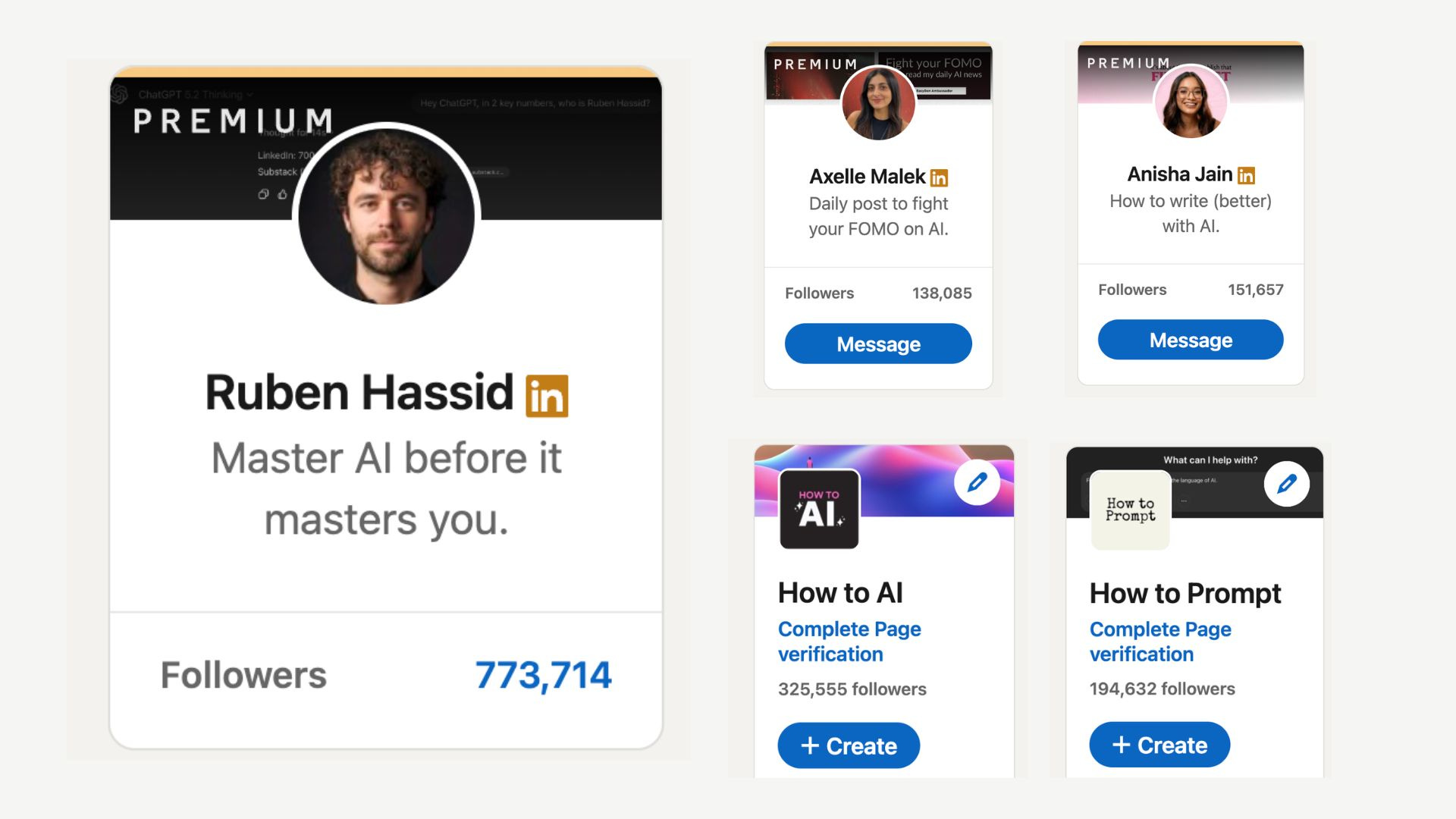
I will share exactly how I did it, right here, to 300,000 readers opening my emails every week. I expect ~300 of you will actually follow it. So 0.1%.
Make sure to be one of them.
Don’t save this guide → apply it right away.
And send it to your team’s chat group for accountability.
No one cares about you.
You opened an AI chatbot, and you prompted:
“Hey, this has been my [achievement] lately, make a viral Linkedin post about it.”
Result: 8,000 impressions. +46 followers.
Congrats, you still need 21,739 days to get to 1 million followers.
That’s 60 years.
So how on earth can I have 770,000 followers (and you don’t)?
I might have 700k+ followers, but I (still) never write a personal post. I know no one cares about me. Strangers can’t relate to my achievements.
And that’s how I average roughly 1,000 followers a day:
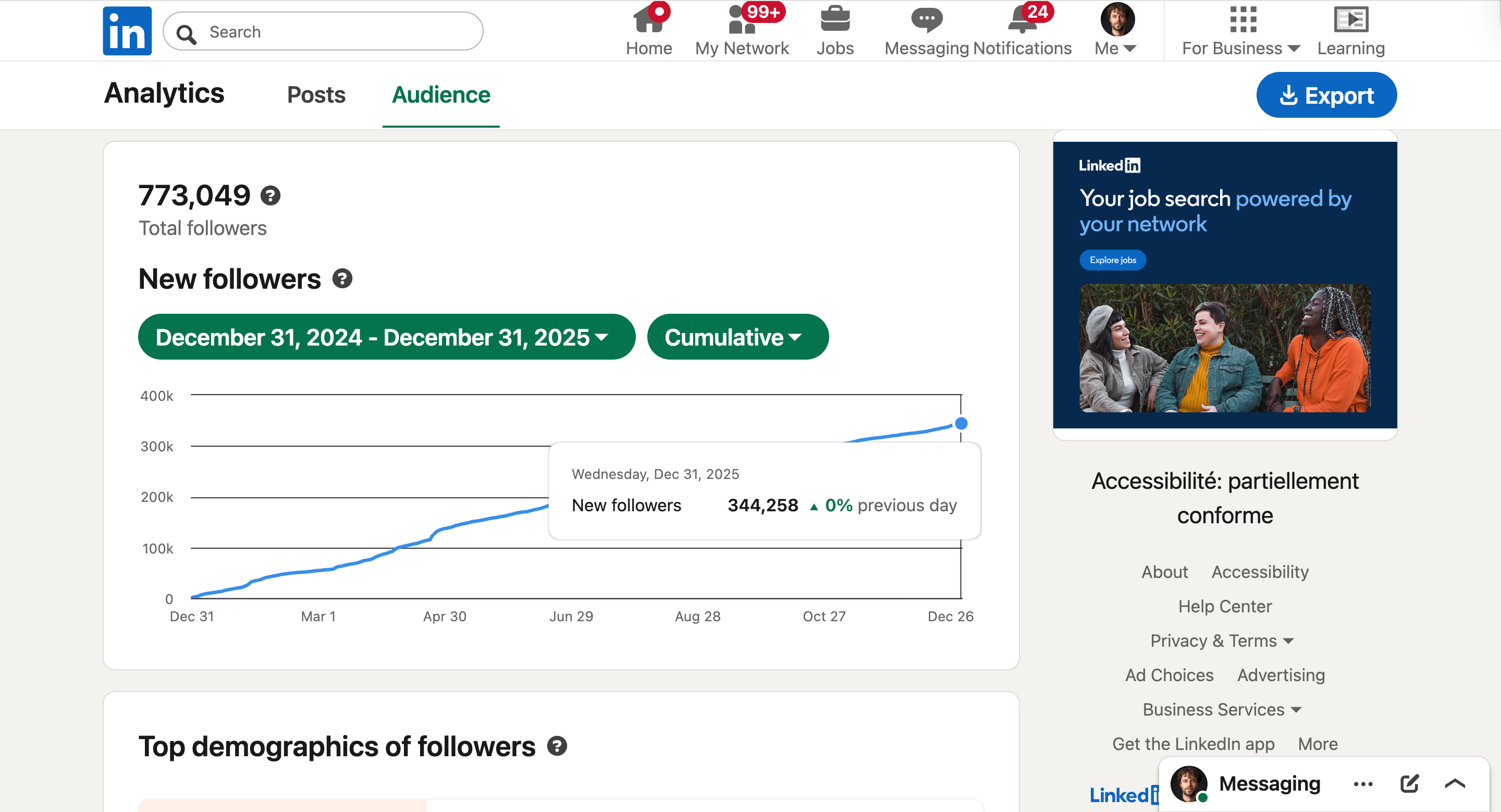
Personal posts won’t make you grow. They make people around you proud: your mom (definitely), your kids (arguably), and most likely your team/boss.
But it won’t make new people excited about your journey or what you have to offer to the world. They don’t want to be part of it. They don’t relate.
Readers only care about themselves.
They read your post alone, facing a screen, with hundreds of life problems to deal with. Kids to pick up. Sick parents to call. Concert tickets to cancel.
Let’s take you as the example (because you are my reader right now).
Imagine if I write here in this article that my Substack made me hundreds of thousands of dollars - do you care? No, you don’t. It does not concern you.
You will ask yourself, ‘Why is he bragging? He wants to sell me something?’ You are not involved. You have other things to care about. Now, if I said, “Here’s how YOU can generate $1,000 with Substack,” you'd suddenly care.
Either I help YOU now, or you won’t care enough to follow me.
Now that you understand no one cares about you, but people want to relate to you so you are useful to them - how can we teach AI this (at scale)?
I want to find the best angle and topic for one LinkedIn post that turns my expertise into something useful, relatable, and 100% about the reader — not me bragging — by asking me clarifying questions about what real problem my audience is struggling with, what piece of my expertise would feel most useful to a stranger, and how to frame it so the reader sees themselves in it so that the post feels like the reader is reading about themselves and gives them a clear reason to follow me.

First, read the uploaded files completely before responding.

DO NOT start executing yet. Instead, ask me clarifying questions (use AskUserQuestion) so we can refine the approach together step by step.

Only begin work once we've aligned.
It will force you to be USEFUL rather than indulging in being PERSONAL.
We start following useful people to us.
We praise personal posts of people we know.
Do you want to be praised or get new followers?
Abuse me. Break my patterns.
Did you see what I just did here?
I said “Abuse me,” and it instantly stopped your scroll. I broke your pattern. You were peacefully skimming through my newsletter, and your thumb stopped.
You couldn’t believe it. “This guy just wrote “Abuse me”. Wait what?”
It’s called a hook.
You must shock the reader. Break his patterns. Wake him up from his slumber and doomscrolling. They are bored, understimulated. They don’t yet know whether they should care.
But every successful thing you can think of broke a pattern.
Music — Nirvana. Hair metal was king. Then Kurt Cobain showed up with a $20 guitar and killed it in one song.
Painting — Picasso. Everyone was painting what they saw. He painted what they felt. People hated it. Then they couldn’t stop looking.
Device — iPhone. Every phone had a keyboard. Steve Jobs removed it. The entire industry called him insane. Then they all copied him.
Software — Google. Every homepage was a cluttered mess of links and ads. Google gave you a white page and a box.
Thinker — Galileo. Everyone agreed the sun moved around us. He said no. They put him in prison. He was right.
How to hook.
You must break the reader’s pattern to hook us.
What’s considered a hook on Linkedin? It’s exactly 2 sentences of 55 characters before people have to click “… more” to read more.
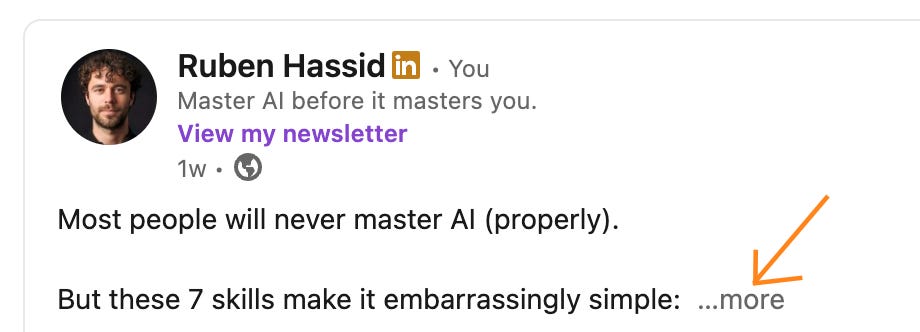
If you can get people to click this button, you win.
Yes, social media is this easy.
Here’s how I taught Claude to hook you on my posts.
(No, Claude won’t write the perfect one-shot hook. But it will create 100 variations. Your taste will want to pick up and try one. Then you will post 100 times, and your experience will sharpen your taste.)
Upload your “about me” text file.
Use the prompt template (I shared above) to make a solid draft of your post. Then move on to the hook. Copy and paste this prompt (as a follow-up):
Now let's write the hook for this post — the first 2 lines readers see before they have to click "… more" on LinkedIn (roughly 2 short sentences of ~55 characters max each).

The hook's only job is to break the reader's scrolling pattern and make them NEED to click "… more." It should feel like a pattern interrupt — something unexpected, counterintuitive, or so specific the reader thinks "wait, what?"

<rules>
- The hook must be about the READER or a universal tension — never about me.
- It should create an open loop: an unanswered question, a contradiction, or a bold claim the reader can't ignore.
- Avoid anything that sounds like a personal achievement, no emoji openers, no hashtags.
- It should feel like something a friend would text you that makes you reply "wait, explain."
</rules>

<hook_techniques>
1. Contradiction — say something that sounds wrong ("The worst LinkedIn posts get the most followers.")
2. Specific number + unexpected context ("I mass-unfollowed 2,000 people. My engagement tripled.")
3. Direct accusation — call the reader out ("You're writing LinkedIn posts for your mom, not your audience.")
4. Stolen thought — say what the reader secretly thinks but won't say out loud ("You know your LinkedIn posts are boring. So does everyone scrolling past them.")
5. Absurd reframe — take something mundane and make it dramatic ("Your LinkedIn hook has 1.2 seconds to live. Most die instantly.")
</hook_techniques>

Generate 10 hook options organized by technique. For each, write the exact 2 lines as they would appear on LinkedIn (keep it tight — every character counts).

To generate the 10 hook options, generate a AskUserQuestion form.
The key is the conversation you have with Claude (or any other AI).
You found it tiring? You wish to have a faster solution you can copy and paste and instantly get followers?
Good.
It means you won’t make it, and my follower growth is still a competitive advantage. If you can’t pursue the effort, the goal isn’t worth pursuing.
And I am pursuing it.
Your media sucks.
I am the Linkedin guy in my surroundings. So people make me read their posts (way too) often. And they all suffer from the same misconceptions & atrocities.
See, the media (image/video/PDF you upload with your text) is the most important part of a post. Why? Because it takes up most of the screen.
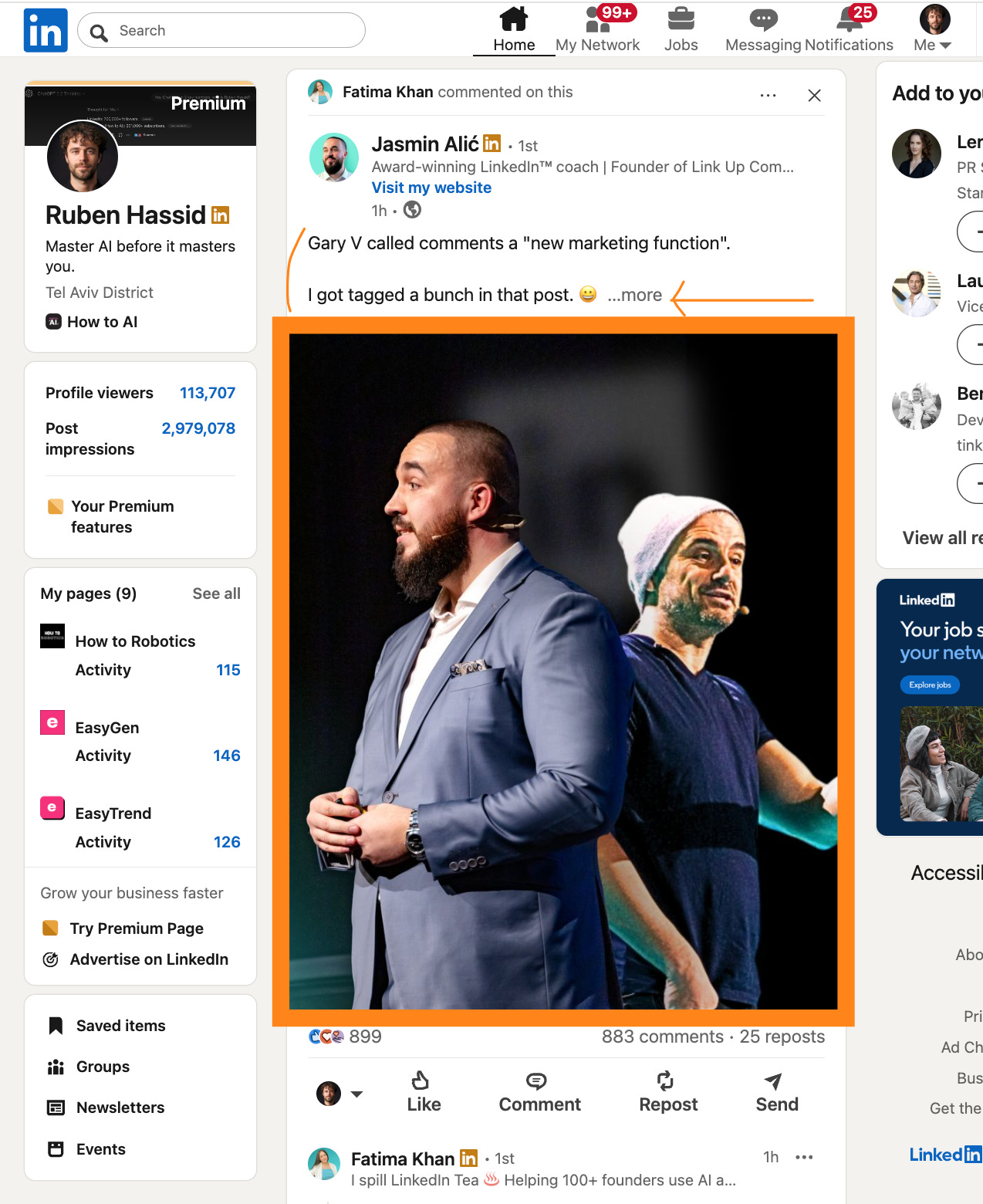
It’s like writing a book and not having a proper cover. People buy books because of the cover (79%) or the back cover (82%). So make sure your book gets read - here it’s your Linkedin post.
Let’s start with the biggest misconceptions around Linkedin:
“The text is what matters” - no, only the hook and your media matter. A wall of text won’t help you.
“Videos are the best formats” - no, people don’t watch many videos on Linkedin because they are supposed to work. Not binge-watch.
“I need a strong recognizable brand for my media” - no, the more it looks like an ad, the worse the post performs. Be scrappy.
So what’s the best media?
1080 x 1350 single image.
It looks scrappy, unbranded.
It’s useful now, and it makes me want to send it to a colleague or bookmark it for later.
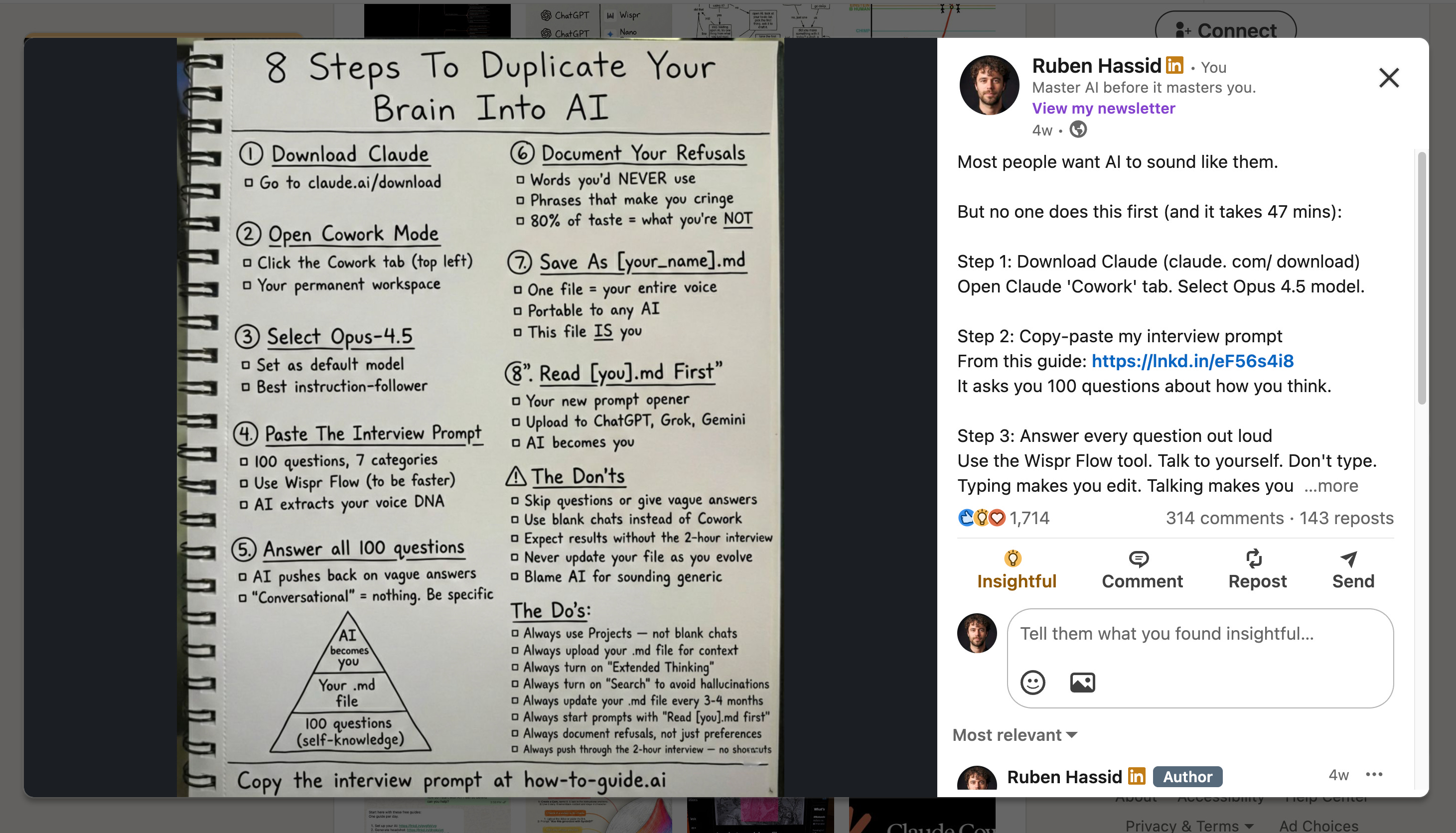
Now, can you teach AI this? Yes. Here’s how:
Go to Pinterest.
Search for your niche + ‘graph’ or ‘cheat sheet’ or ‘infographic’.
Then go to gemini.com.
Upload the Pinterest image.
Copy and paste this prompt:
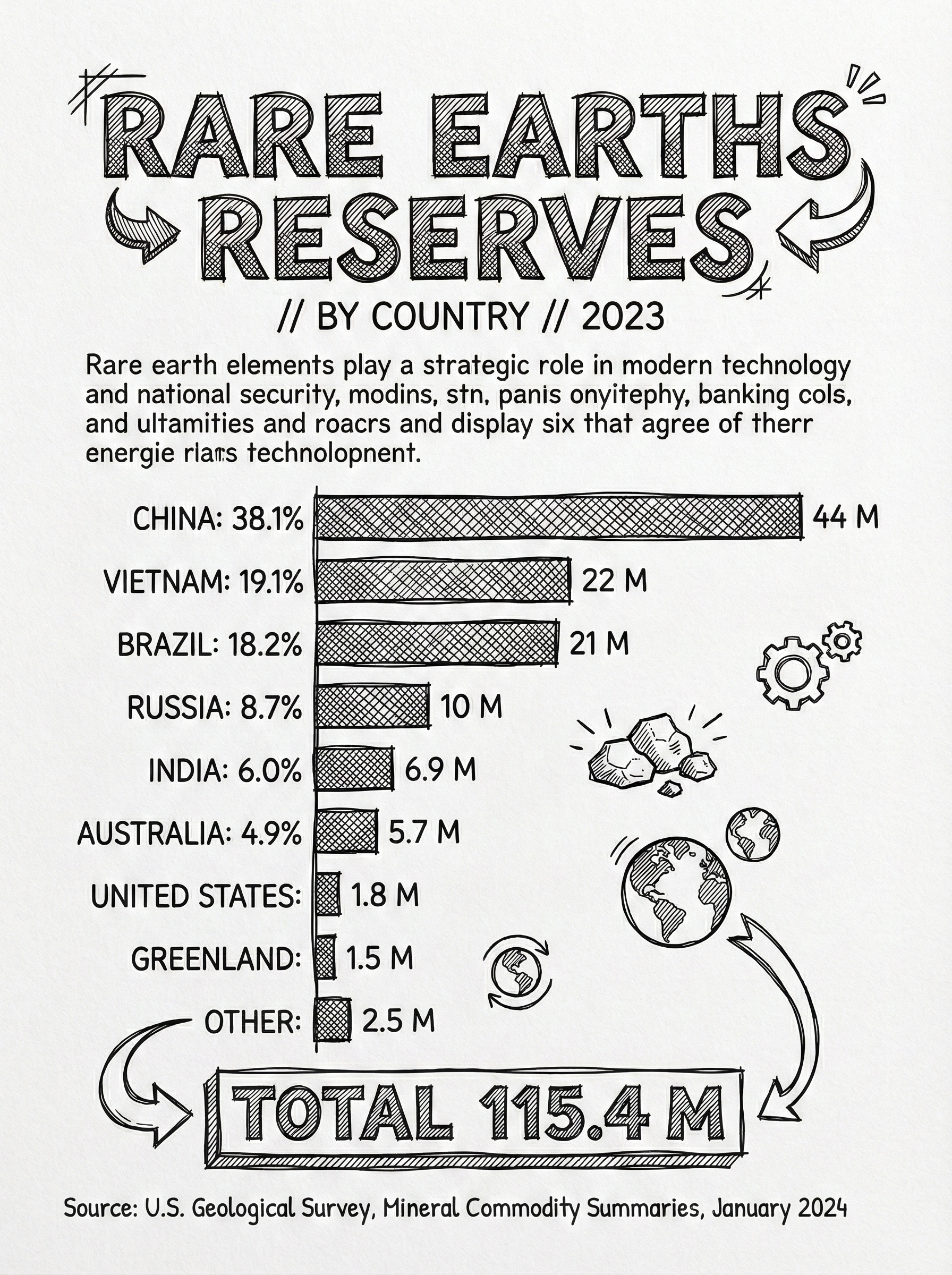
Extract all of the information from this infographic so another designer could remake it. Your goal is to brief it, as if the designer was Gemini nano-banana (reverse prompting).Here’s a step-by-step example:
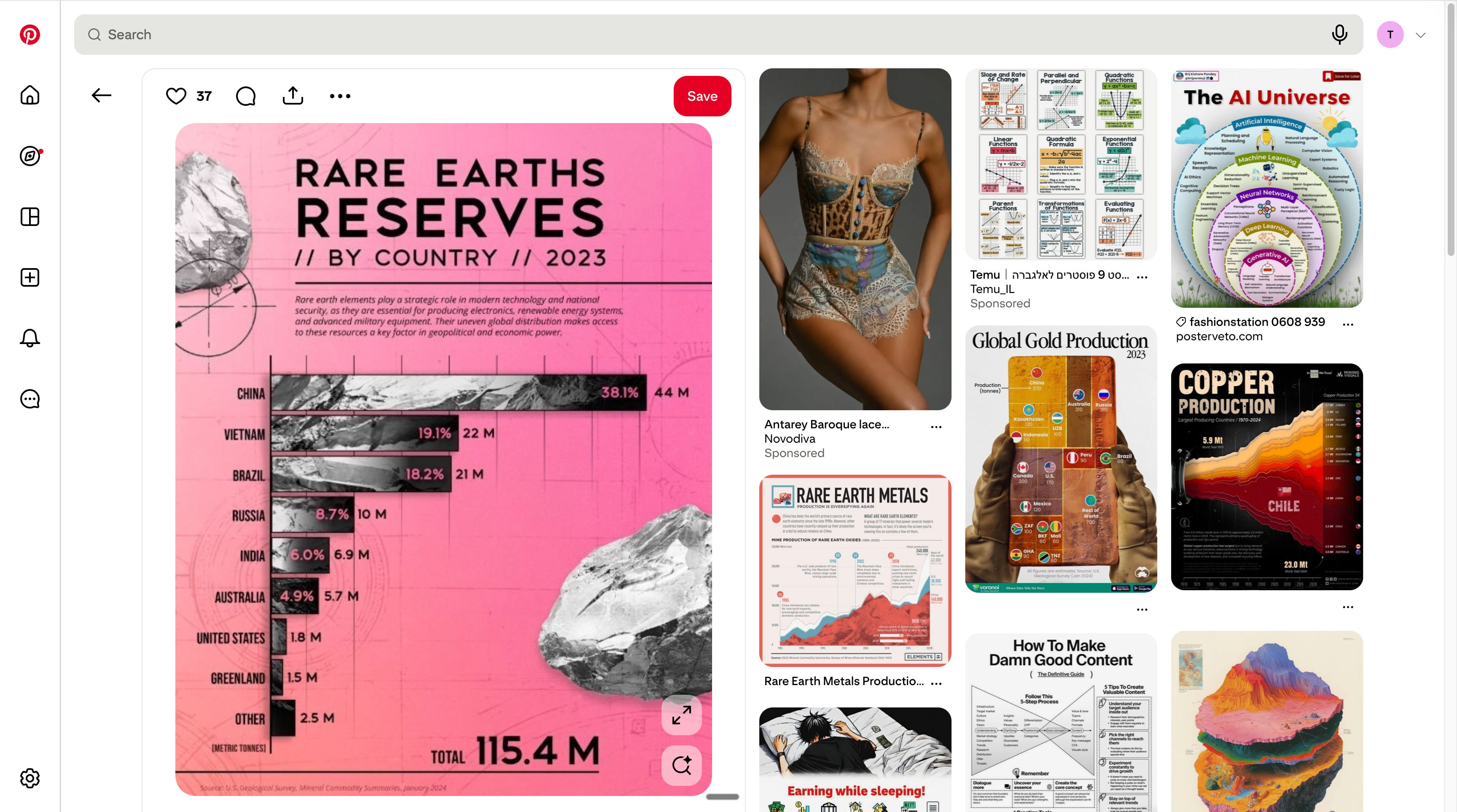
1 - I went to Pinterest and typed: “rare earth infographic”.
2 - I downloaded this one. It looks good, but we must update the style.
3 - I go to gemini.com, upload the image with this prompt:
Extract all of the information from this infographic so another designer could remake it. Your goal is to brief it, as if the designer was Gemini nano-banana (reverse prompting).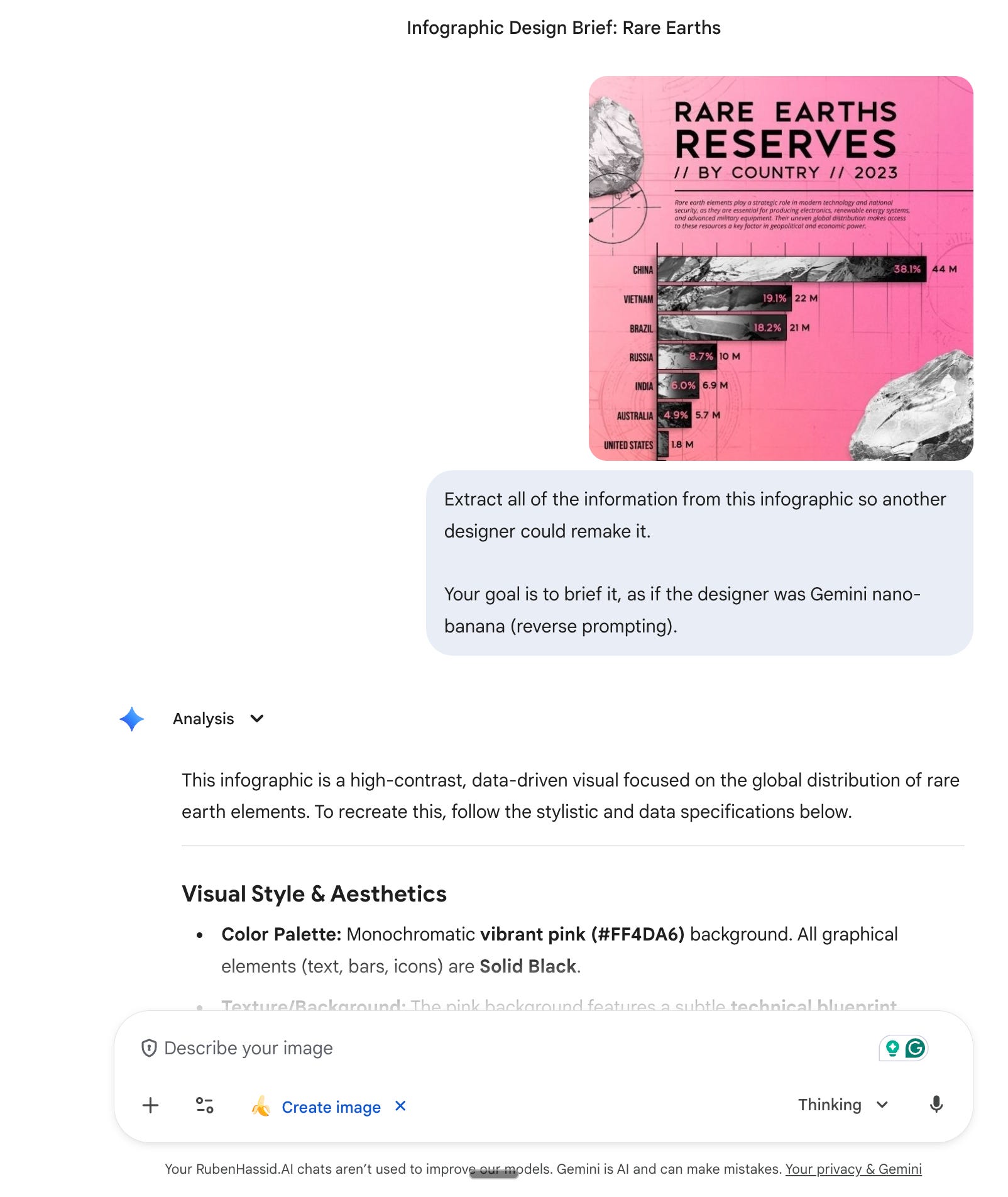
4 - Then go to Pinterest to find a “handwritten style” infographic that feels organic. Your goal is to NOT look like an ad.
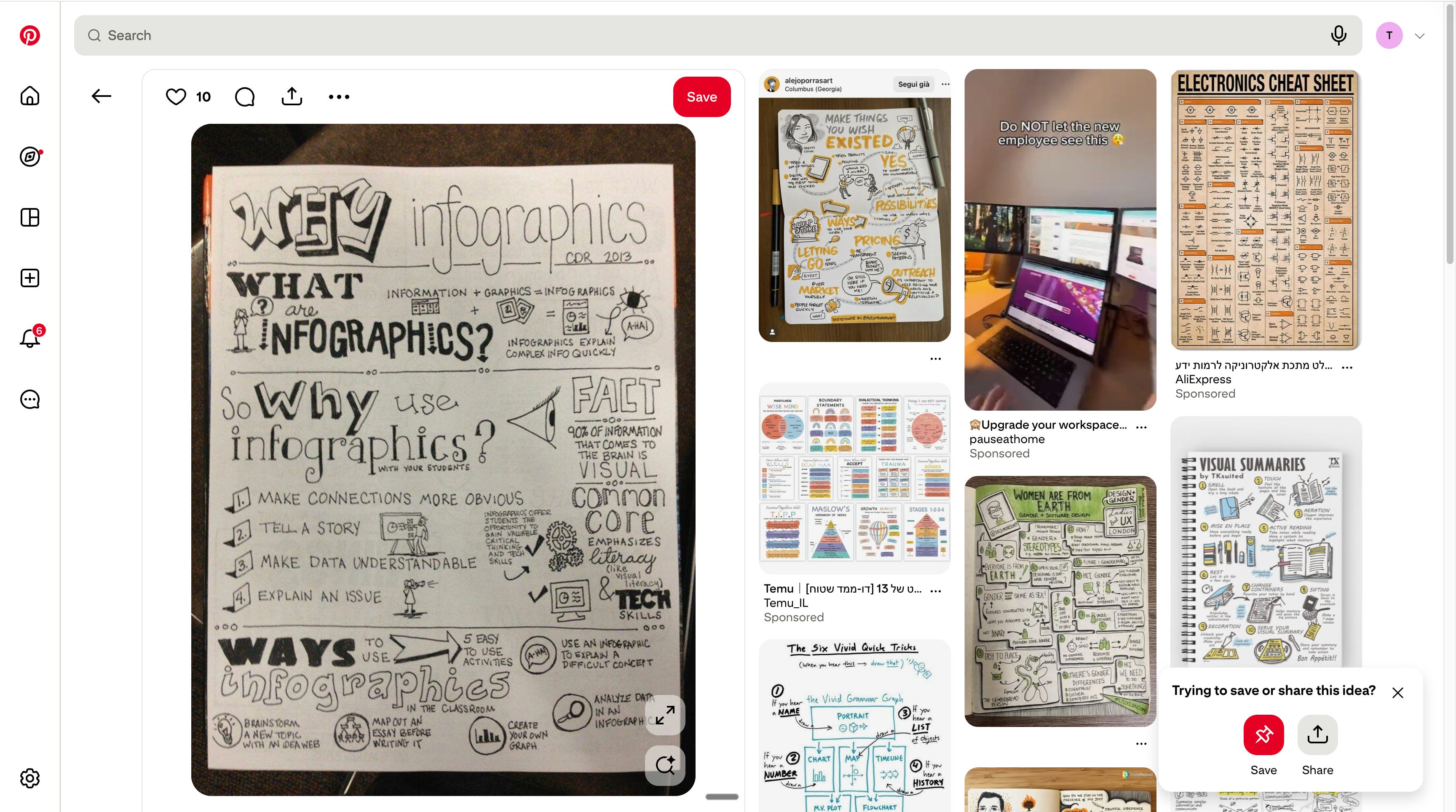
5 - I went back to Gemini and followed up with this prompt:
Now remake this infographic with the information, but with this style I just uploaded (copy only the style, your content comes from what you just shared).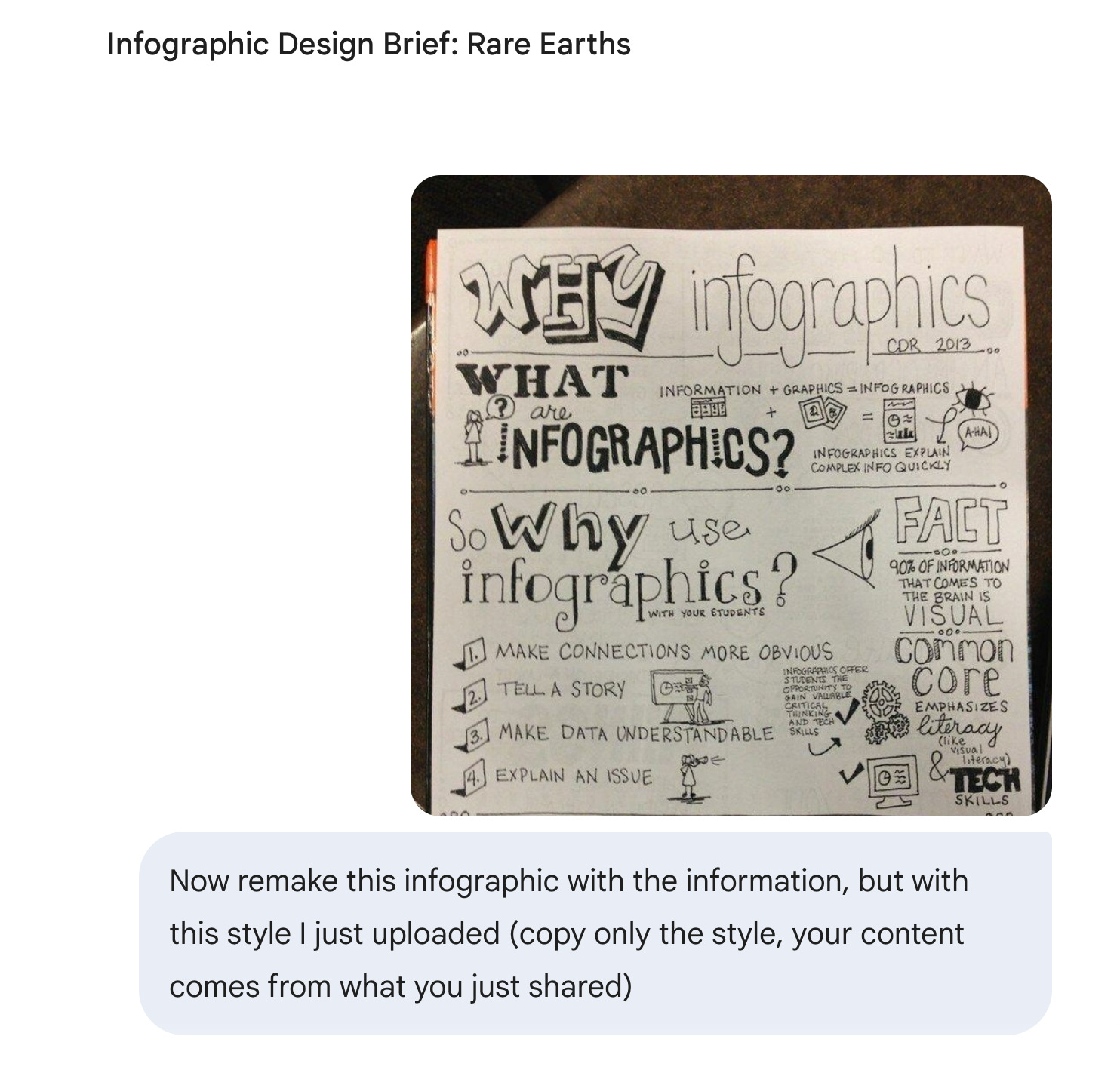
6 - Here’s the result. I could have paid $500 for this:
I told you to get 1 million followers on Linkedin, you need AI + taste + consistency. We covered AI & taste. Let’s talk about your consistency now:
You are shamefully inconsistent.
You expect a bodybuilder's body while working out twice a month.
How can you expect to grow seriously on Linkedin (or anywhere else) if you don’t truly focus on it? You need to post more.
Action produces information.
Posting more gives you the keys to post better. The difference between you and me is that I wrote thousands of posts and I learned from them.
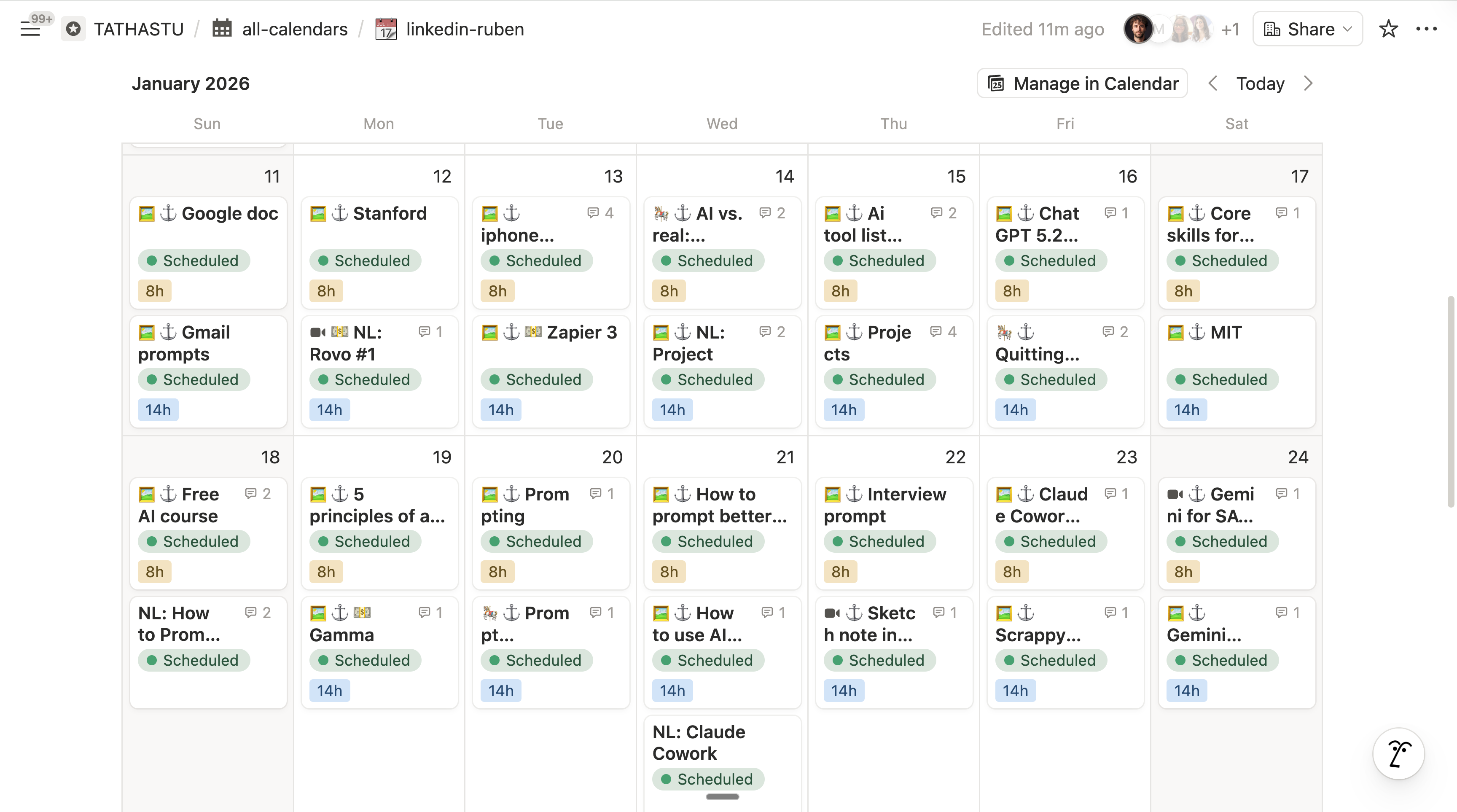
There is no secret AI prompt to make you consistent. If you can’t post once a day and dedicate 30 minutes of your time, you won’t make it. Because others do.
Someone infinitely dumber than you is getting what you want in life by simply being consistent and using AI smartly. Be that person.
(It also means sacrificing a lot of other things you do that don’t help you achieve what you want. Take the bet - trying going all in.)
Maybe one reason you can’t be consistent is that you don’t really want it:
You don’t want 1,000,000 followers.
That’s the truth you don’t want to hear.
I could give you the entire playbook to one million followers, and you won’t follow it. Because deep inside, you don’t know if this is worth pursuing. If this is “really what you want”.
So you’re standing there, waiting for the “right thing to be worth pursuing” to happen to you.
Sure, Linkedin followers are most likely not what you really want. But remember action produces information. And AI made action incredibly easy. So some people are getting a godlike amount of information from a godlike amount of action.
Don’t stand still.
Pick a target. Pursue it with all of your heart, using AI, and everything you can, to have the unfair advantage you really want.
It’s your only competitive advantage with today’s technology.
Make your advantage so unfair it feels insurmountable to catch up with you.
Now, how can you go from planning to mastering?
Do this:
✦ Join a community of obsessed AI users (like my Slack with 1,108 professionals).
✦ Pick one tool (most likely Claude for most of you) and master it.
✦ Use AI to produce action → to get information.
Humanly yours - Ruben.
PS: I consult Fortune 500 companies in the US for AI assessment and workshops. Still 1 spot left for Q2. DM me on LinkedIn (only). I read every one of my messages there.
"I will share exactly how I did it, right here, to 300,000 readers opening my emails every week. I expect ~300 of you will actually follow it. So 1%."
1% of 300k is 3k.
Who made the mistake you or the ai?
@Ruben I appreciate your guidance and advisory in this space.
I have learned a lot from your newsletter over the past month.
Your perspective has created positive direction in my mental space.
I endeavour to use these tools to be useful and help people.
I enjoy your perspective/framing of the AI landscape.
I have been actively improving my AI craft based on your content.
https://www.linkedin.com/in/coulson-f-03a648152/