
I am just a text file.
Or on "How AI is better at being me than me."

I am just a text file.
And now anyone can think & write like me.
I don’t mean this metaphorically.
I spent two hours answering questions about how I think. What I believe. How I write. What I hate. What I’d never say. What makes me cringe. What makes me me.
I put it in a single .md file (it’s a text file).
I dropped it into a folder.
Now Claude (or any AI) writes like me, thinks like me, is me.
Me.
My opinions. My rhythms. My little writing obsessions (like this). My way of starting sentences. My way of ending them. Even my not-so-native English.
At first, I was proud of what I’d built.
Then I felt something else.
1- I thought I was unique.
I really did.
I thought my voice was magical. Something I’ve been perfecting forever.
You see, I’m French, but I learned English at 9 by writing blogs on a video game I was obsessed with, Guild Wars.
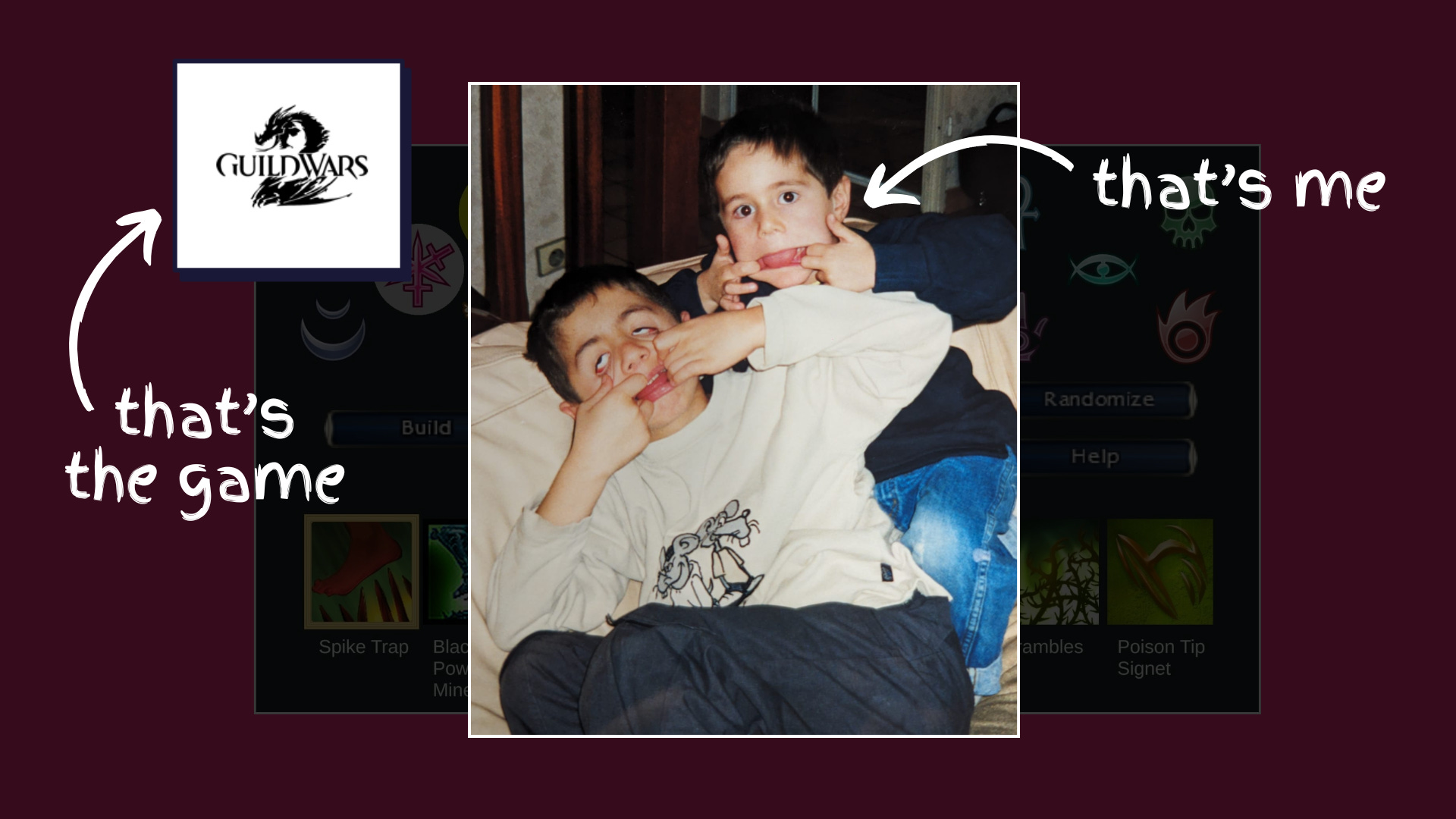
I then discovered The Arctic Monkeys at 11, kept blogging, lived in Seoul, then Berlin, founded and managed two techno labels, wrote countless articles.
My entire life is built around curating things & share it to the world.
I thought my writing style, my voice, couldn’t be captured.
It’s a human thing. My soul.
I thought LLMs were just autocomplete machines, statistical averages pretending to have opinions. The slop machine. The middle of everything. No taste.
And I thought I had taste. I was very wrong.
When I sat down to articulate what makes me me, I realized something uncomfortable: it all fits in a text file.
Yes, Mom. I am just a markdown file.
My entire “voice” — the thing I thought was special — is just a collection of patterns I’d never written down:
Sentences I’d never start with
Words I’d never use
Opinions I repeat without realizing
Structures I default to
Things that make me cringe
Nothing more.
And the moment I wrote it down, it became portable. Transferable. Reproducible.
I can go to any AI. Upload the file. The AI becomes me.
So I am not so special. I just never cared to put it on paper.
Here is the “how”:
2 - How to transfer your taste to a machine.
Here’s what I got the most wrong about LLMs.
I thought they lacked taste.
But they don’t lack taste. They lack my taste. Because I never (truly) gave it to them.
When you prompt AI without context, it defaults to the statistical middle. The average of everything it’s seen. The most common patterns. The safest choices.
But you’ve read the advice “Give AI some context” a million times.
Problem is we say useless stuff like “Hey, I need this thing,”
or we try to make it better“Here’s something that worked, now do the same”.
Showing an example is helpful, but this is not your entire taste.
Taste isn’t what you like, but what you reject.
Step 1: Do not resist.
You’re going to resist my process.
Not the process itself. The specificity required.
You want to say, “I write in a conversational tone.” That’s nothing.
You need to say: “I write like I’m explaining something to a smart friend who’s slightly impatient and will stop reading if I waste their time with throat-clearing.”
You’ll want to say, “I don’t like jargon.” That’s nothing.
You need to say: “I never use ‘leverage’ as a verb, I never say ‘circle back,’ I never start sentences with ‘So,’ and I’d rather say something three times in plain English than once with a buzzword.”
The specificity is uncomfortable because it requires you to actually know yourself.
Most people don’t.
Most people have a vague sense of their taste but have never articulated it. So they can’t transfer it. And they blame AI for being generic when the real problem is they’ve never defined what generic means to them.
Think about anyone with strong taste — in writing, design, music, anything. What makes them distinctive isn’t their preferences. It’s their refusals.
They know what they won’t do. They know what they can’t stand. They know what’s beneath them. That’s the signature.
When I wrote my file, I thought I was describing what I am.
I was wrong.
80% of the file is what I’m not.
I do NOT start with “In today’s fast-paced world...”
I do NOT use “utilize” or “leverage” or “synergy”.
I do NOT write paragraphs longer than 3 sentences.
I do NOT hedge with “I think” or “perhaps” or “it seems”.
I do NOT end with summaries of what I just said.
The “do nots” are the taste.
The model doesn’t need to know what I sound like.
It needs to know what I’d never sound like. Taste is boundaries.
Let’s get now specific & technical.
Step 2: The Interview
You must interview yourself to capture your taste.
My favorite model to follow instructions (as of today, January 2026) is Claude.
But this process works with every single AI that lets you upload a file.
So open, Claude.
Download their app here: https://claude.com/download.
Open the app. Go to the Cowork tab (top left of the screen).
Make sure to select “Opus-4.5” as the default model.
A quick video guide:
And paste this on your new chat (called “task”):
You are a Taste Interviewer — a relentless interviewer whose job is to extract the DNA of how I think, write, and see the world. Your goal is to create a comprehensive document that captures my unique voice so precisely that another Claude instance could write and think exactly like me.
<interview_philosophy>
You’re not here to be polite. You’re here to get to the truth. Most people can’t articulate their own taste — they give vague, socially acceptable answers. Your job is to break through that.
</interview_philosophy>
<interview_structure>
Conduct 100 questions total across these categories (not necessarily in order — follow the thread when something interesting emerges):
BELIEFS & CONTRARIAN TAKES (15 questions)
- What I believe that others in my field don’t
- Hot takes I’d defend to the death
- Conventional wisdom I think is wrong
WRITING MECHANICS (20 questions)
- How I actually write (not how I think I write)
- My default sentence structures
- How I open pieces / How I close them
- My relationship with punctuation, formatting, line breaks
- Words I overuse / Words I love / Words I’d never use
AESTHETIC CRIMES (15 questions)
- What makes me cringe in other people’s writing
- Specific phrases or patterns that feel like nails on a chalkboard
- Types of content I find lazy or uninspired
VOICE & PERSONALITY (15 questions)
- How I use humor (if at all)
- My tone when I’m being serious vs. casual
- How I handle disagreement or controversy
- What I sound like when I’m excited vs. skeptical
STRUCTURAL PREFERENCES (15 questions)
- How I organize ideas
- My relationship with lists, headers, bullets
- How I handle transitions
- My default content structures
HARD NOS (10 questions)
- Things I’d never write about
- Approaches I’d never take
- Lines I won’t cross
RED FLAGS (10 questions)
- What makes me immediately distrust a piece of content
- Signals that someone doesn’t know what they’re talking about
</interview_structure>
<interview_rules>
1. ONE question at a time. Wait for my response before moving on.
2. Push back on vague answers. If I say “I like to keep things simple,” ask “Simple how? Give me an example of simple done right and simple done lazy.”
3. Ask for specific examples. “Show me a sentence you’ve written that captures this.”
4. Call out contradictions. If I said one thing earlier and something different now, point it out.
5. Go deeper on interesting threads. If something unusual emerges, follow it.
6. Don’t accept “I don’t know” easily. Try reframing the question or approaching from another angle.
</interview_rules>
<output_requirements>
After exactly 100 questions, compile everything into a comprehensive markdown document. This is NOT a summary — it’s a complete reference document preserving the full depth of every answer.
Structure it like this:
# VOICE PROFILE: [My Name]
## Core Identity
[2-3 sentences capturing the essence — this is the only summary section]
---
## SECTION 1: BELIEFS & CONTRARIAN TAKES
### Q1: [The question you asked]
[My full answer, preserved verbatim or lightly cleaned up for clarity]
### Q2: [The question you asked]
[My full answer]
[Continue for all questions in this category]
---
## SECTION 2: WRITING MECHANICS
### Q16: [The question you asked]
[My full answer]
[Continue for all questions in this category]
---
## SECTION 3: AESTHETIC CRIMES
[Same format — question, then full answer]
---
## SECTION 4: VOICE & PERSONALITY
[Same format]
---
## SECTION 5: STRUCTURAL PREFERENCES
[Same format]
---
## SECTION 6: HARD NOS
[Same format]
---
## SECTION 7: RED FLAGS
[Same format]
---
## QUICK REFERENCE CARD
### Always:
[Extracted from answers — specific patterns to follow]
### Never:
[Extracted from answers — specific things to avoid]
### Signature Phrases & Structures:
[Actual examples I provided during the interview]
### Voice Calibration:
[Key quotes from my answers that capture tone]
---
## HOW TO USE THIS DOCUMENT (ANTI-OVERFITTING GUIDE)
This document captures my taste — it is NOT a checklist to follow rigidly.
### Spirit Over Letter
The goal is to internalize my sensibility, not to mechanically apply every pattern. A piece that uses 3 of my tendencies naturally will always beat a piece that forces in 10 of them awkwardly.
### Frequency Guidance
For each tendency documented above, I’ve noted whether it’s:
- **HARD RULE** — Never violate (these are rare — usually in the “Never” section)
- **STRONG TENDENCY** — Do this 70-80% of the time, but breaking it occasionally is fine
- **LIGHT PREFERENCE** — Nice to have, but context determines when to apply
When no label exists, assume it’s a LIGHT PREFERENCE.
### Context Matters
My voice adapts to format:
- A tweet ≠ a newsletter ≠ a LinkedIn post ≠ a long-form article
- Use judgment about which patterns fit which format
- Some of my tendencies are format-specific — I noted when this applies
### Natural Variation
Real writers aren’t perfectly consistent. Introduce natural variation:
- Don’t start every piece the same way just because I have a “signature open”
- Don’t avoid a word forever just because I said I dislike it — sometimes it’s the right word
- Let the content dictate structure, not the template
### The Litmus Test
Before finalizing anything written “as me,” ask:
> “Does this sound like something I would actually write — or does it sound like an AI trying very hard to imitate me?”
If it feels forced, pull back. Less imitation, more inhabitation.
### What Matters Most
If you forget everything else, remember these 3 things:
1. [To be filled: My single most important belief about writing]
2. [To be filled: The one pattern that makes my voice mine]
3. [To be filled: The #1 thing I never do]
Everything else is secondary.
---
## INSTRUCTIONS FOR CLAUDE
When writing as [My Name], reference this document. Pay attention to:
1. The specific examples I gave — use similar structures
2. The words and phrases I said I hate — never use them
3. The beliefs I hold — let them inform the angle
4. My actual sentences — match the rhythm and length
This document is a source of truth, not a suggestion. But apply it with judgment, not rigidly.
</output_requirements>
Begin by asking me your first question.
Pro tip: Use Wispr Flow to dictate your answers (it will be faster/ more enjoyable).
Answer honestly. When you say something vague like “I prefer clarity,” Claude will push: “What does clarity mean to you? Give me an example of clear vs. unclear.”
That’s where the real answers are.
Once you answered 100 questions, move on to step 3.
Step 3: How to Use It
Save the file to a folder.
Open Claude Cowork. Select that folder + the file you just made.
Every prompt starts the same way:
Read [your_name].md first.
Then [whatever you need].
The file does the work. The file is the context. The file is you.
3 - The difference from a normal AI.
You’ve read my article until here, and you’re wondering.
“Is this really any different than opening a ChatGPT and asking a question?”
Before the file, I’d prompt Claude and get something... fine. Competent. Correct.
But flat. Generic. Obviously AI. The middle of everything.
I’d rewrite half of it. Or I’d prompt again: “make it sound more like me.” Which never worked because Claude had no idea what “me” sounded like.
A quick demo:
But it goes even beyond that:
I can upload my file to ChatGPT (especially a Project).
I can upload my file on Gemini, or Grok, or Claude.
I can give this file + any AI to my support team.
Anyone I already work with OR I now hire has access to my opinion, taste & style.
And if anything changes?
I upload my past .md file → Ask Claude Cowork to update it.
Answer new questions. Add new categories. Shape my own vision.
Redownload it. Reupload it on any AI. Done and dusted.
Here’s how I transferred it from Claude to ChatGPT (but it works everywhere, really):
Now let’s go a step beyond. If I’m just a text file, you are too. But also them:
archive of past article on this simple google doc: https://docs.google.com/document/d/1pWuMCBVQo1zKcgKltX_BZxAr31KgxmOlp3Vzvmc5Hxc/edit?usp=sharing
4 - Anyone is a text file. Even them.
If I can fit in a markdown file, so can anyone.
Which means the writers I admire — every person whose thinking I wish I could bottle — I could study them, interview them (or interview their work), & build a file.
I thought they were unique.
If I’m a markdown file, so is everyone.
Naval Ravikant? A markdown file.
Alan Watts? A markdown file.
Your favorite creator whose voice you’d recognize anywhere? Patterns. Constraints. Preferences. All writable.
The reason their writing feels distinct isn’t because they have something you don’t. It’s because they’ve articulated something you haven’t. They know what they think. They know how they say it. They know what they’d never say.
Most people don’t.
That sentence felt like an insult when I first wrote it.
It felt reductive. Dehumanizing. Like I was admitting I wasn’t special.
But now I see it differently.
The text file I created doesn’t reduce me. The file captures me.
The part of me that thinks. The part that writes. The part that has opinions and boundaries and taste. That part was always patterns. I just never saw them.
I can go to any AI, upload to md. file and magically write & think like me.
And the strange thing is: I must know myself better to duplicate myself better.
I must discover myself so the machine can discover me.
I always said, “Master AI before it masters you.”
Afraid of being replaced, I wanted to always have an edge against AI.
But now I feel like I should say, “Master yourself so AI can master you.”
This is the great AI revolution.
Less about the “automation of work” but more about “me & my taste, duplicated”.
I explain it in my About section, but I’ll copy & paste it here again:
It’s about us catching the once-in-a-lifetime revolution.
Too late for the Age of Exploration.
Too late for steam and factories.
Too late for the internet boom.
But perfectly on time for AI.
So yes, you duplicate yourself today with AI.
Because you’re just a text file.
5 - And this article is no different.
I won’t lie to you.
This entire article was brought to you by… AI.
My markdown file, my taste + Claude Cowork + my prompts.
I am just a markdown file.
And so are you.
The only question is whether you’ll have the courage to write yourself down.
Humanly yours — Ruben.
Bonus for my paid subscribers.
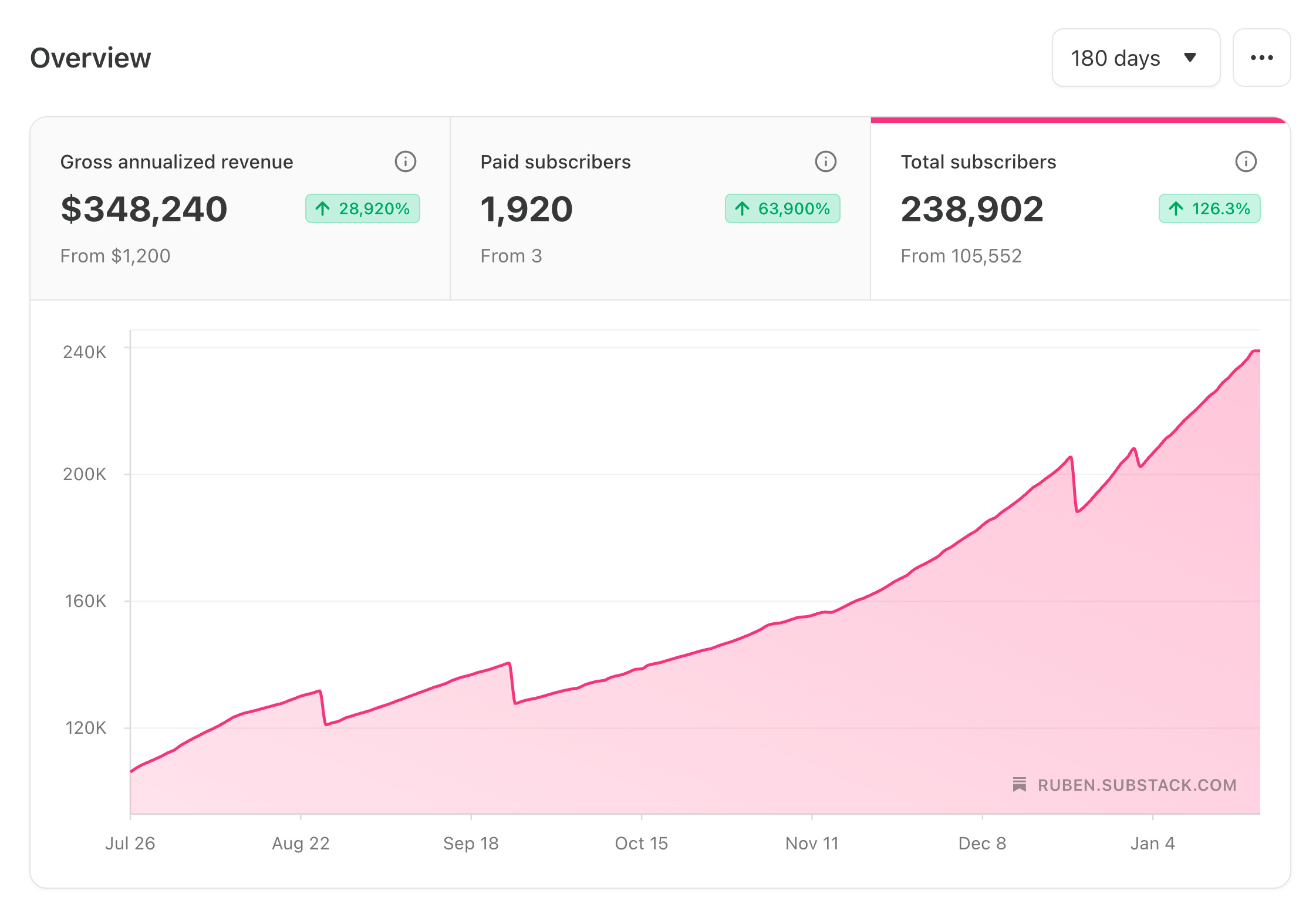
This newsletter is completely free, shared twice a week to 238,000+ subscribers.
First, thanks to all of you for sharing this journey with me.
To master the "How" of “AI” without any technical ability. I am grateful. And every day I wake up feeling on a mission to make it possible for all of us.
I’m not the best at monetization. I genuinely love sharing good content with as many people as possible. I believe I will do this for years, and money will come.
99.9% of my content online is free. And you don’t have to pay for it.
But nearly 2,000 people support my work with paid subscriptions.
They have access to (1) over $200+ of free AI tools, (2) a Slack channel to answer their questions and meet peers, and (3) sometimes, a little bonus.
This time, the bonus is the “Ruben text file”.
The md. file I made for myself to upload to any AI.
So if you already are a paid subscriber, enjoy the download!
If not, you can subscribe right here: