
Happy New AI Year.
How to (best) master AI in 2026:

Happy New Year!
Wow. 2026.
Technically it’s the year the apes takes over in the movie Planet of the Apes:
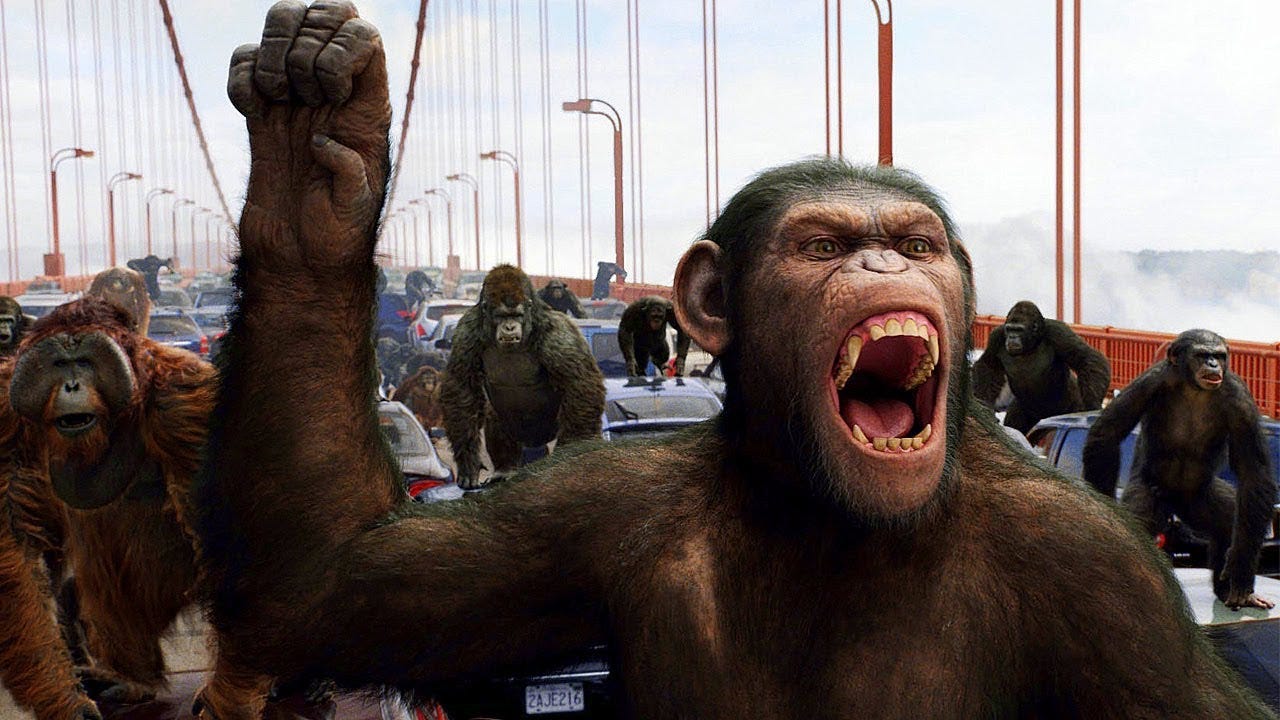
That’s a movie. But for us, 2026 shouldn’t be so different from 2025, right?
Especially for this “AI thing”.
You still use ChatGPT.
You don’t really use AI for anything else.
This whole “revolution” might not have been one after all.
Well, take a look at this:
You’re looking at GPT-1 in 2019.
The very first version of this chatbot everyone keeps talking about.
The thing that started everything.
How could it be so bad?
✖ No internet connection.
✖ No images, no videos, no (valid) code.
✖ Nothing to train it on your tone of voice.
The problem isn’t GPT-1.
The problem is that you (& I) are completely out of touch with the speed of AI.
Let’s take another example: my favorite AI to make images, Midjourney.
Today, Midjourney uses its 7th version of its model (V7).
Here's the exact timeline:
☑ V1: February 2nd, 2022.
☑ V2: April 12th, 2022.
☑ V3: July 25th, 2022.
☑ V4: November 5th, 2022.
☑ V5: March 15th, 2023.
☑ V6: December 21st, 2023.
☑ V7: April 4th, 2025.
I want you to feel the difference in the exact same prompt:
editorial photograph, gritty reality mixed with surreal elements, man in shiny heat-resistant metallic suit used around volcanos, styled with gorpcore fashion pants and top, prominent gold gem-set Patek Philippe Nautilus watch, posing expressively on rock, black volcanic ground, wall of lava exploding behind him, front white blue flash highlighting him from darkness, camera low angle with 14mm lens and fisheye effect, visible heat waves, film grain texture, documentary style, juxtaposition of high fashion and harsh environment, shorter blonde tipped hair, high cheekbones, silver blue eyes, visible skin pores, natural skin imperfections and blemishes, charcoal dirt smudges from hard work, no helmet
Here’s the result, for each version of Midjourney:
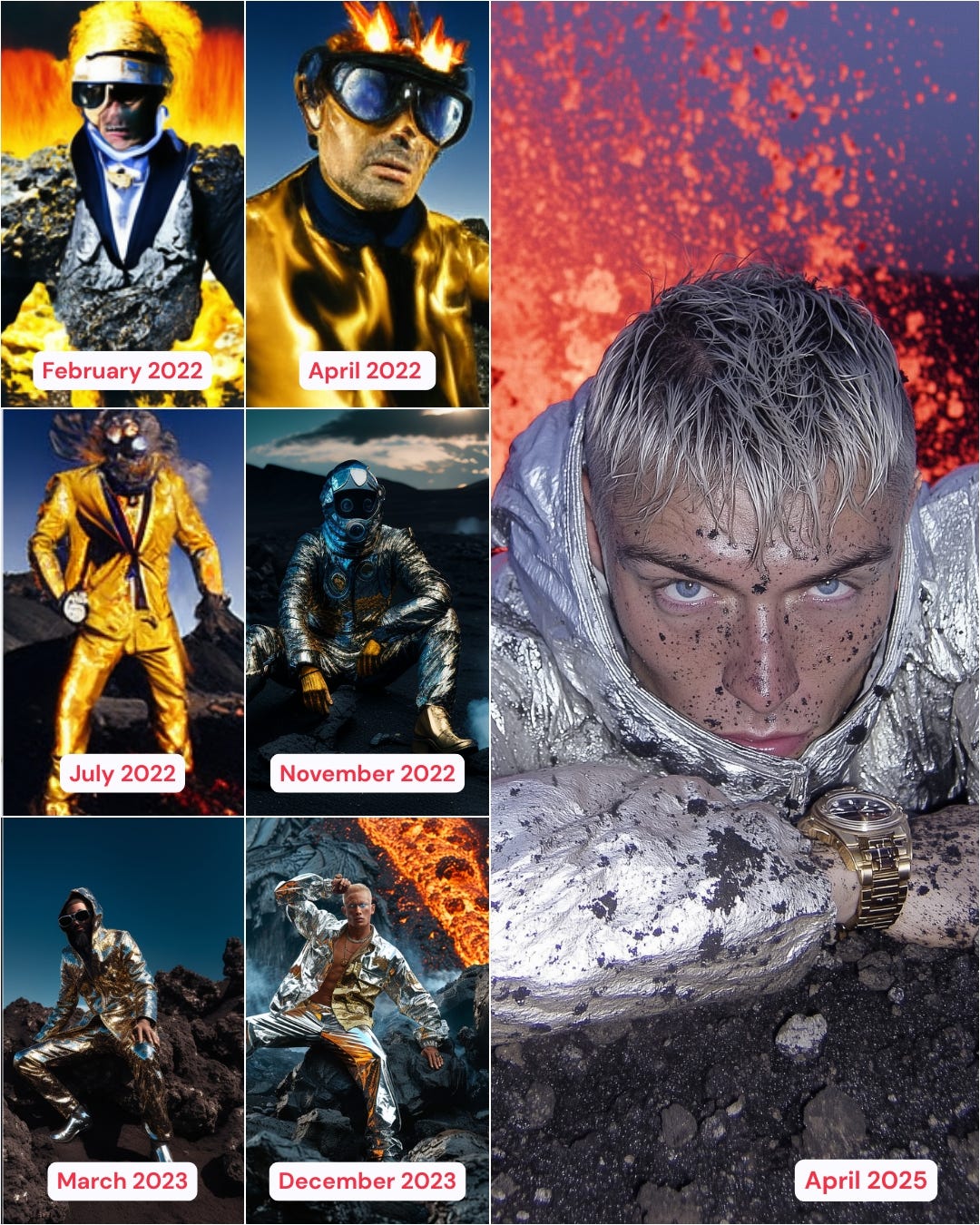
This is the speed of AI.
Midjourney went from “Ah-ha! it can’t make hands!!” to ad-worthy.
And all of this in 3 years.
Have you accomplished the same in 3 years?
I didn’t.
What about the next 3 years?
We won’t, unless we are the ones steering the wheels.
That’s how you & I both must start the year to stay ahead of the curve.
But how?
Well, this is How to AI.
1. Your ChatGPT isn’t the same.
The ChatGPT you opened in January 2025 is not the ChatGPT you have today.
Same logo. Same chat box. Different brain.
And I have proof.
Epoch AI just published data showing AI capabilities nearly doubled in speed starting in April 2024. (Source: Epoch AI, 2025)
Before April 2024: AI improved at 8.3 points per year.
After April 2024: AI improved at 15.4 points per year.
That’s a 1.85x acceleration. In one year.
But here’s the thing.
Most people are still using ChatGPT like it’s 2022.
One blank chat. Zero context. No memory. No projects.
Here’s what changed (and you probably missed):
☑ Thinking. ChatGPT thinks (by talking to itself) before answering. On hard math problems, this alone improved accuracy from 13% to 83%. A 6x jump.
☑ Memory. ChatGPT remembers you across conversations. Your job. Your tone. Your preferences. Most people never turned it on.
☑ Projects. You can create dedicated workspaces with custom instructions and files. Most people still use one blank chat for everything.
☑ Web search. ChatGPT browses the internet in real time. Most people still ask it questions from 2023.
☑ Canvas. ChatGPT can write and edit documents with you, side by side. Most people still copy-paste into Google Docs.
☑ Custom GPTs. You can build your own GPT for specific tasks. Most people use someone else’s. Or none at all.
Don’t use a 2025 tool with a 2023 mindset.
And that’s the real gap.
Prepare for 2026 with these articles:
2. The speed no one is showing you.
I spent hours reading AI research papers so you don’t have to.
Here’s what scared me.
The MATH benchmark tests AI on 12,500 math problems from high school competitions.
Hard stuff, really.
When it launched in 2021, the best AI models scored 6.9% accuracy.
By 2024, GPT-4 with code interpreter hit 84.3%. (Source: arXiv)
From 6.9% to 84.3%. In three years. That’s like a different technology at this point.
And then GPT-5.2 came out: it scored 100%. Perfect score.
The benchmark is now useless. They have to create harder ones.
Same for Stanford’s 2025 AI Index that dropped last week:
Training compute doubles every 5 months.
Inference costs fell 280-fold between November 2022 and October 2024.
AI is getting better, faster, and cheaper. All at the same time.
We are entering level 2.
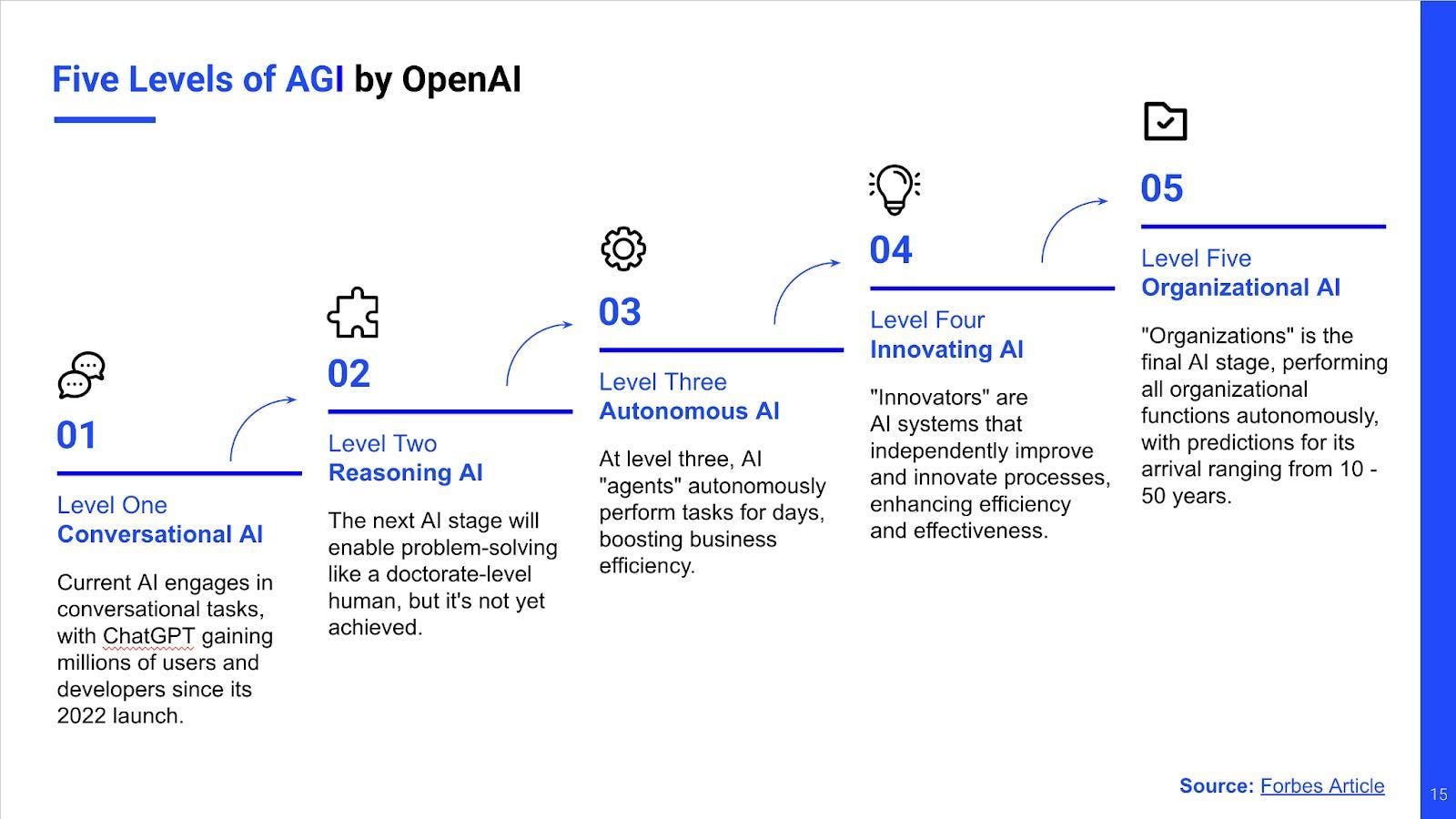
OpenAI published its internal framework for tracking AI progress.
Level 1: Chatbots. AI that talks. (We are here.)
Level 2: Reasoners. AI that solves problems at PhD level. (Approaching.)
Level 3: Agents. AI that takes actions. Books meetings. Runs workflows.
Level 4: Innovators. AI that invents.
Level 5: Organizations. AI that runs entire companies.
The jump from Level 1 to Level 2 is taking 3 years.
The jump from 2 to 3? Might take 12 months.
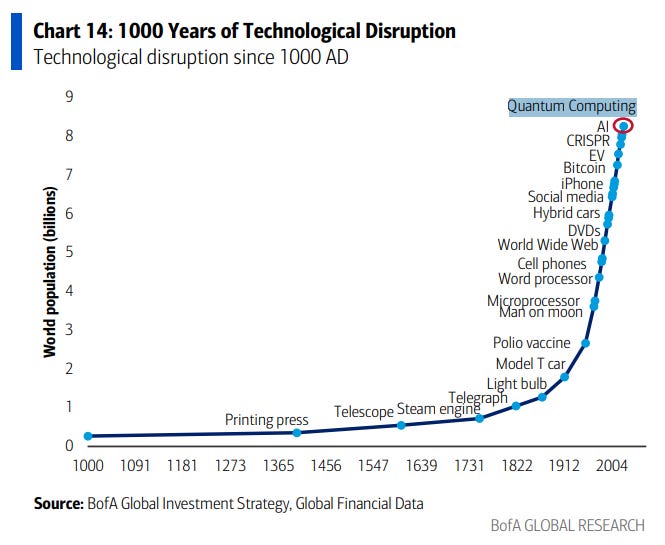
That’s the speed curve. It bends.
It’s called the Law of Accelerating Returns:
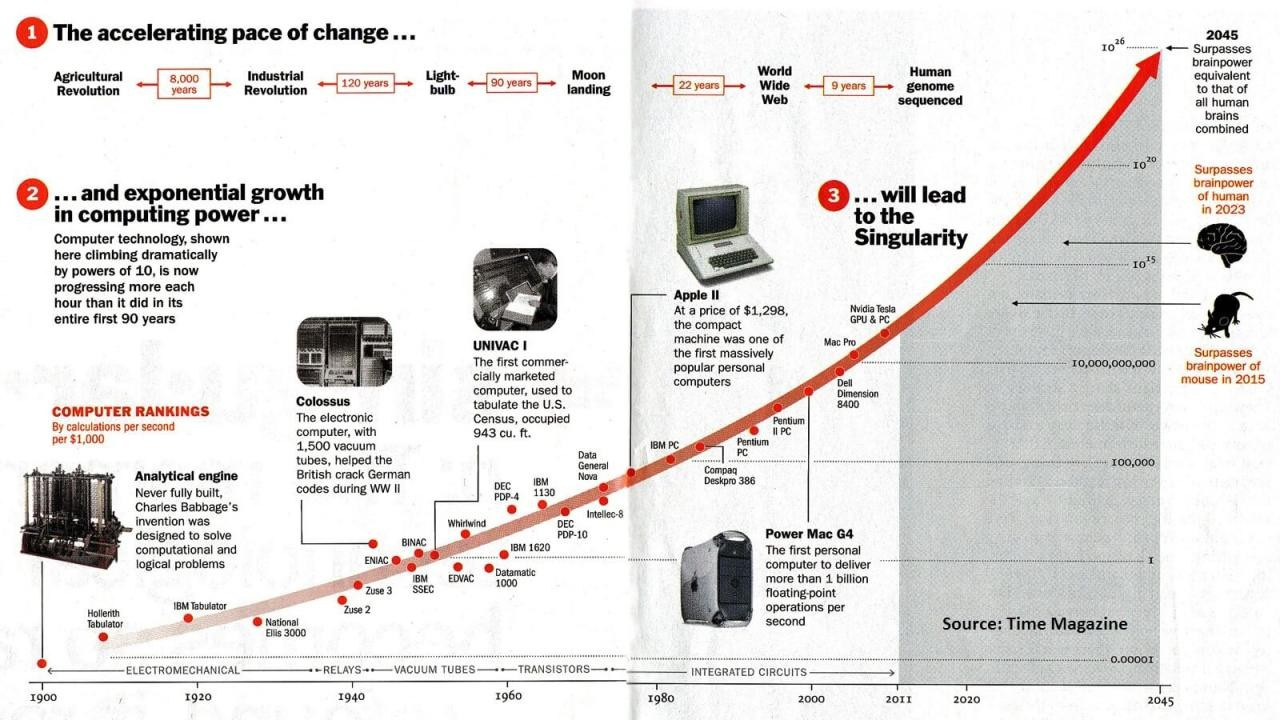
So now you do understand that:
1 - It went much faster than you think, before.
2 - It will go much faster than you think, after.
Remains the question: so what do we do NOW?
Archive: https://docs.google.com/document/d/1pWuMCBVQo1zKcgKltX_BZxAr31KgxmOlp3Vzvmc5Hxc/edit?usp=sharing.
3. So how to best prepare 2026?
Theory is useless without action. This is why I’m rarely about theory or news.
And I’m sorry for this long introduction. It felt right as we leave 2025 to enter 2026. Here’s exactly how I plan to best prepare 2026:
A. Stop trying to prompt.
It’s key to learn how to prompt (and talk to AI).
It was relevant in 2022. It will still be relevant in 2026.
But some shortcuts exist to make it easier:
✦ My prompt library. I remade it and I will keep updating it.
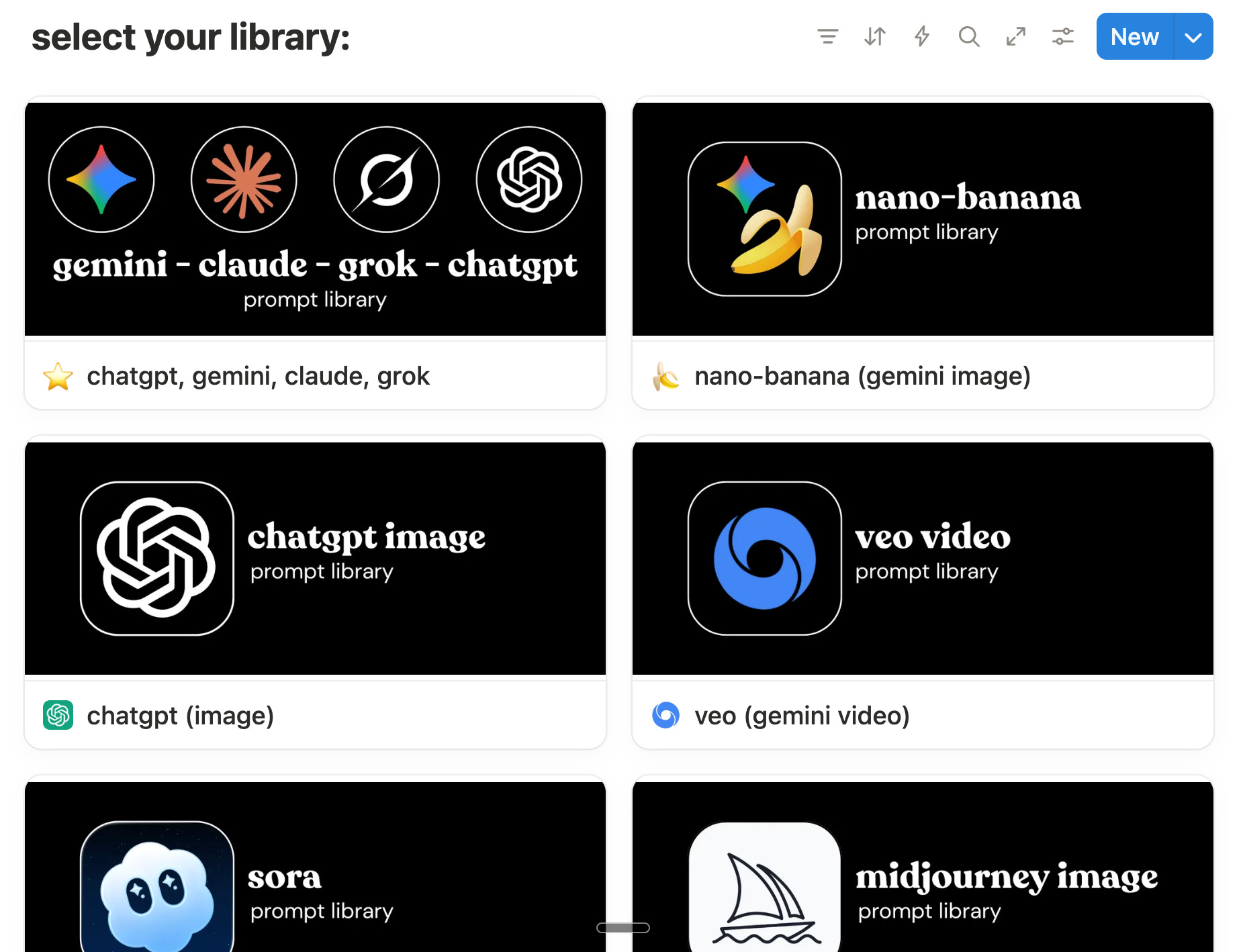
✦ My prompt maker (for ChatGPT). It’s also free.
B. Stop expecting an entire video from AI.
I receive this DM every single day:
“Ruben, which AI can make a 5-min video, ready for YouTube?”
Once and for all, it does NOT exist. Yet.
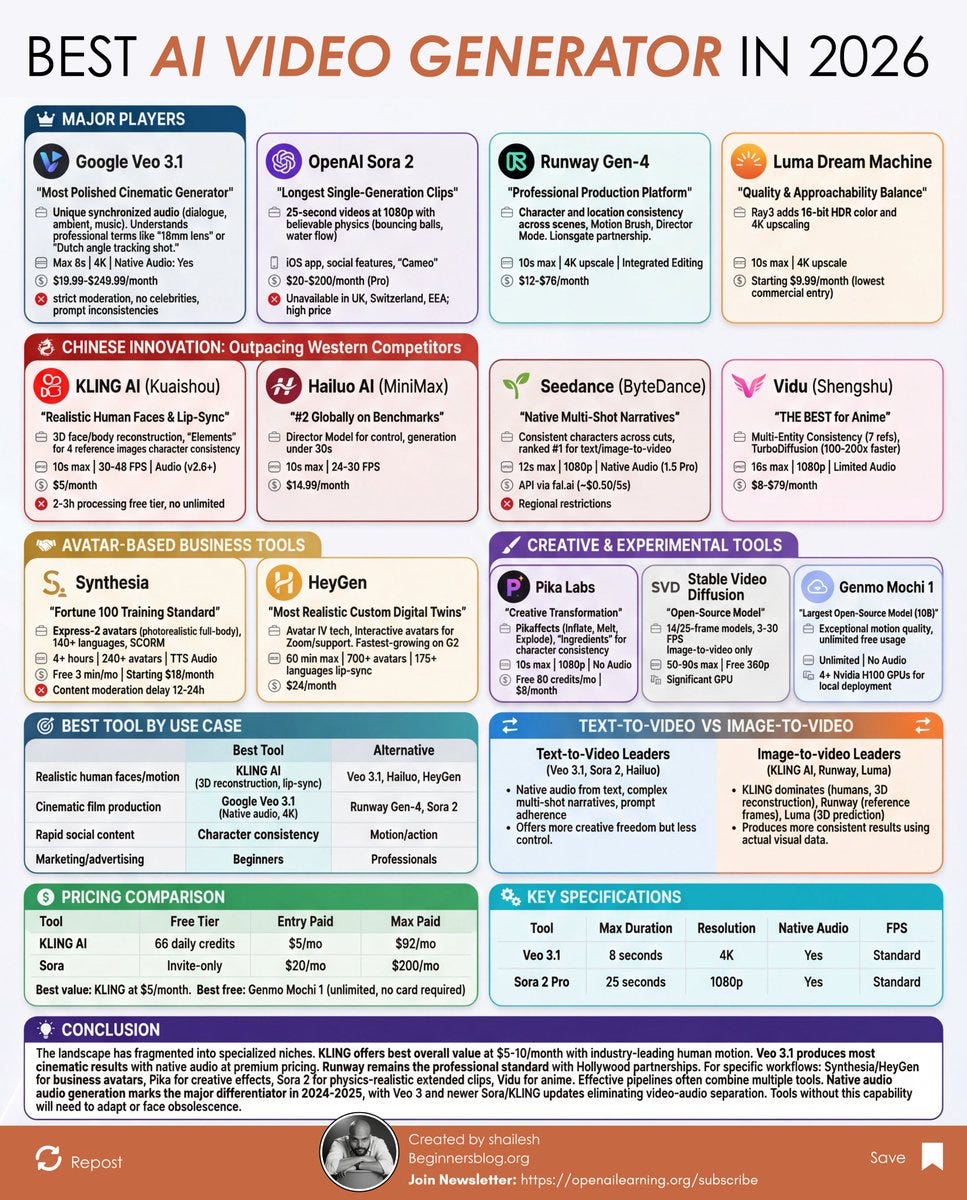
You can create 10-20 second videos with Sora (OpenAI) or Veo (Gemini).
It still requires a lot of tweaking. And it’s only good for specific use cases.
But the use cases keep being wider and wider.
I expect 2026 to be the year of long videos. And 2027 the real year of AI videos.
Until then, here’s a good recap of the best AI video models:
C. Stop expecting an AI to never be able to write like you.
People think they are soooo unique.
Their writing style is impossible to mimic, and no AI can ever copy it.
AI keeps using em-dashes and stupid expressions anyway—right?
No. I could copy your sooooo unique writing style perfectly within 5 minutes.
(spoiler alert: mine too!)
Here’s exactly how:
Go to Claude.ai.
Go on the “+” to create a custom style. Yours.
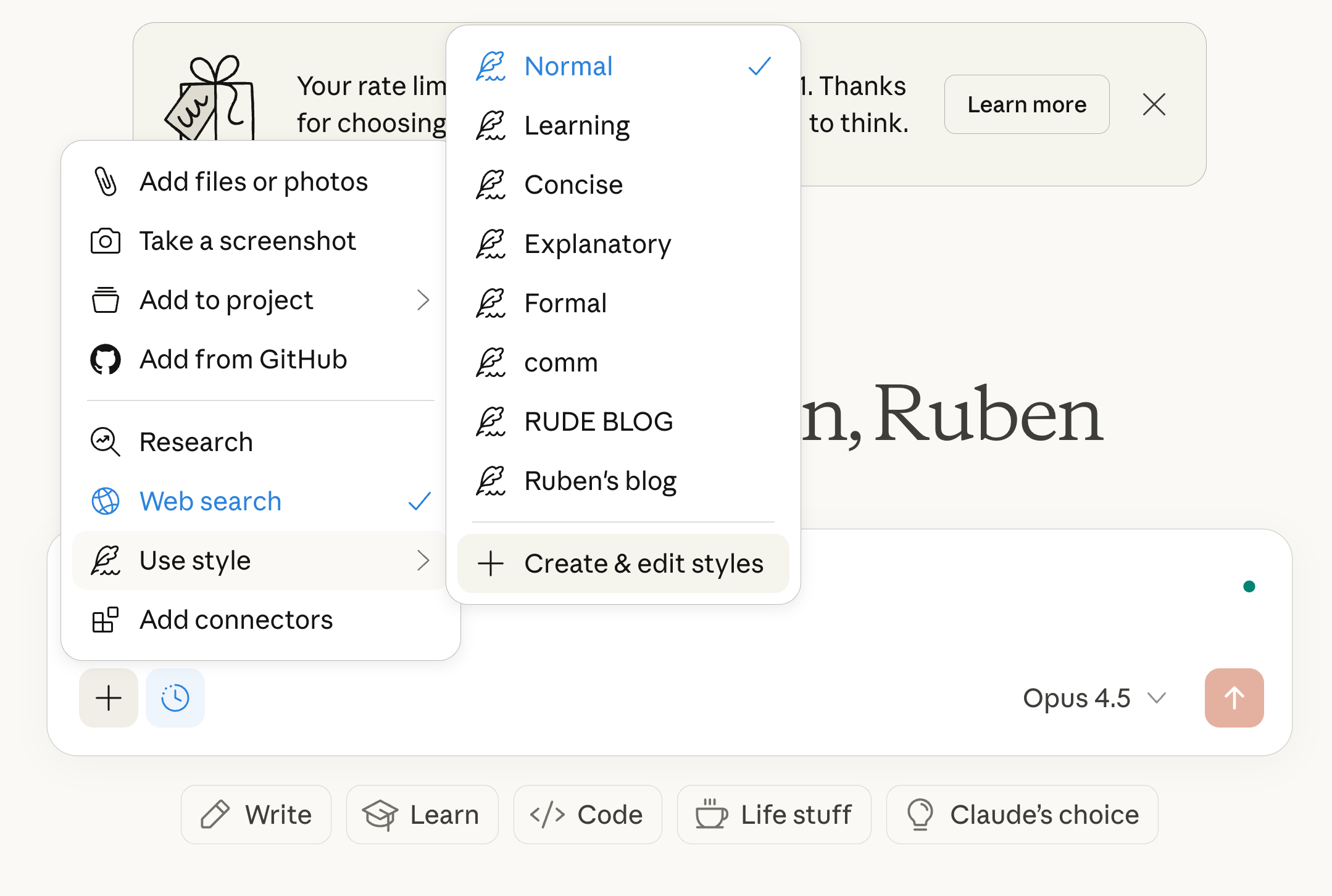
Create & edit styles. Follow the instructions.
Select your new style before using Claude now.
Make sure to (always) use Claude Opus 4.5. It’s the best.
You struggle with this part? Leave me a comment and I will help you set it up.
4. My 2026 vision board to master AI.
This is the (super viral) Matrix from Shohei Ohtani.
One of my major inspiration for 2026:
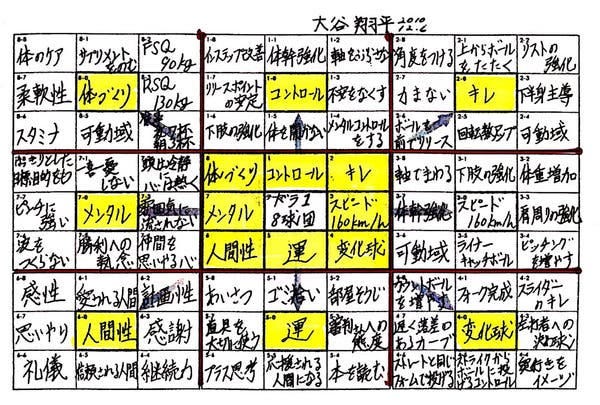
A 9x9 grid the best baseball player created as a high schooler (~2010-2012) using a Japanese goal-setting method.
Core idea: Center square holds his big goal: “Draft #1 by 8 teams” (meaning first-round selection by 8 NPB pro teams in Japan, giving him leverage to go to MLB early).
Around it: 8 essential qualities he needed to develop (Physical strength, Mental toughness, Pitch control, Personality/character, Luck, 160 km/h (99 mph) fastball speed, Precision, Curve balls/variety).
Each quality breaks down into 8 specific, actionable habits (64 total tasks) — like building “Luck” through greetings, picking up trash, cleaning his room, and positive thinking; or fastball speed via core/wrist training, weight gain, and supplements.
Ohtani tracked progress rigorously (many items checked off) and credits this systematic approach for his insane achievements: becoming a two-way superstar, multiple MVPs, $700M contract, 50-50 club, World Series win, etc.
He planned success years in advance.
Here’s my own version of this 9x9 vision board to master AI in 2026: