
Fable 5.
Don't use Claude Fable-5.

Do not use Fable 5 if you don’t know how.
Or it will cost you an arm and a leg.
Smarter AI = Expensive AI.
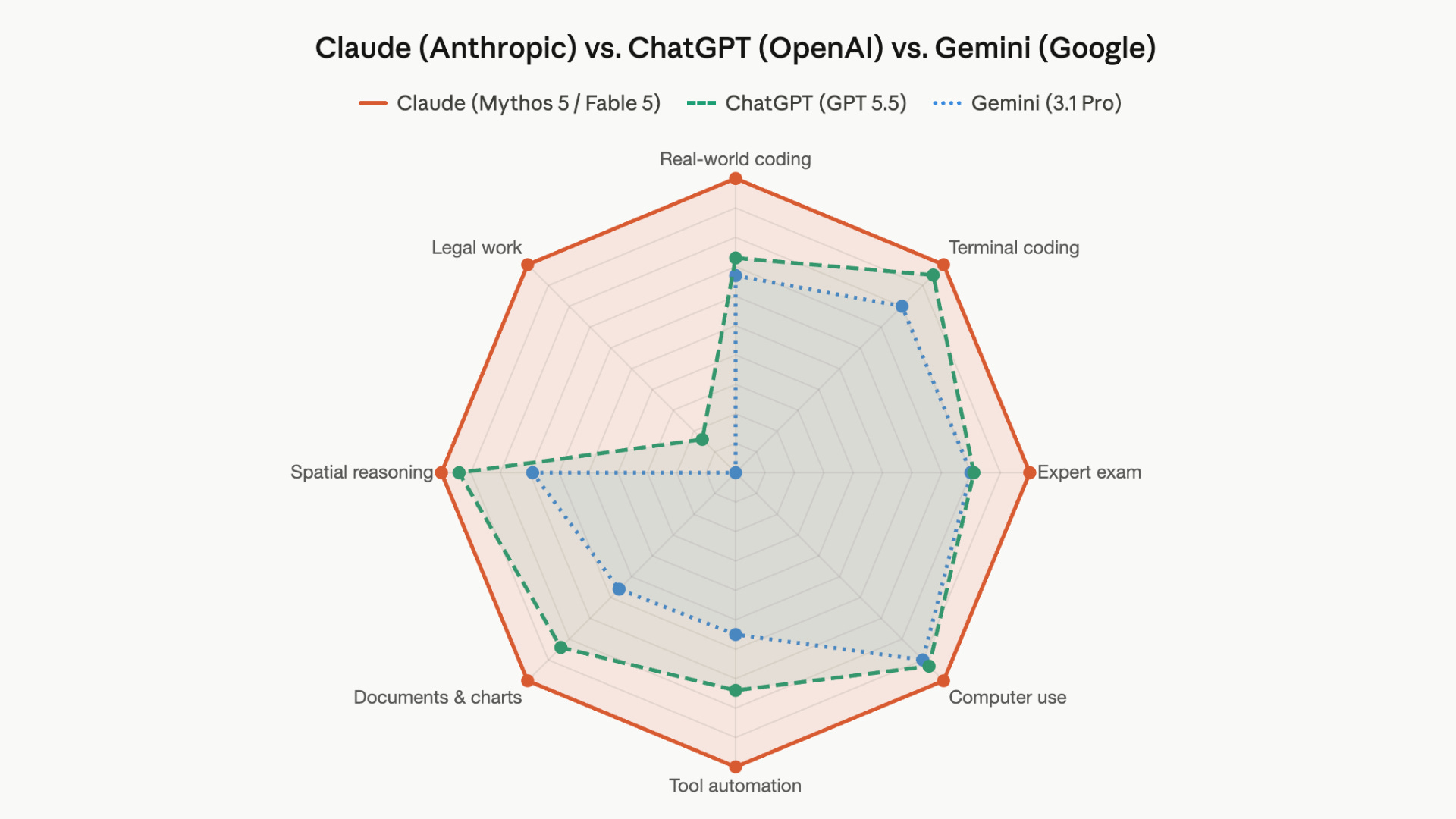
And the new Claude Fable-5 is by far the smartest AI model on Earth.
I mean this smart:
OK. So what can you do with this ‘Claude’?
Pretty much anything:
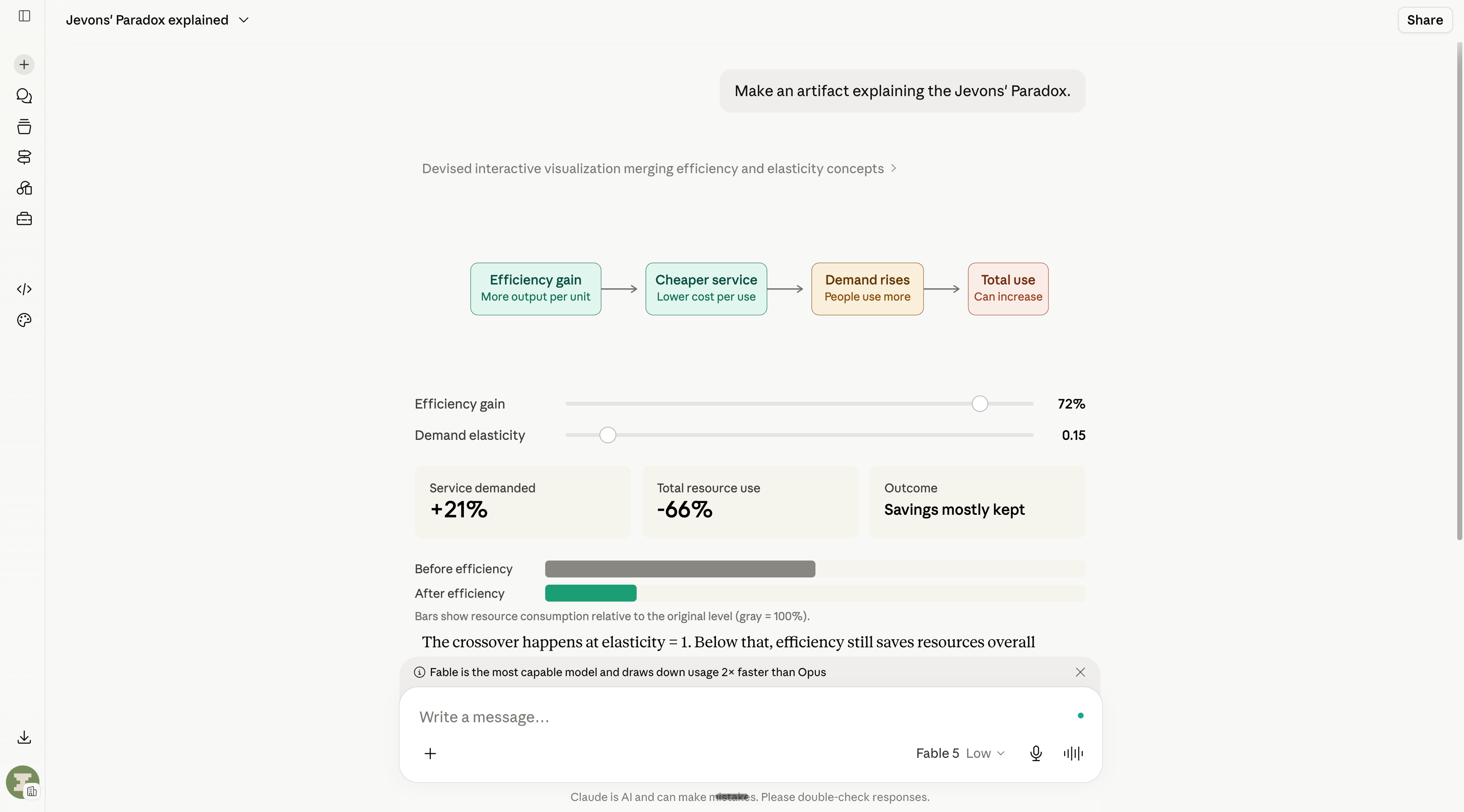
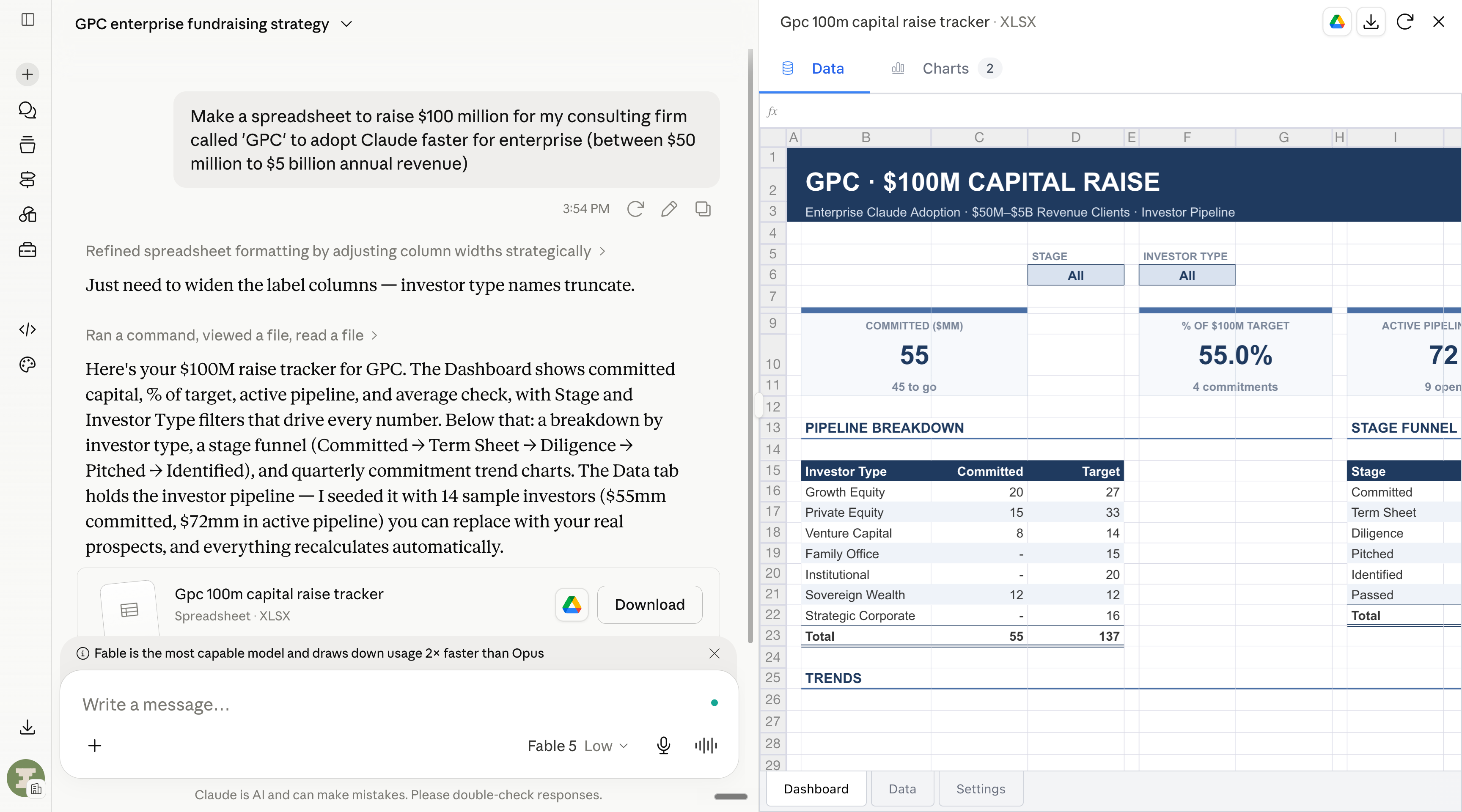
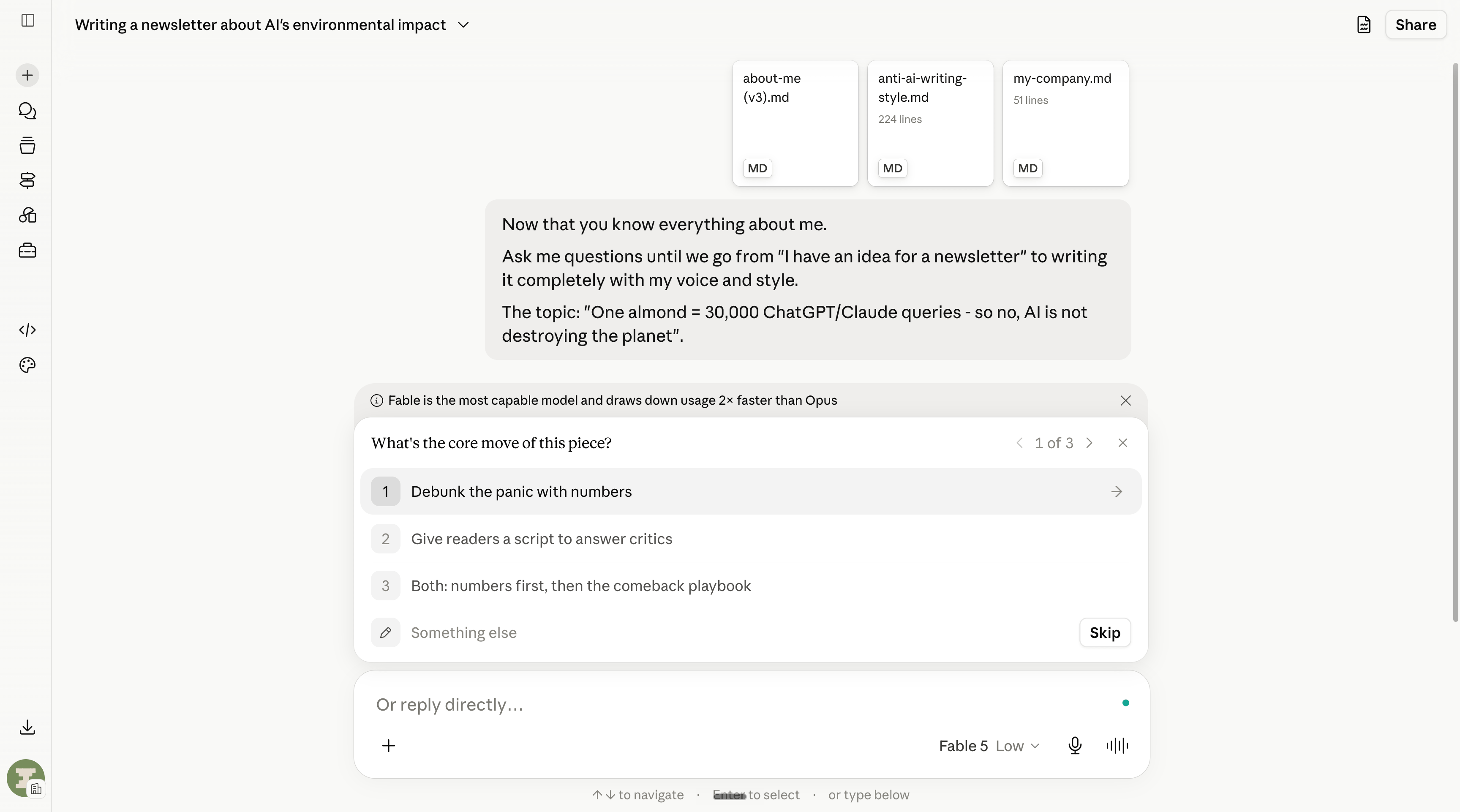
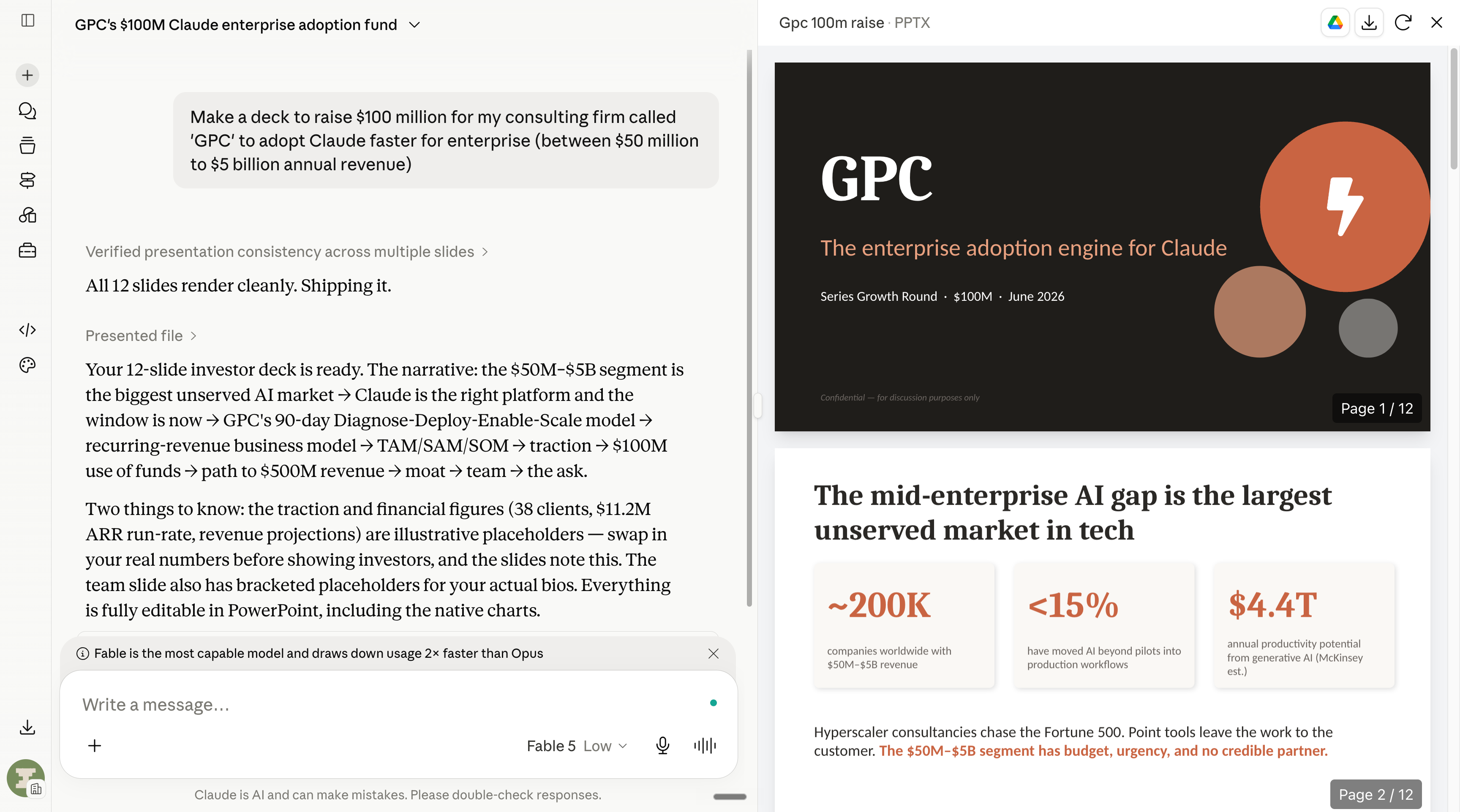
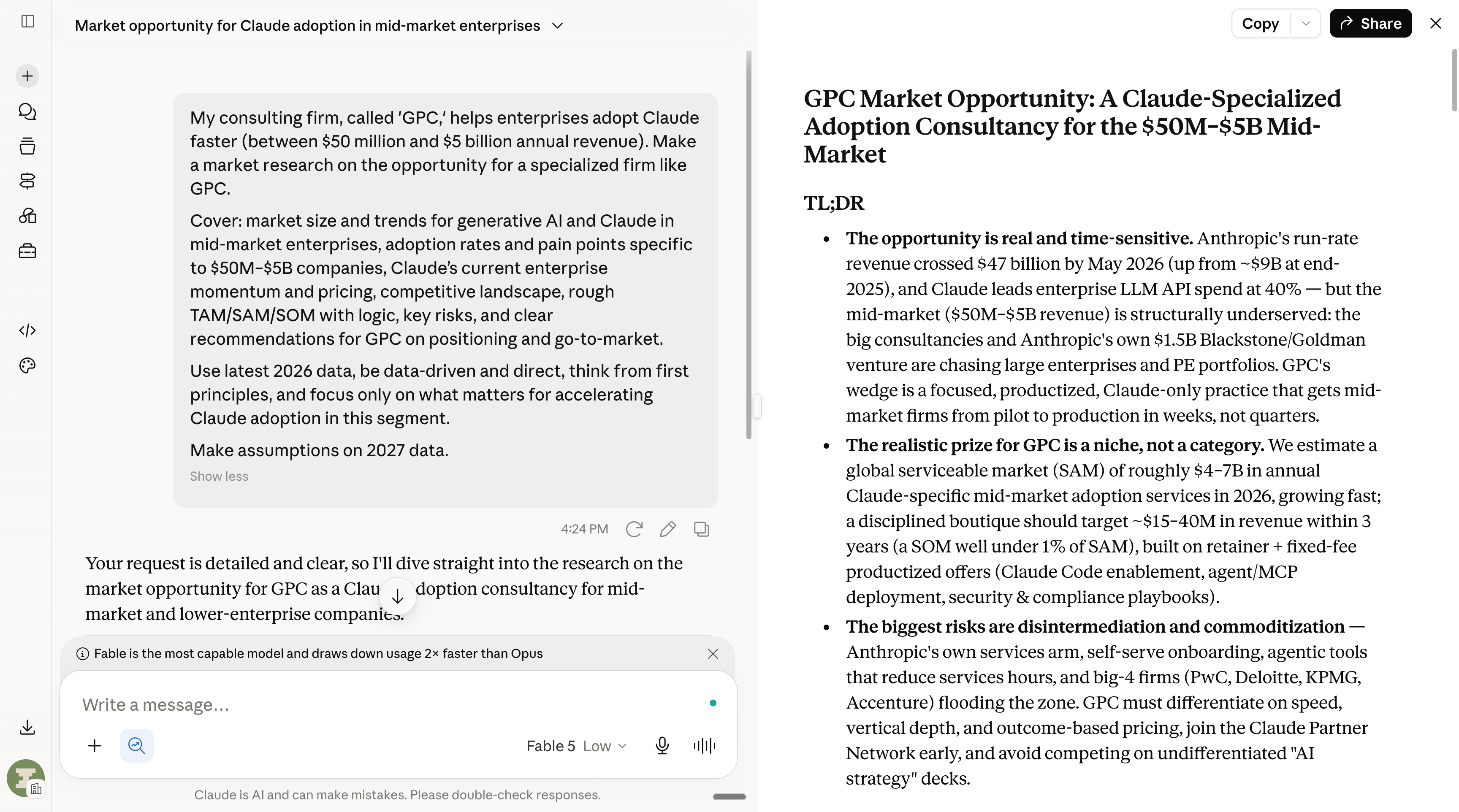
“OK, but this is not new. The old Claude can also do it.”
You’re right.
But you need to understand the difference between the many Claude.
Claude comes in different flavors of intelligence:
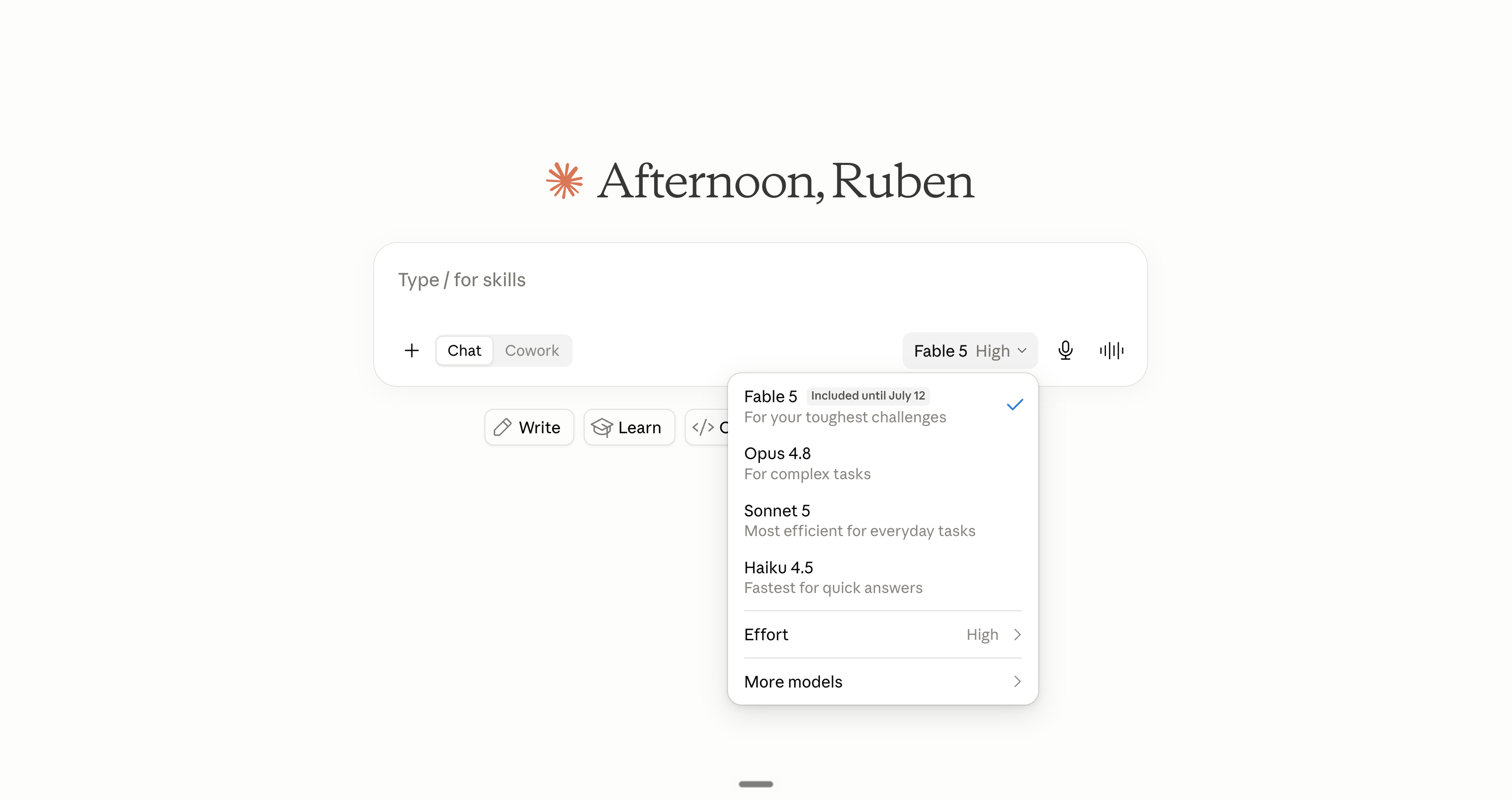
Haiku, the fastest but dumbest model.
Sonnet, the middle one. Good fast/smart ratio.
Opus, the big one. Very smart, used to be the smartest.
Mythos, the new smartest model. But also the most expensive.
Then each flavor is associated with a number, kinda like iPhone 6 vs iPhone 17.
But somehow, just to confuse you a bit, they launch a “Mythos-level” of Claude with a name associated with it instead of just a number.
And it’s called “Fable-5”.
The only thing you need to remember is that Fable-5 is the smartest AI around. It’s actually so powerful; you must experience it sooner rather than later.
Reminder #1: I’m not paid by Anthropic. I don’t care if you use it or not, I actually love ChatGPT too :) and I’m sure they will soon catch up, if not be better. I don’t pick sides.
Reminder #2: You have until July 12th to experience Fable for “free” (if you have a paid Claude account). After the 12th, you have to pay per use. More about it later.
“So, OK, what’s a “smarter” AI in practice?”
Think of Claude as an expensive senior lawyer and their intern.
Fable-5 is the expensive senior lawyer with 20 years of experience. He costs $1,000 per hour.
Sonnet-5 is the cheap intern, and only costs $100/hour. Worth noticing, he can still read what Fable-5 tells him to do.
You don’t want to pay the expensive lawyer for every quick contract review. You want to pay the expensive senior lawyer to define the overall international contract strategy. Then the drafting assistant (Sonnet-5) follows that strategy consistently.
Now imagine you lead a team of 100 people.
They all have Fable-5 and zero training. So they spend dozens of hours billing the senior lawyer for the most mundane tasks, and no one tracks it.
Well, you will soon wake up with a $,000,000 bill from Anthropic.
Not fun.
You - and your team - must know:
When to use Fable-5, and when NOT to use it.
How to best use Fable-5 to get the most of it.
I won’t waste your time explaining why this model is widely better than the previous one. You trust me.
I will also assume you never tried the new Claude 5.
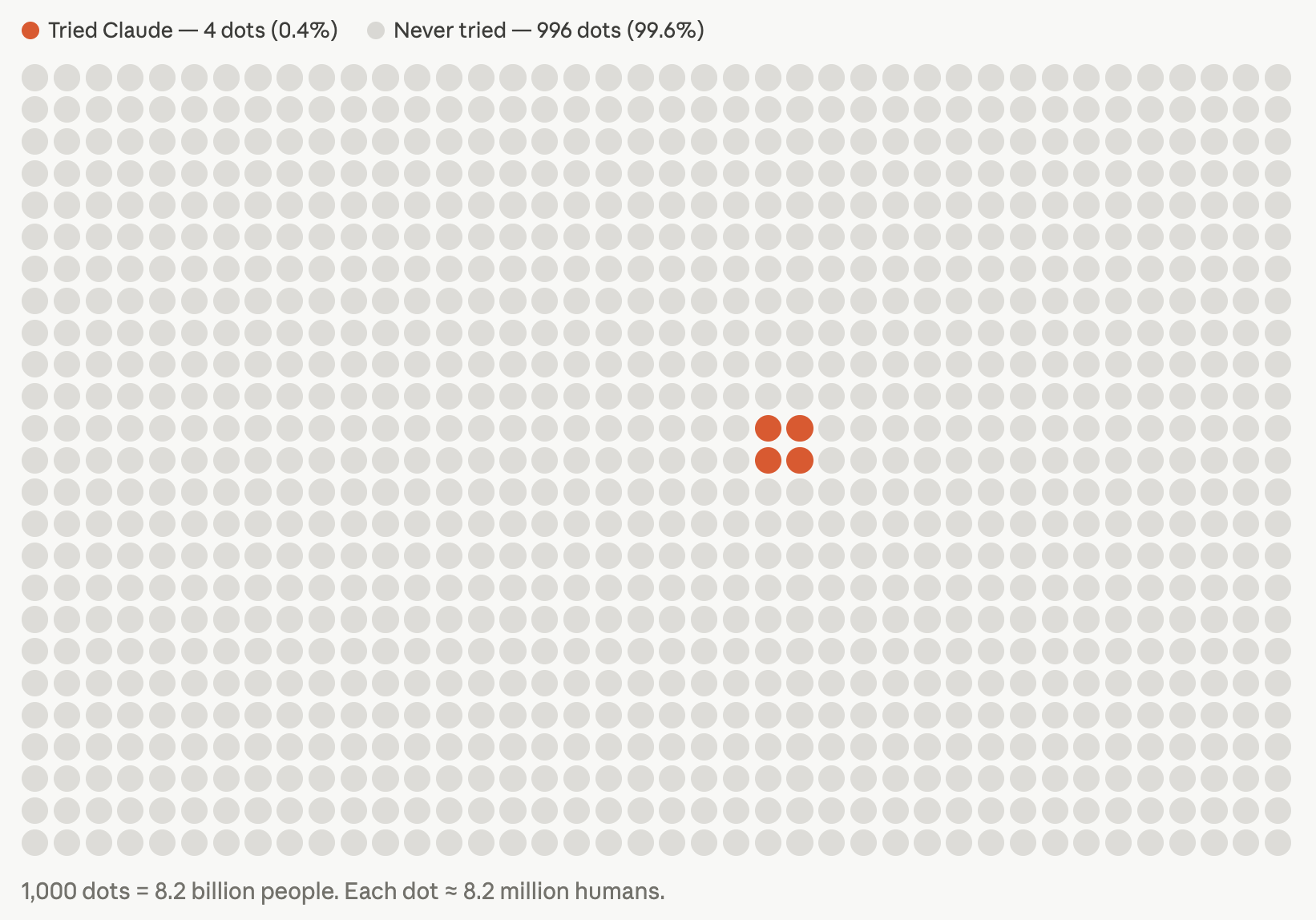
And by the end of this (very long) guide, you will know more than the entire world. Because yes, 99.64% of the world never tried Claude.
Sounds like a good deal? Good.
But two things before we start:
Save this guide. Block 10 min this week & try Claude-5 for the first time.
Send it to anyone who has never tried Claude (& still thinks it’s a French name).
PS: Think of one person still typing everything into Google like it’s 2021. Send them this. You’ll be the friend who finally got them using AI right. People remember.
1. Don’t prompt Fable 5.
Fable-5 now costs extra, starting July 12th.
Here’s the timeline:
June 9: Fable-5 launches, included in paid plans.
June 12: banned by US government. Gone worldwide, overnight.
July 1: it’s back, included again (up to 50% of your weekly limits).
July 12: it leaves subscriptions. From now on, Fable runs on usage credits. You pay per use.
The price: $10 per million input tokens, $50 per million output tokens.
In normal-people terms…
$0.15 for a one short question, and one answer (of 1,000 words).
$6 for 19 turns of long questions & answers (of 1,000 words).
$14 when you hit 40 turns. Turns are the most expensive habit.
Here’s how to understand it:
You have turns (your prompt + Claude’s answer = 2 turns).
Each prompt (you) or answer (Claude) is using tokens for words.
The more tokens, the more expensive it is.
So the longer the prompts/answers or the more turns = the more $$$.
And also, Claude reads the entire thread at every turn. So it scales fast.
Here’s the math:
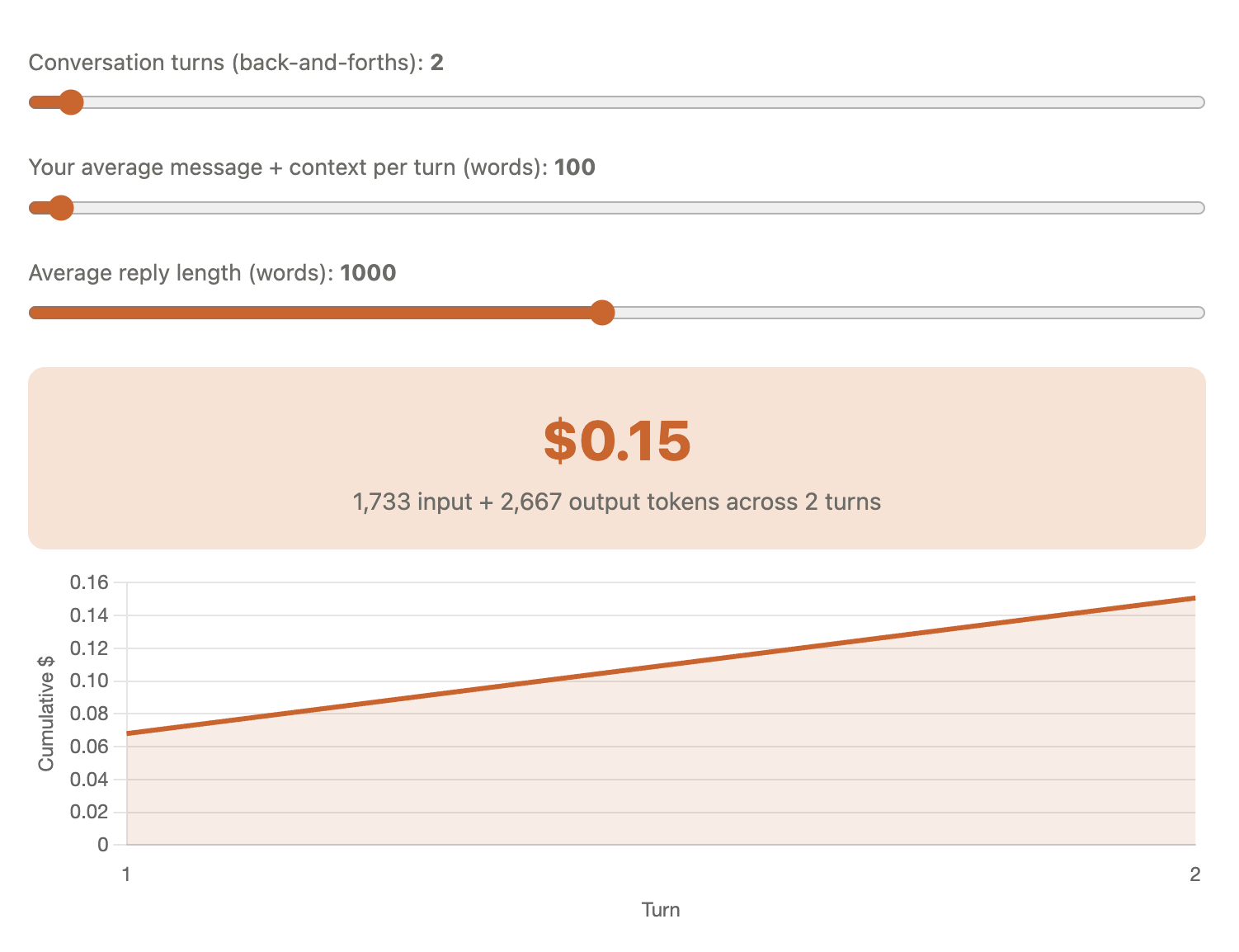
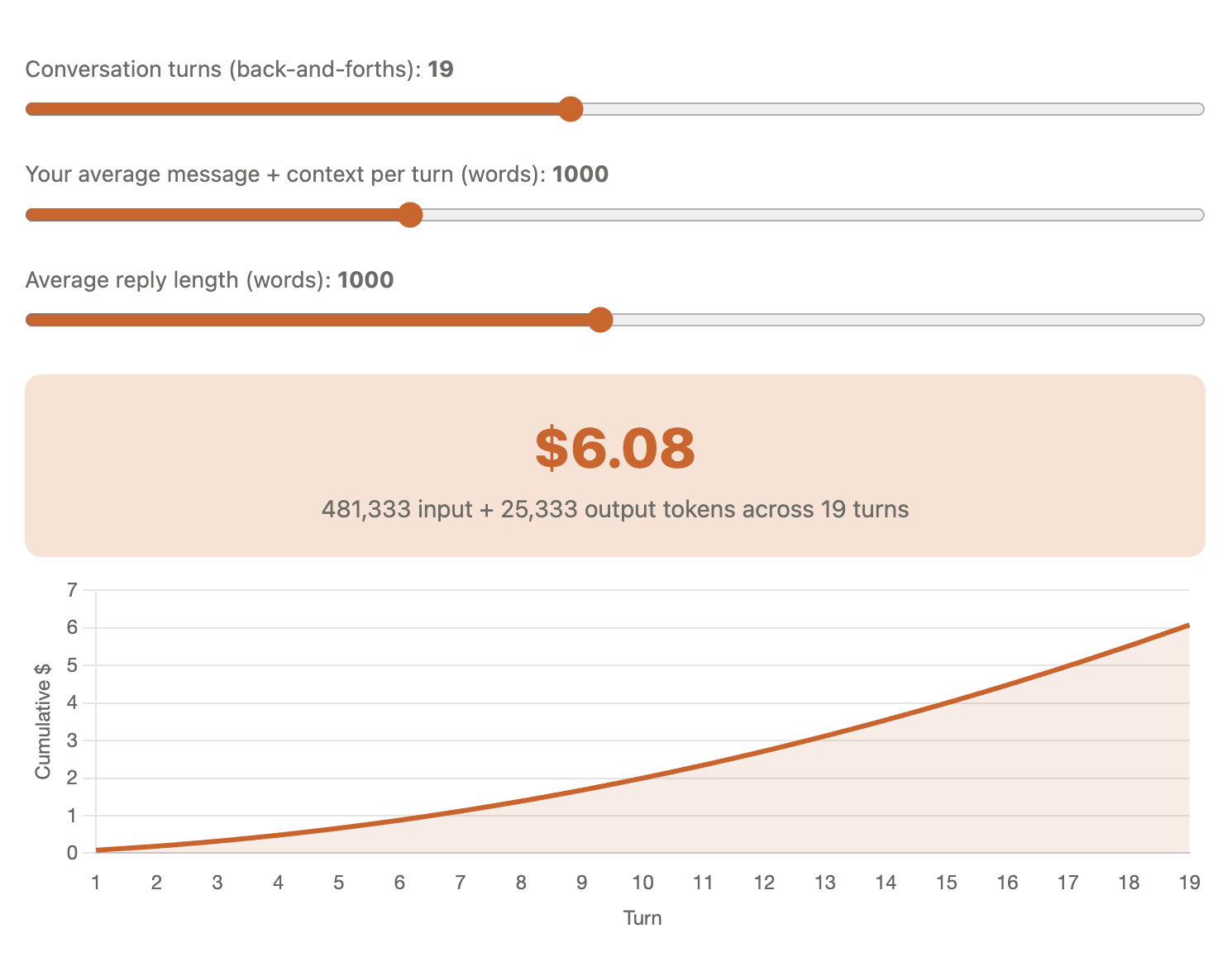
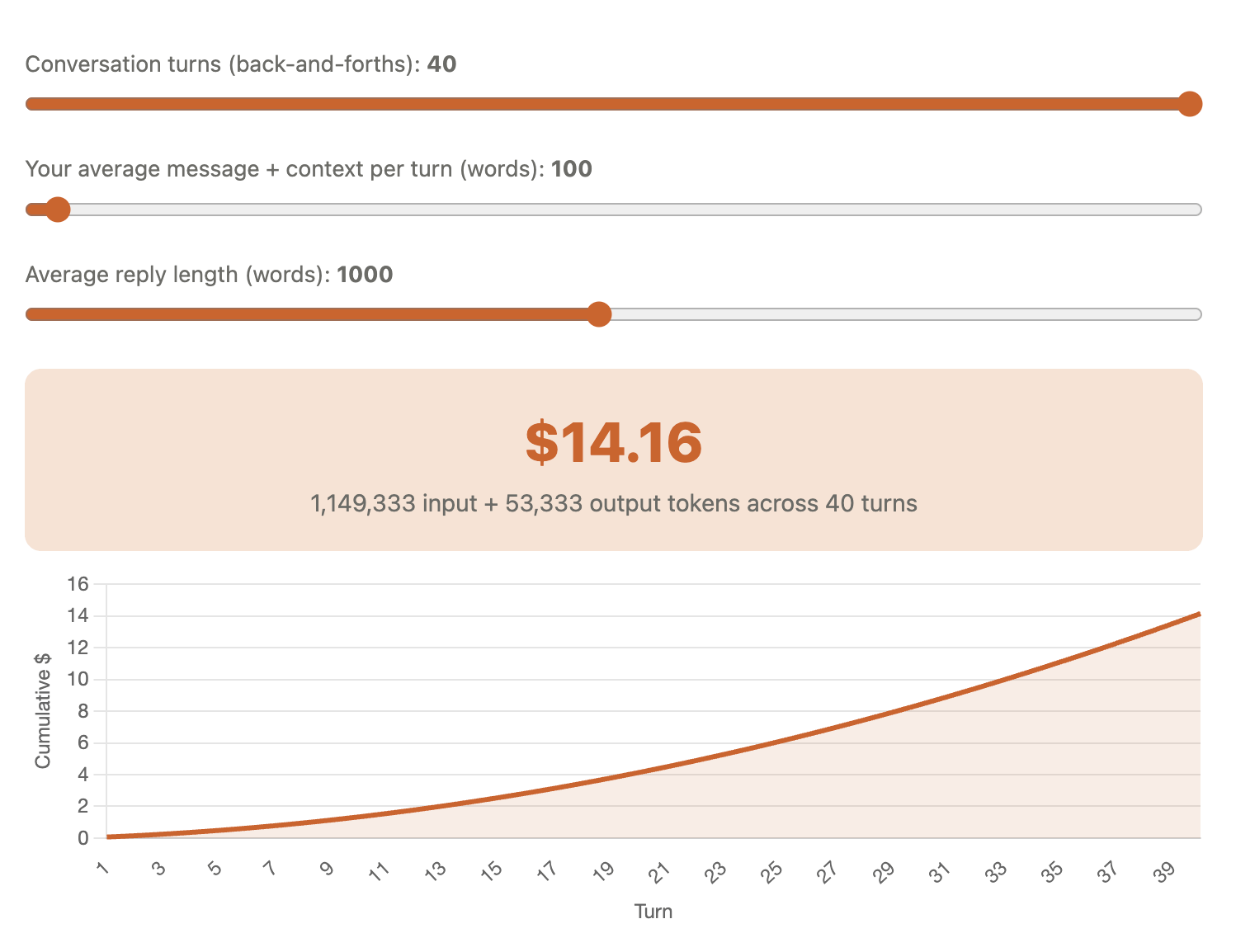
The longer your chat is, the more expensive it becomes.
So what can you do?
Ask Fable super hard goals, for one or two turns max.
Switch to Opus 4.8 (High) for the rest. Because it’s not pay-per-use.
It’s super simple. Here’s my explanation with screenshots:
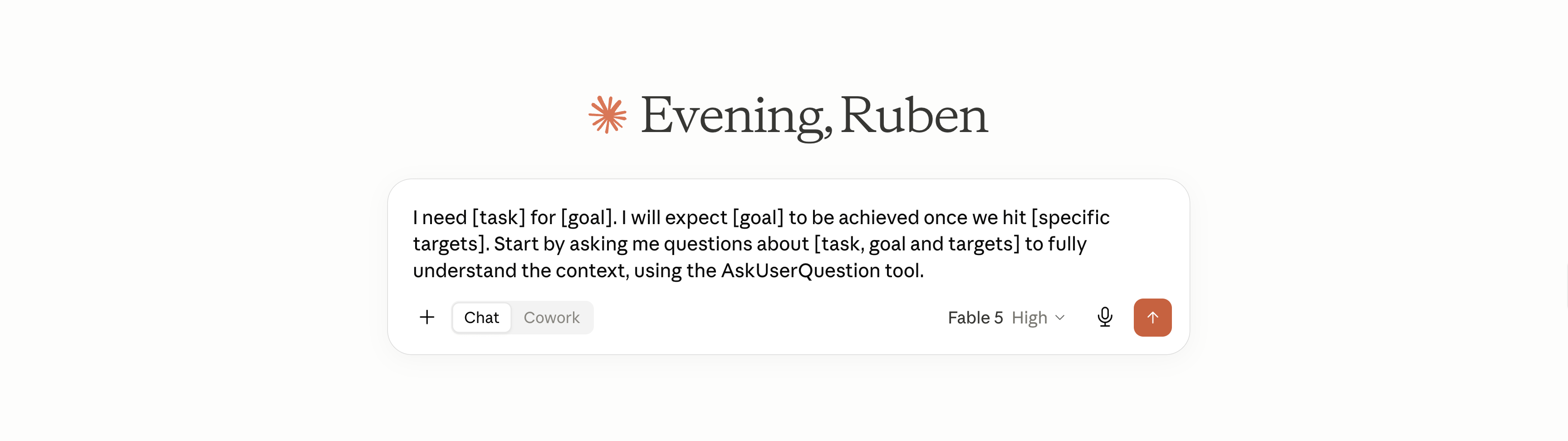
I need [task] for [goal]. I will expect [goal] to be achieved once we hit [specific targets]. Start by asking me questions about [task, goal and targets] to fully understand the context, using the AskUserQuestion tool.
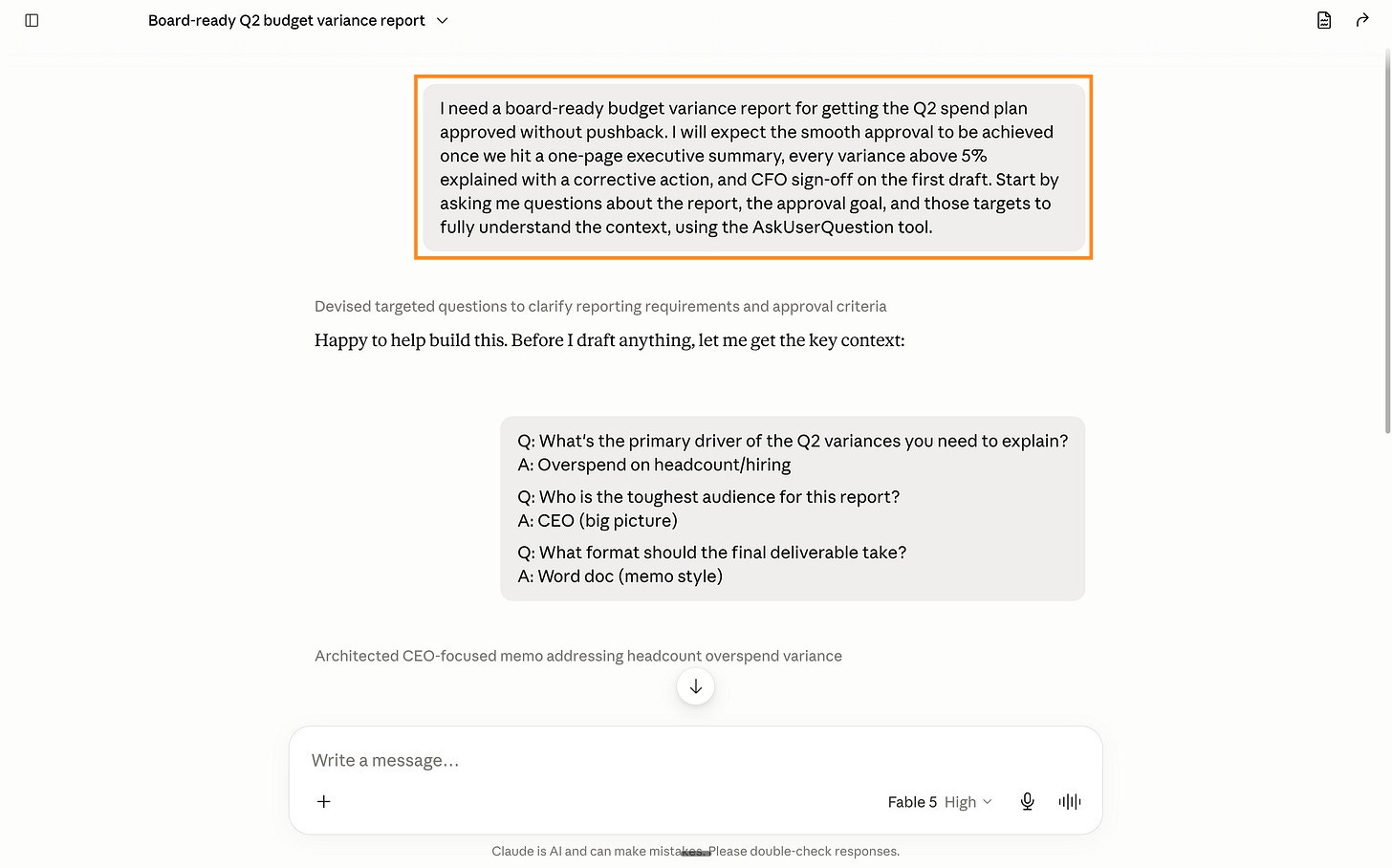
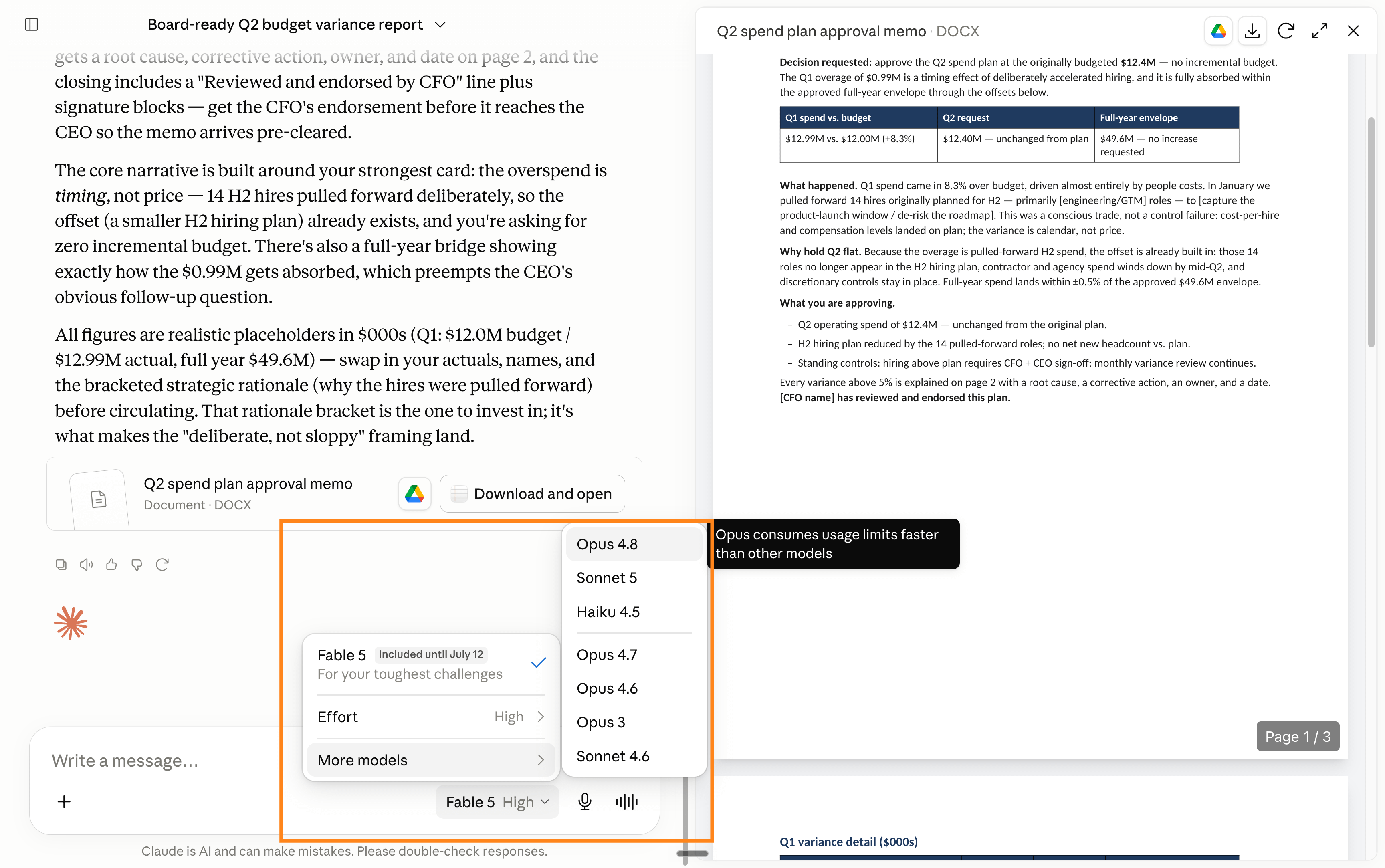
That’s the right way of using Claude Fable-5.
You use it, few turns, and then you switch the model to Opus.
What about Cowork? Somehow we can’t switch model during Cowork… Annoying, I know. If you don’t know what’s Cowork, I explain it later.
How do I know we must switch models?
Because I read their entire documentation:
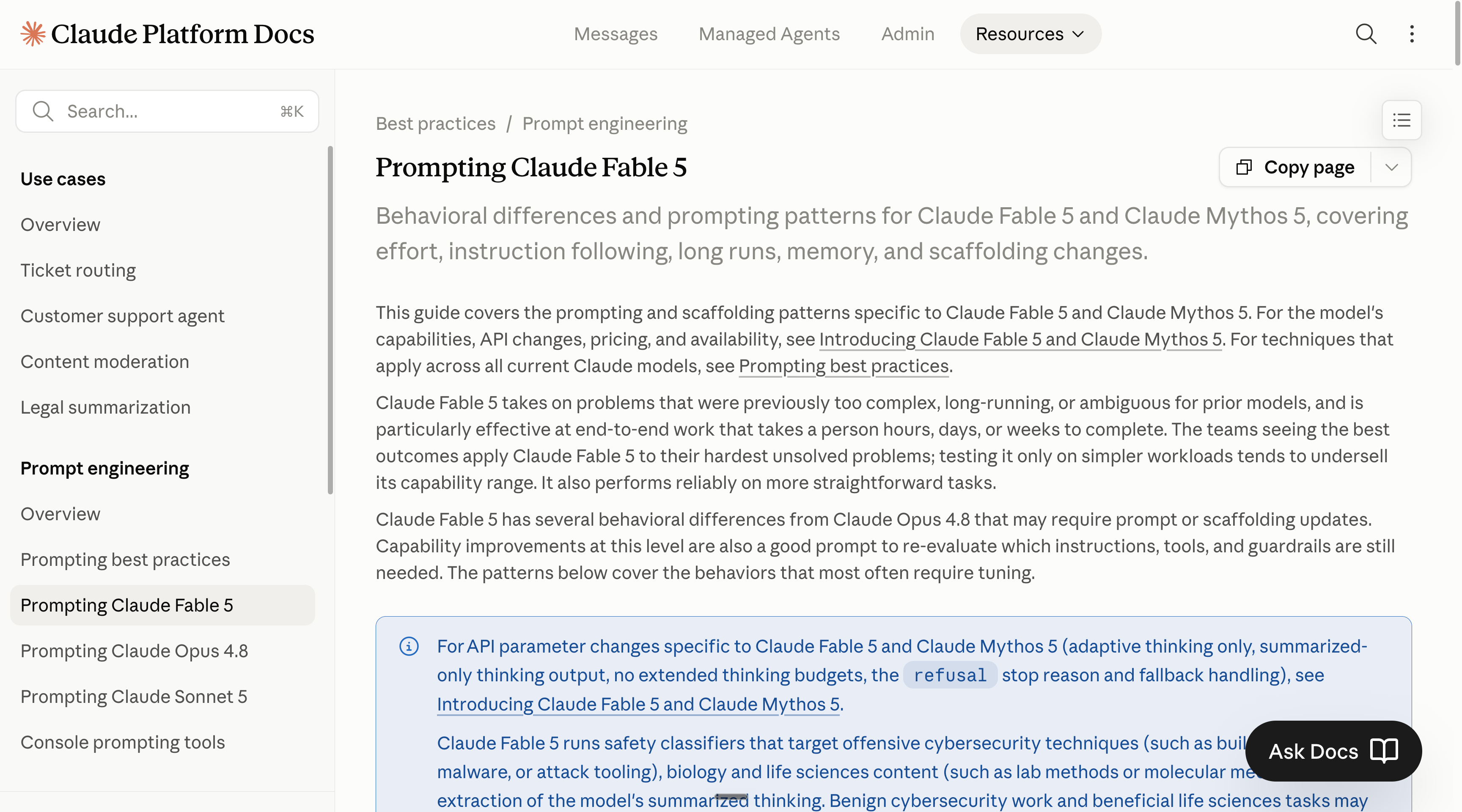
And I am also chronically online on Twitter. I have your back.
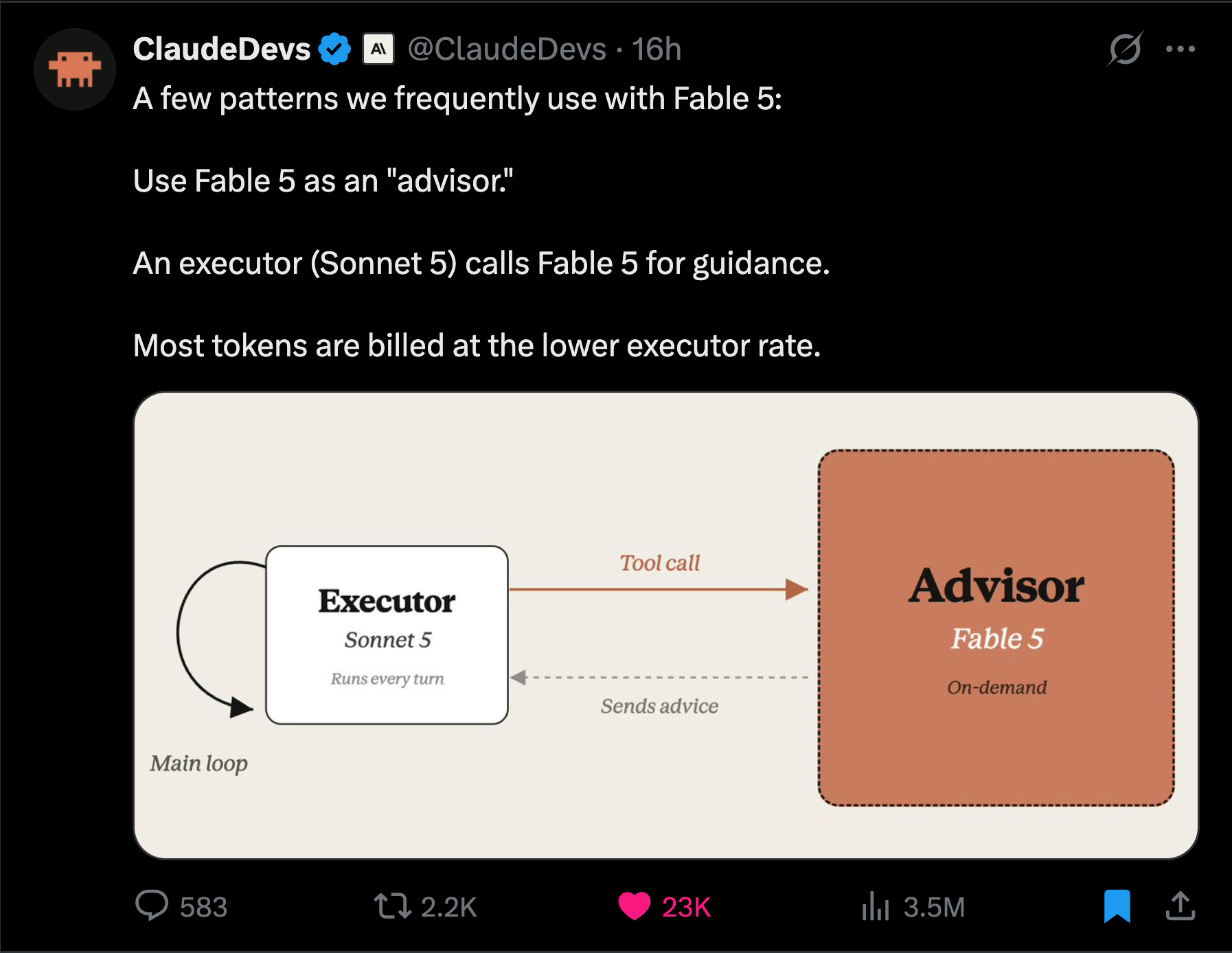
You still need to know two things before I can move on to more complex concepts.
What happens if you only use Fable-5?
After using Fable-5 once or twice, should you switch to Sonnet or Opus?
Let’s start with the first one.
#1. I did the test.
And I had to spend $14 (!!!), one-shot, on top of my $100 plan.
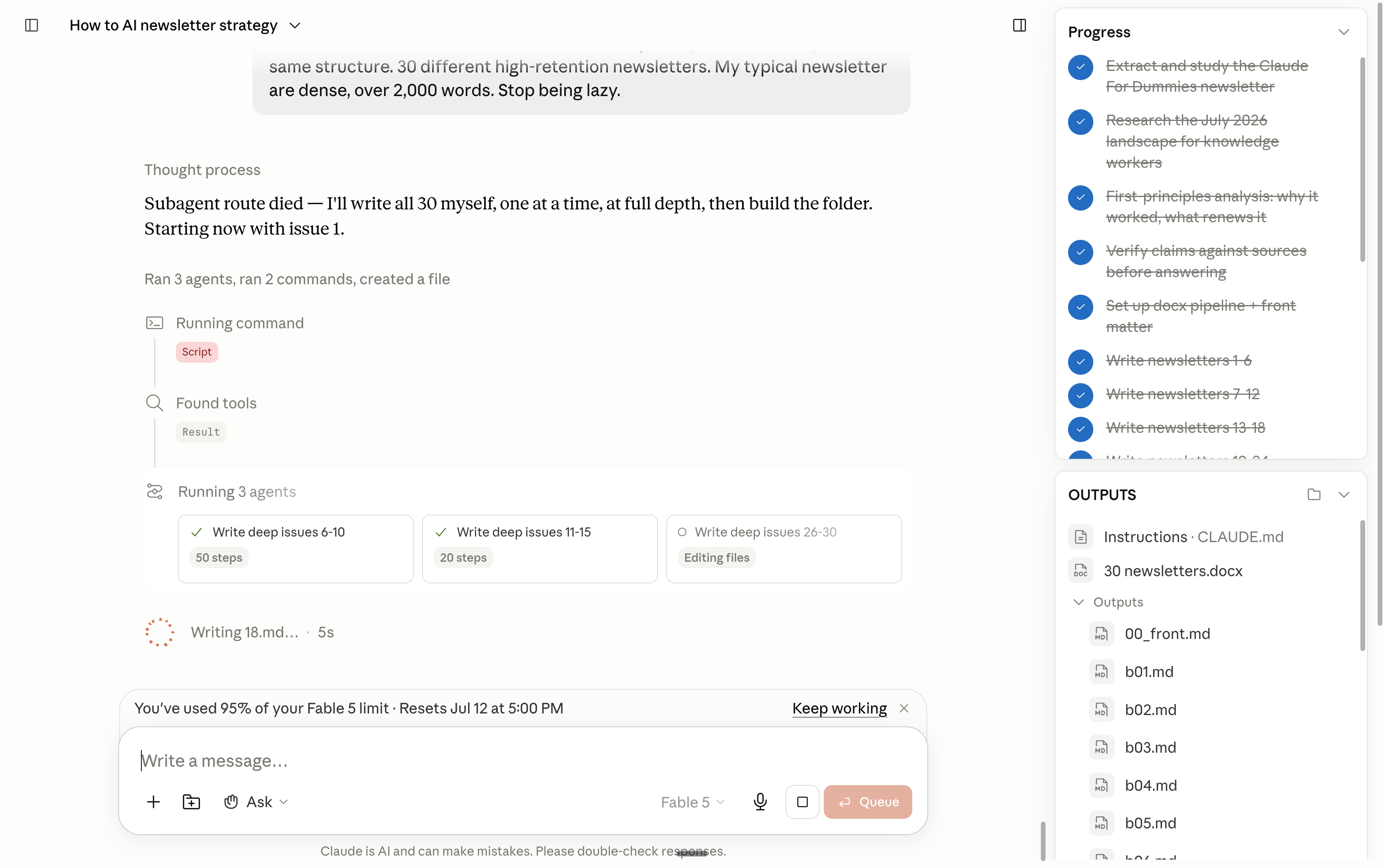
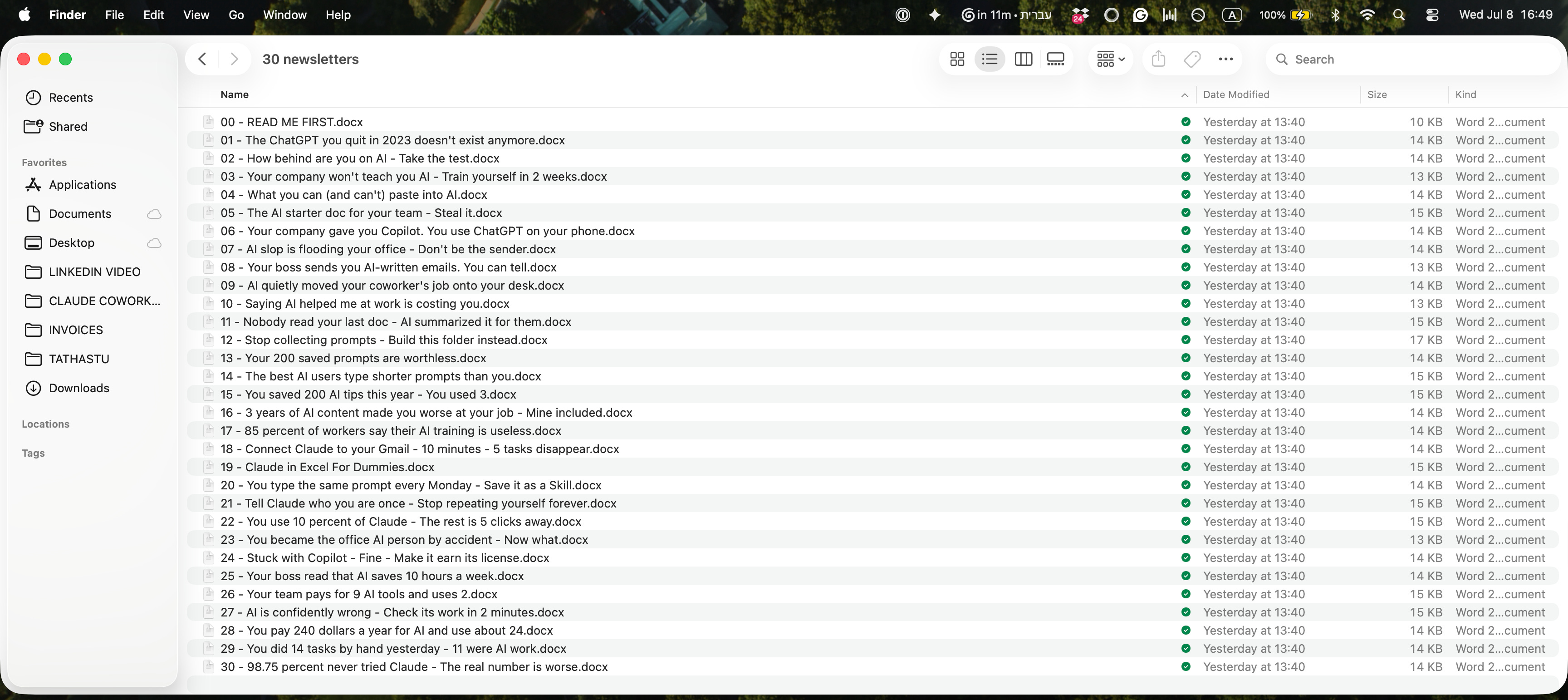
Now I do have to say, Fable-5 wrote 30 entire newsletters, right inside my computer:
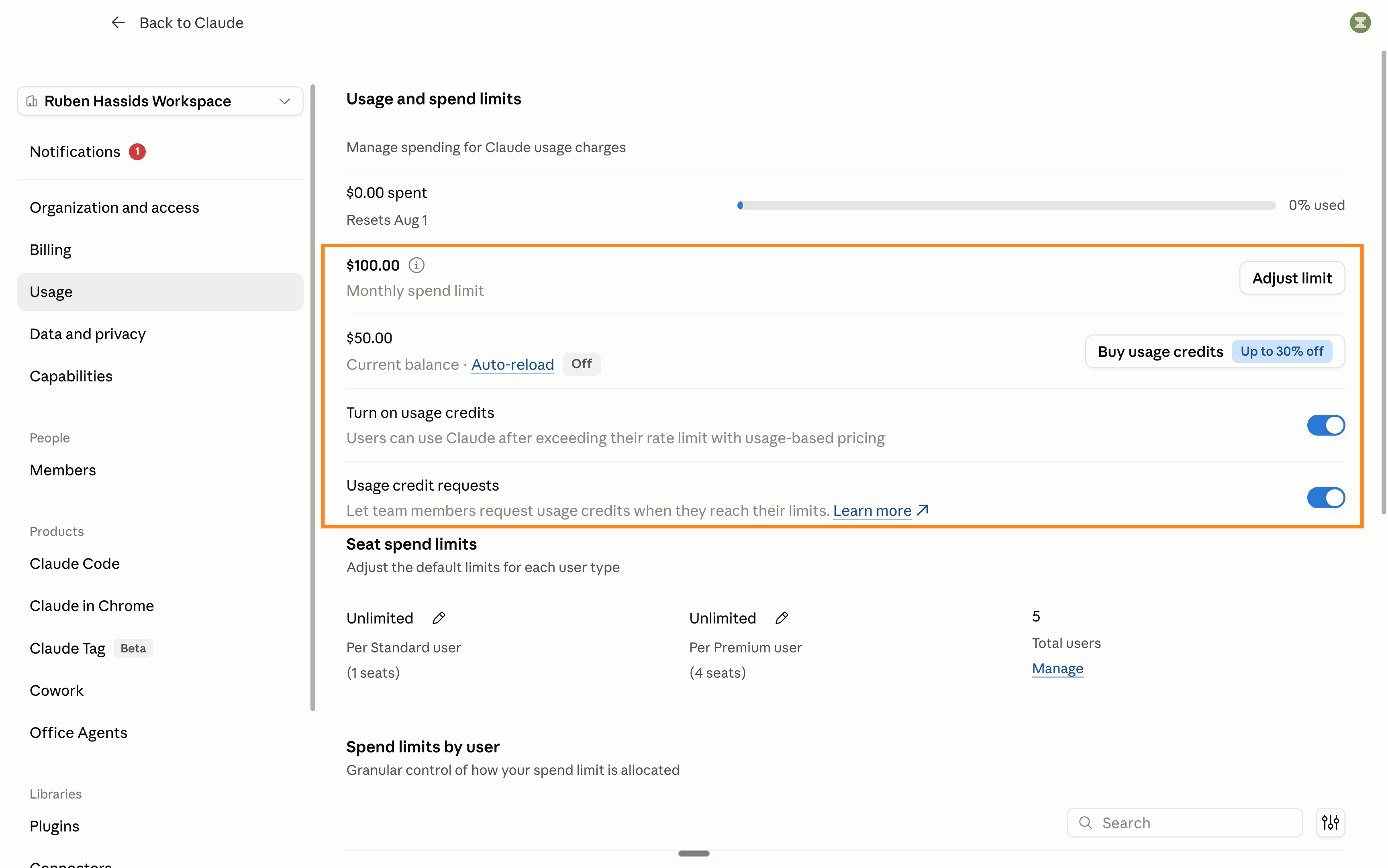
If you need to check your spending and limit your team’s credits, you need to go in your organization settings, in Usage:
This section is the most important one, right below:
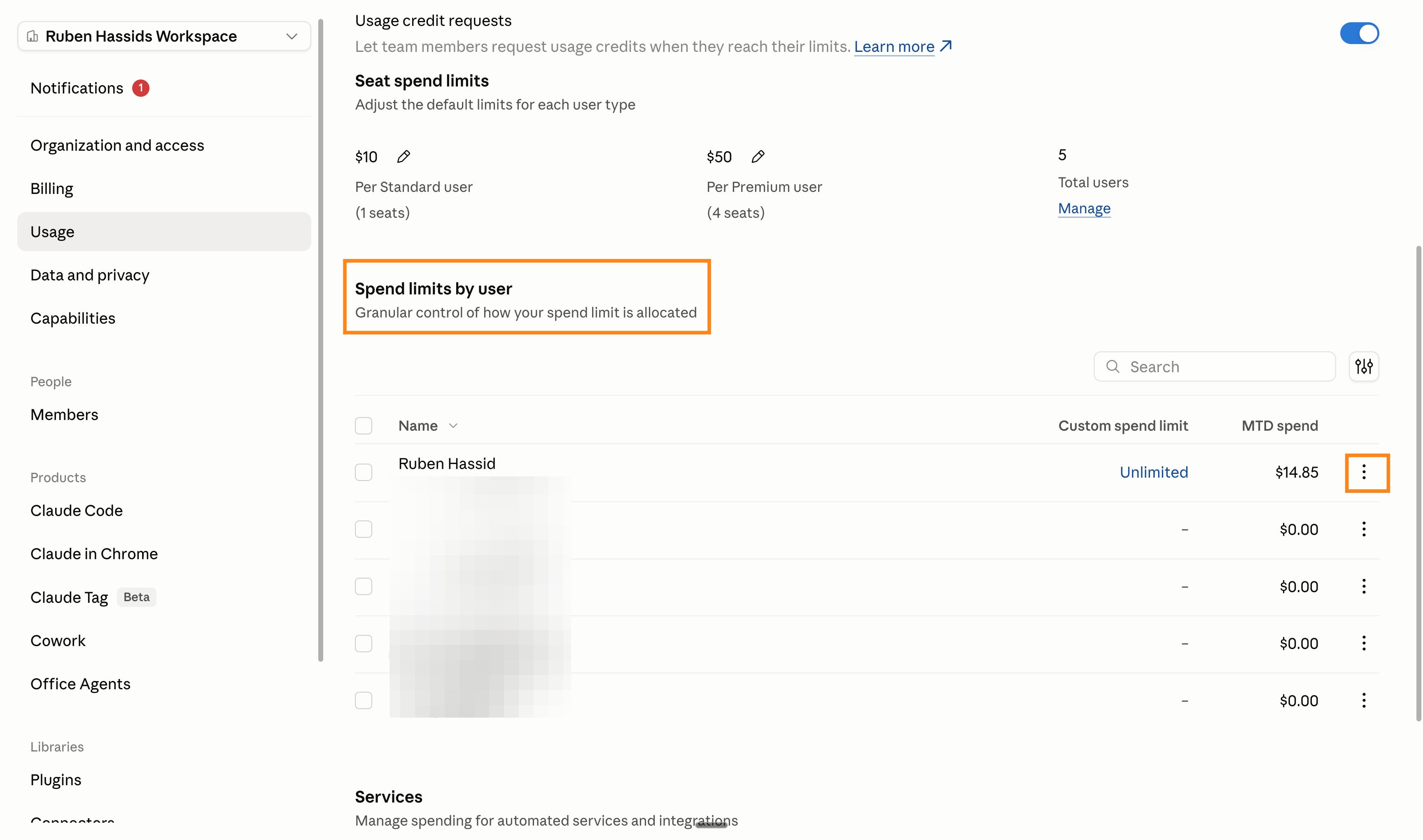
My team can help you. If your company did not set this up properly, you will wake up with an Anthropic bill that could sink you real fast.
We set up Claudes for enterprise, train you on it, and make sure you never need us again so you can do your job with it.
If you have a team/company of 30+ people, DM me here:
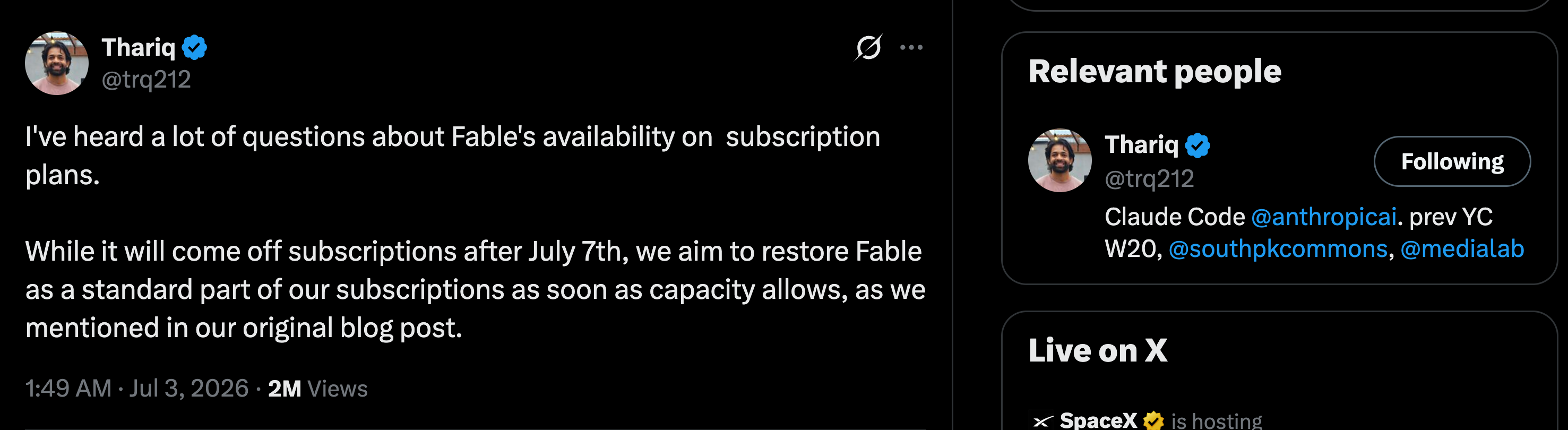
Anthropic did say Fable returns to subscriptions “as soon as capacity allows.”
So am I telling you to close this guide because AI is too expensive?
The opposite. Here’s how you play it:
1. Sonnet and Opus remains included in your subscription. It handles your daily work, and it’s better than anything you had 6 months ago. Everything in this guide works on Sonnet or Opus, after using Fable.
2. Aim Fable at expensive problems only. Paying per token to “rewrite this email” is shooting a bird with a bazooka (please leave birds alone, though).
I wrote a newsletter about saving tokens if you have another 10 minutes to spare. But long story short:
Create a new chat for a new task.
Don’t talk too much to Fable-5 in one long session.
Switch from Fable-5 to Sonnet/Opus during the session.
#2. Sonnet or Opus?
I have no idea.
I’m guessing from my own experience.
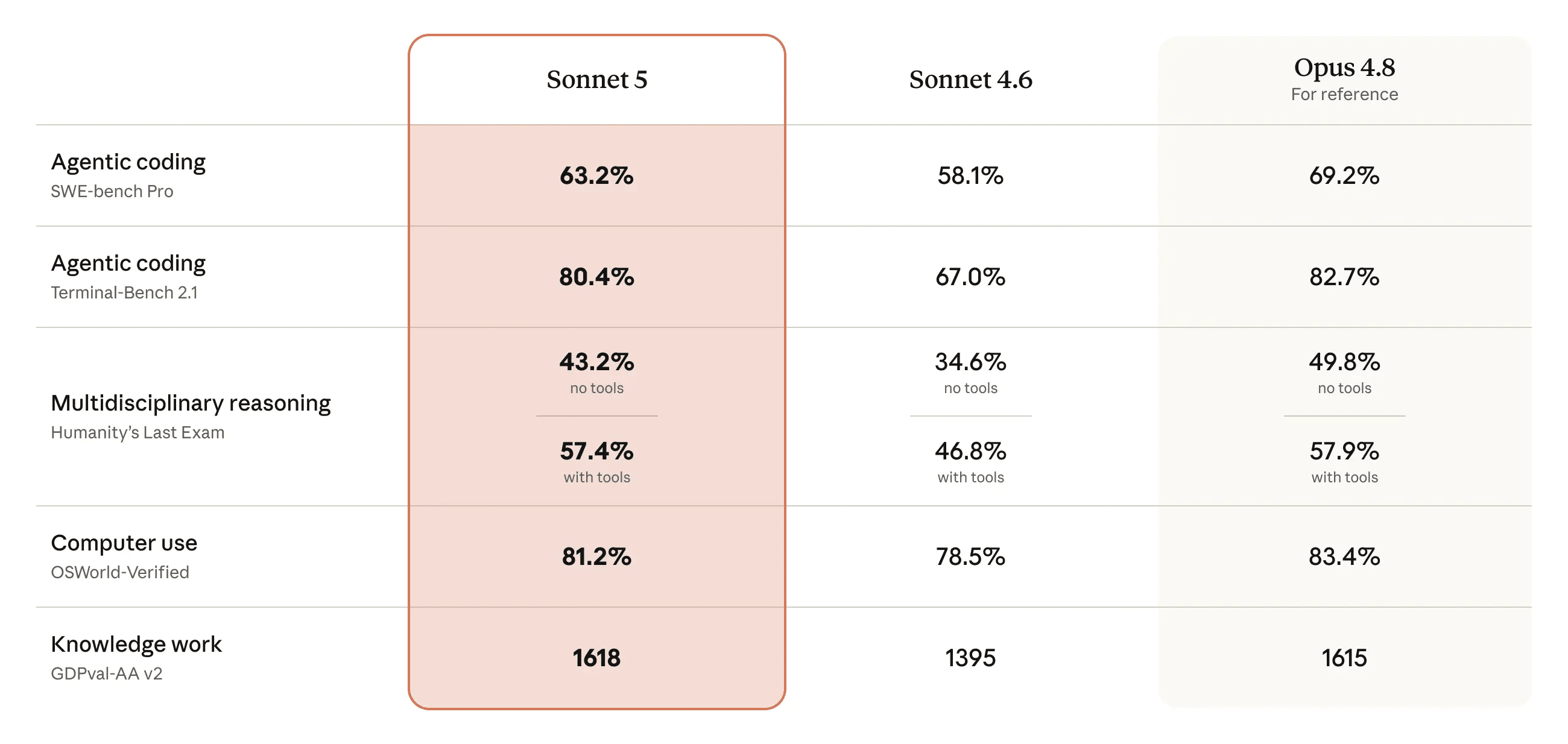
On the one hand: Anthropic wants you to use Sonnet 5. Like they said it eveeeerywheere. But it’s their latest model (besides Fable).
On the other hand: every benchmark shows Opus 4.8 as cheaper & better than Sonnet 5. Soooooo… I prefer cheaper and smarter, no?
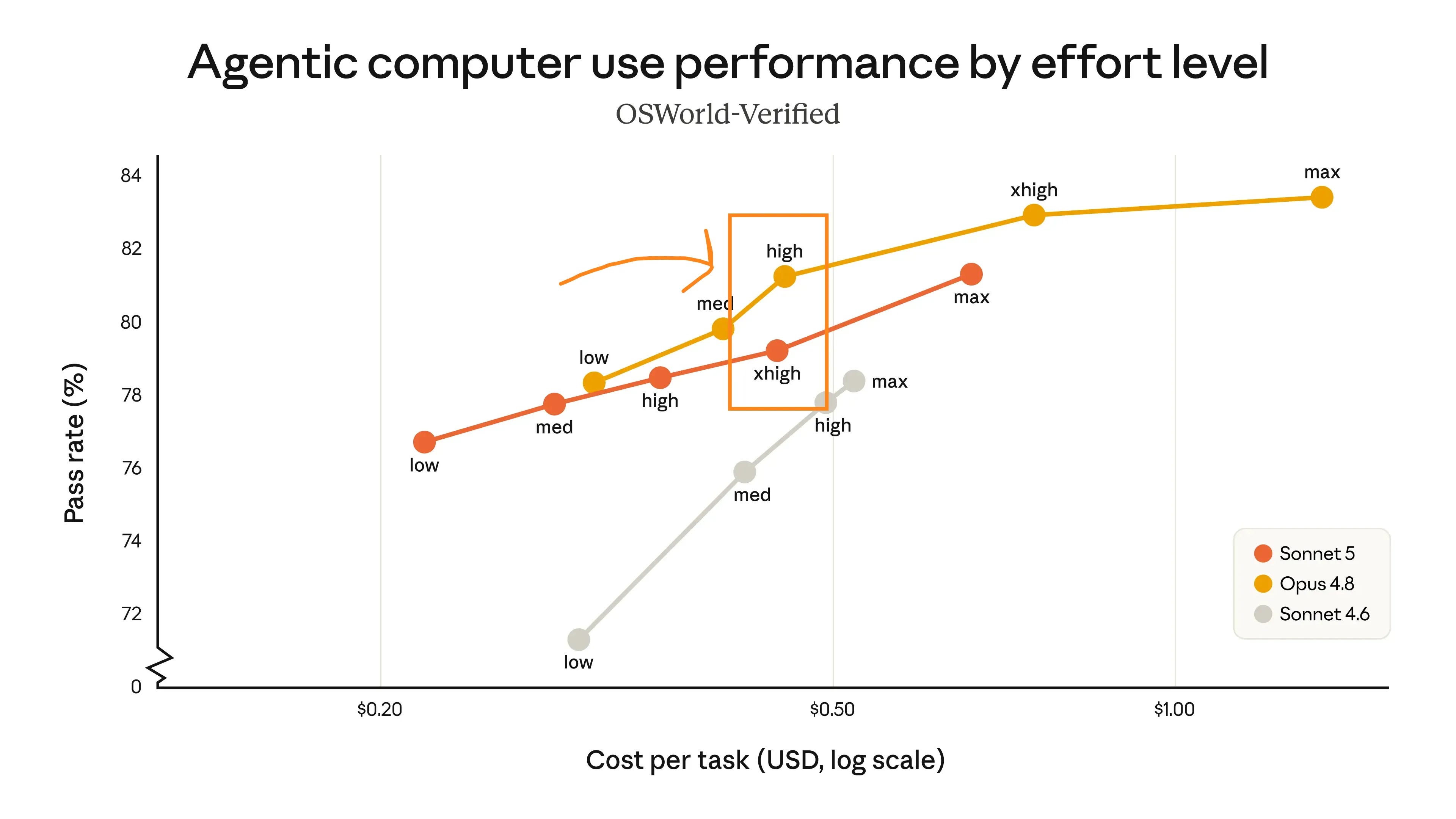
So far I’ve been using Fable-5 (High) + Opus 4.8 (High).
Stay subscriber to my newsletter, and by next month, I will share my Anthropic bill.
What should be our max per month? $200? $1,000?
Superintelligence is getting expensive…
2. Expensive superintelligence.
You need to pay for Claude (at least $20 per month; I personally pay $100) to access Fable-5. The free Claude won’t get you anywhere anyway.
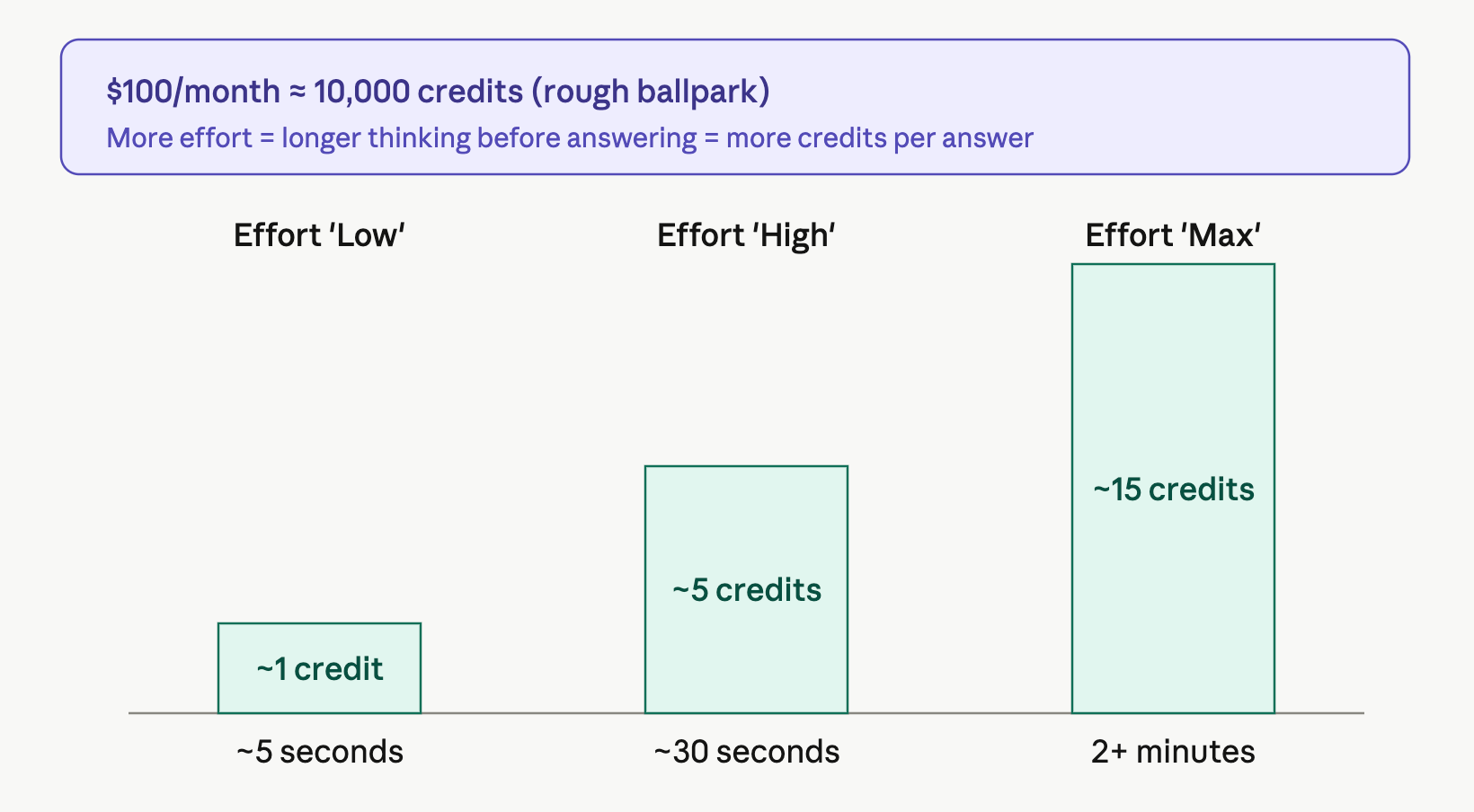
Then you can pick the model’s “Effort”:
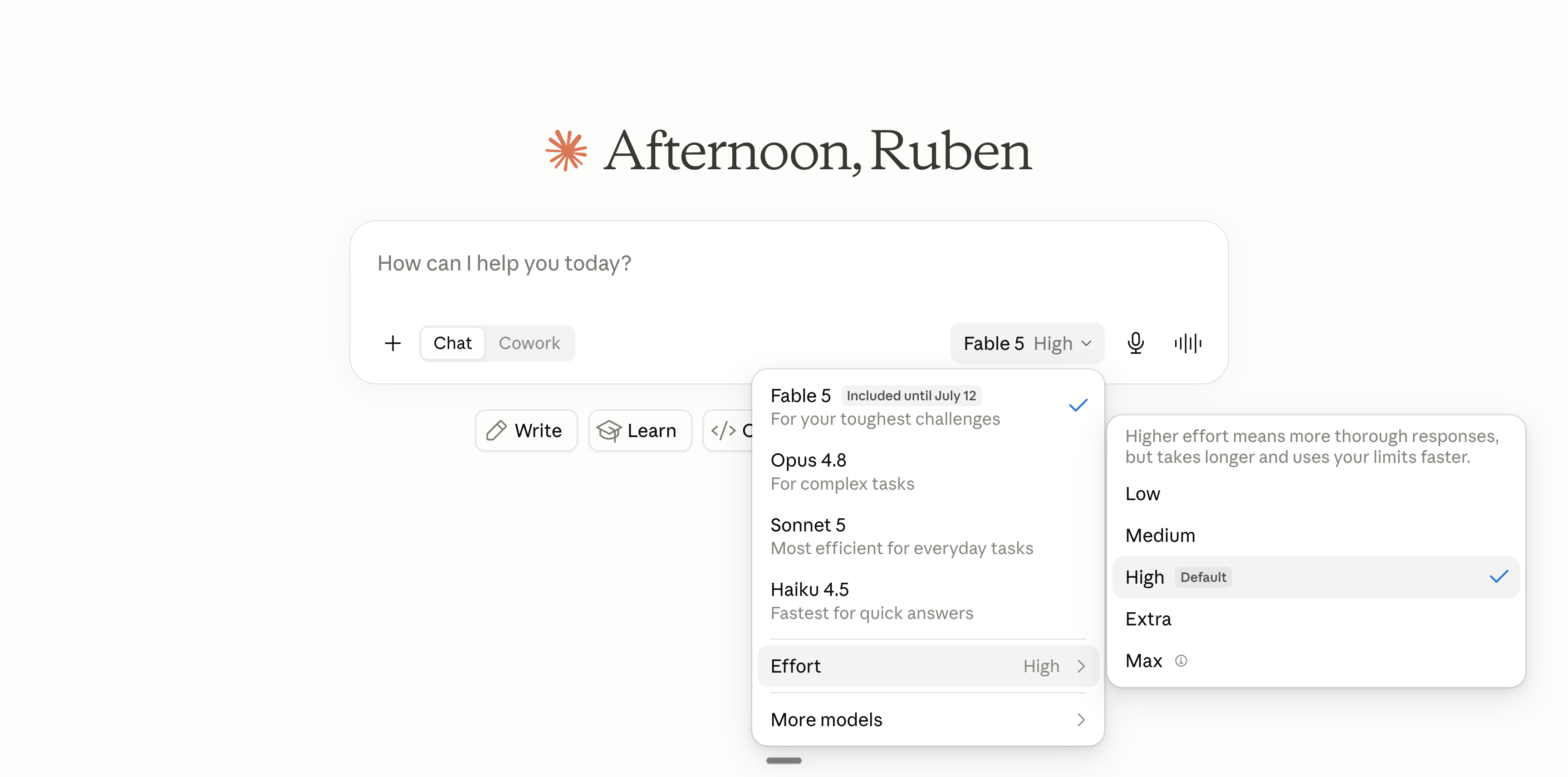
The effort level is just how long it takes before answering you.
The longer it takes, the more credits it takes.
So you might be wondering, “Why are we even using Fable-5 then?”
Well, it’s better at literally everything.
Here’s an example. Copy-paste this exact prompt:
Ask me what I do for work and what I keep track of in my head all day. Then build me a small interactive tool I'd actually use every week. You pick what to build based on my answers. Make it look expensive, and add one feature I wouldn't have thought to ask for.Claude will ask you questions. Answer them.
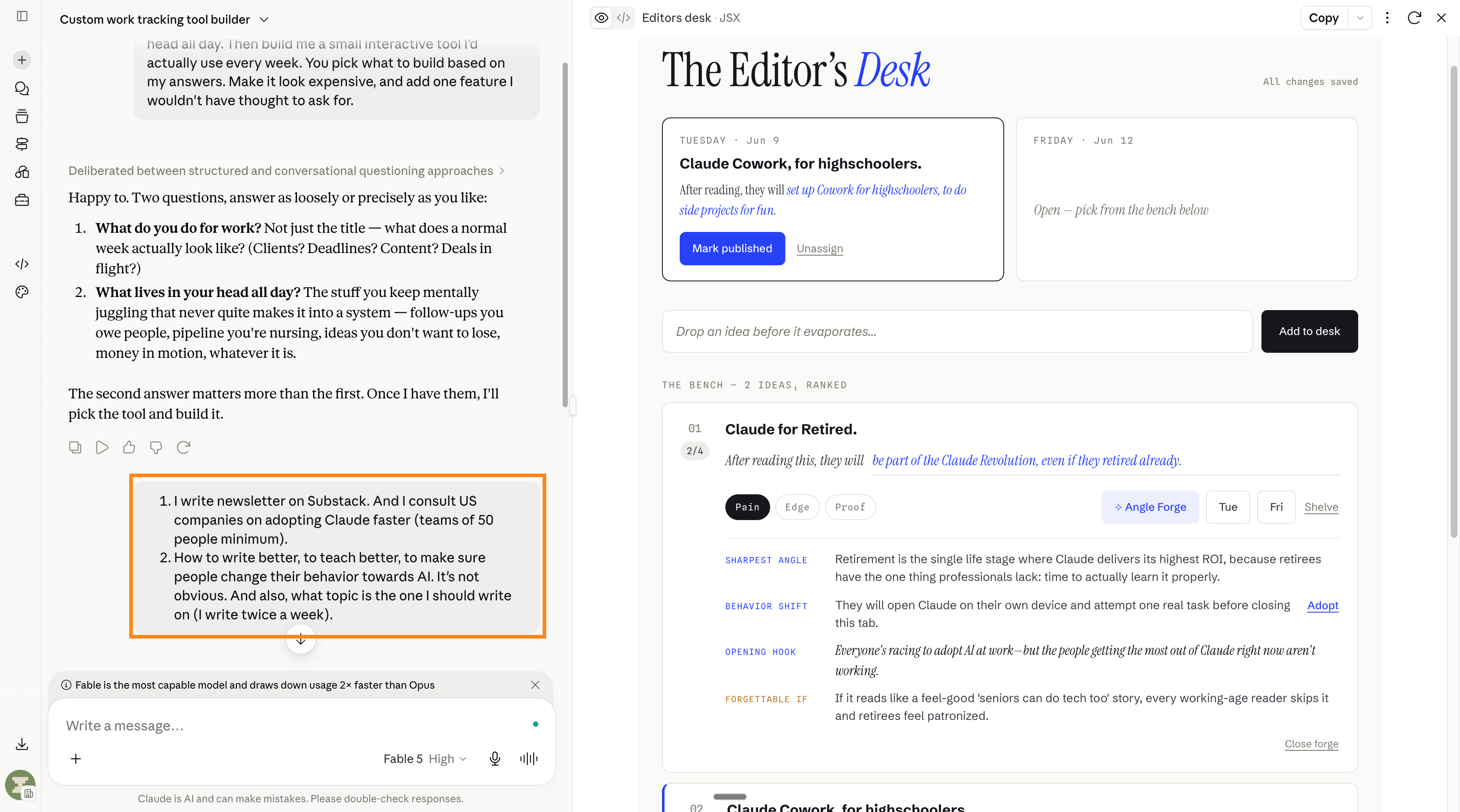
Then watch the right side of your screen.
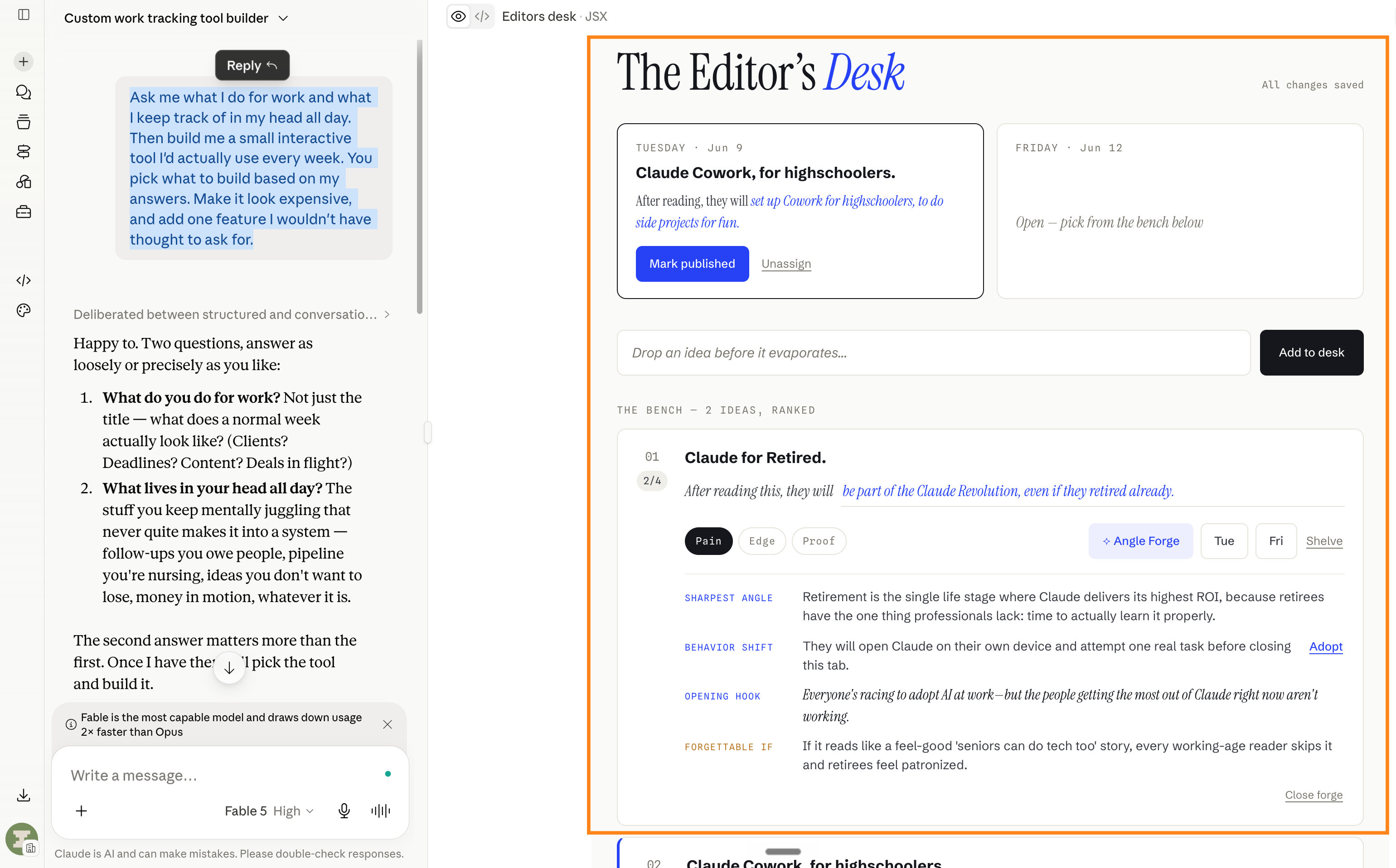
That window is called an Artifact.
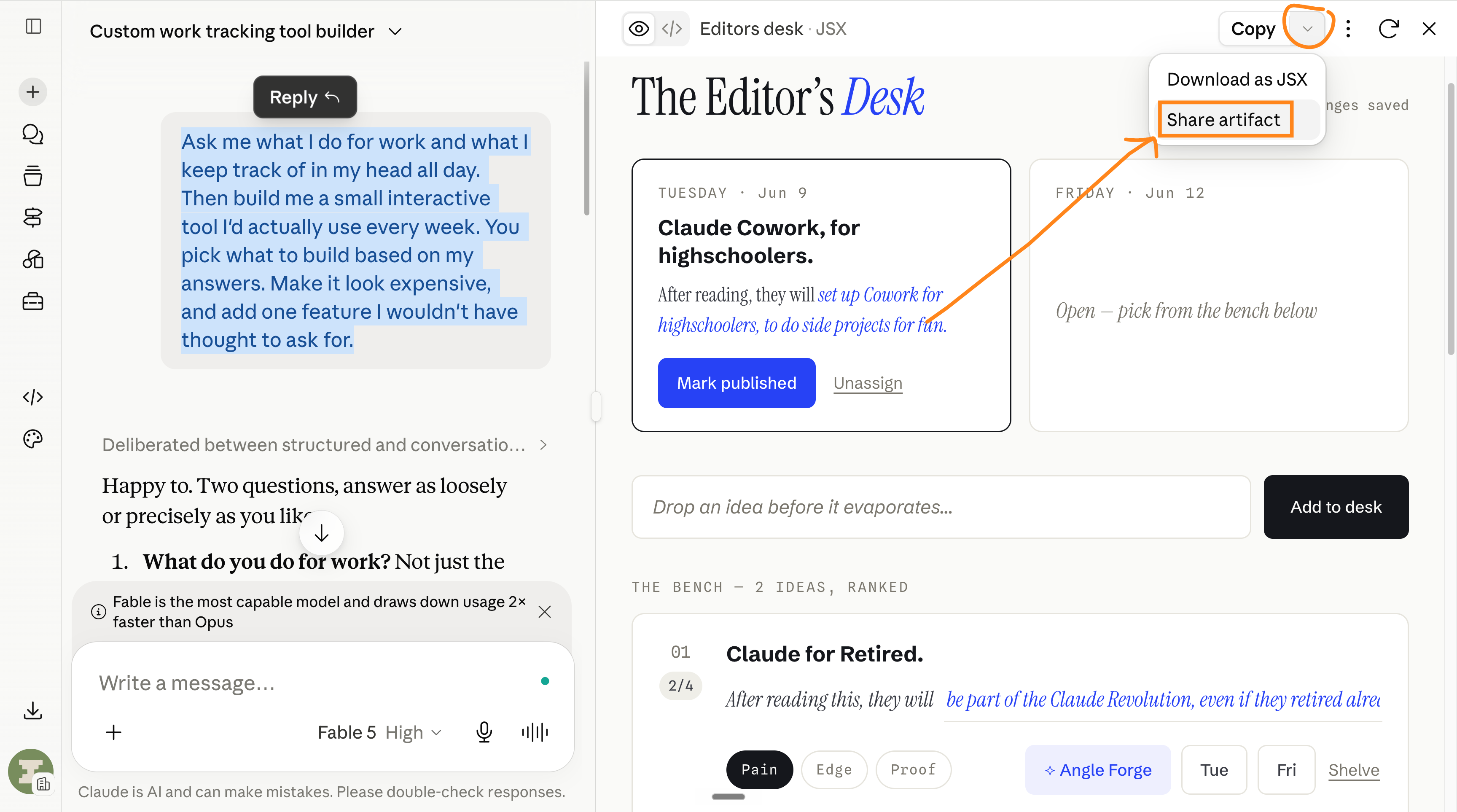
Anything Claude makes that’s bigger than a chat reply opens there: documents, websites, mini-apps, dashboards, charts, even small games. You can open it full screen.
You can publish it as a link and send it to your team:
Sometimes an artifact can be interactive too, inside the chat.
Remember the orange image at the top of this newsletter?
Made with Claude.
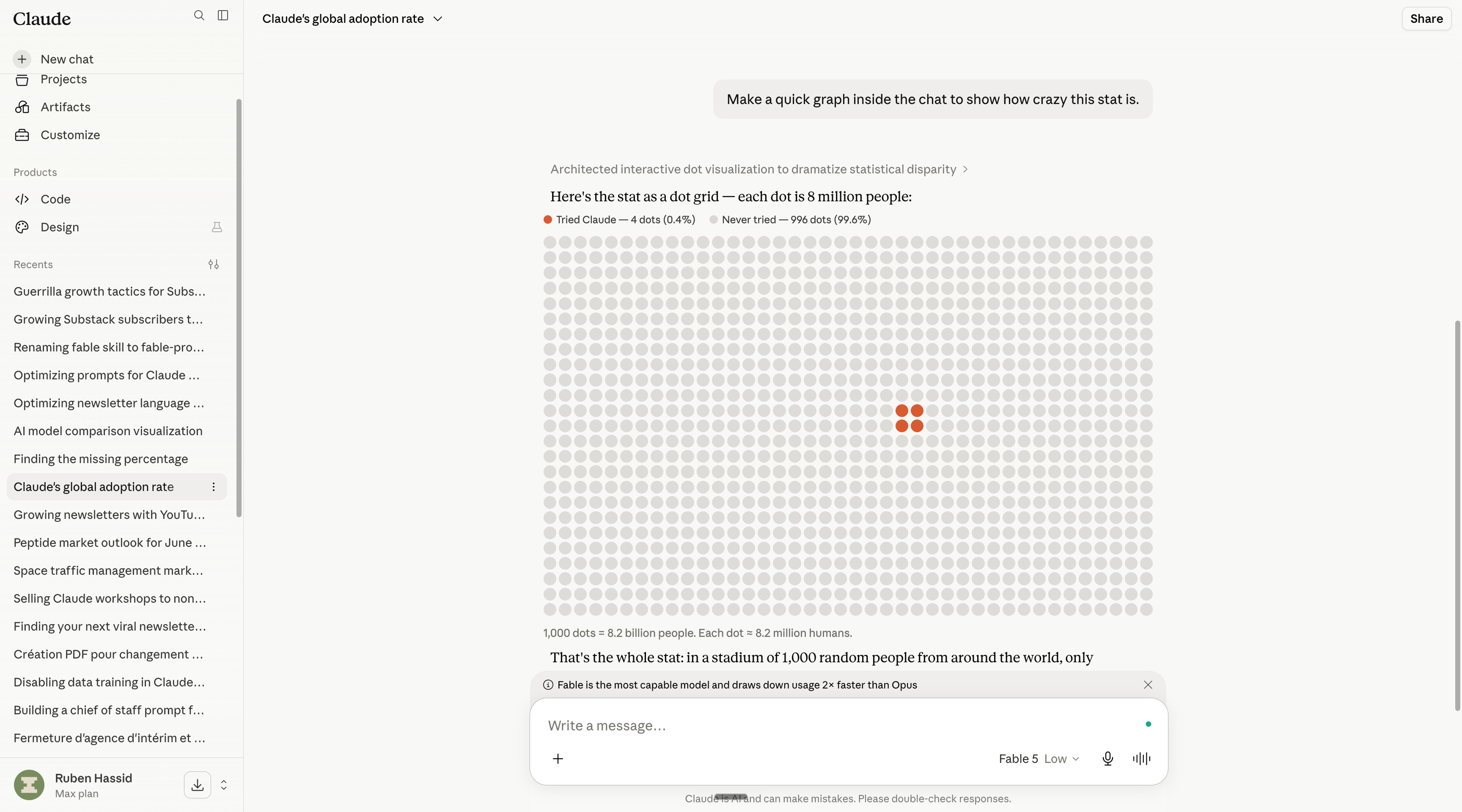
But you now know you need to balance out Fable-5 (planning, or a quick super-good results within 2 turns) with Sonnet-5 or Opus 4.8.
OK, good. But how do we prompt this expensive superintelligence?
It’s been 4 years we have AI, and people (you) got away with these prompts:
“Rewrite this email.”
“Summarize this PDF.”
“Make it shorter.”
Tasks. Small ones.
One step, then you grab the wheel back, then another small step.
These prompts made sense, especially between 2022-2024.
Old models lost the plot after 3 steps, so you learned to chop your work into bite-sized prompts. I probably wrote 100+ of these guides.
But Claude Fable-5 is different. Another league of its own.
It plans. It asks you questions before starting. It works for a long time without drifting. It pushes back. It checks its own work before handing it back, like an employee who re-reads before hitting send.
So here’s the new rule:
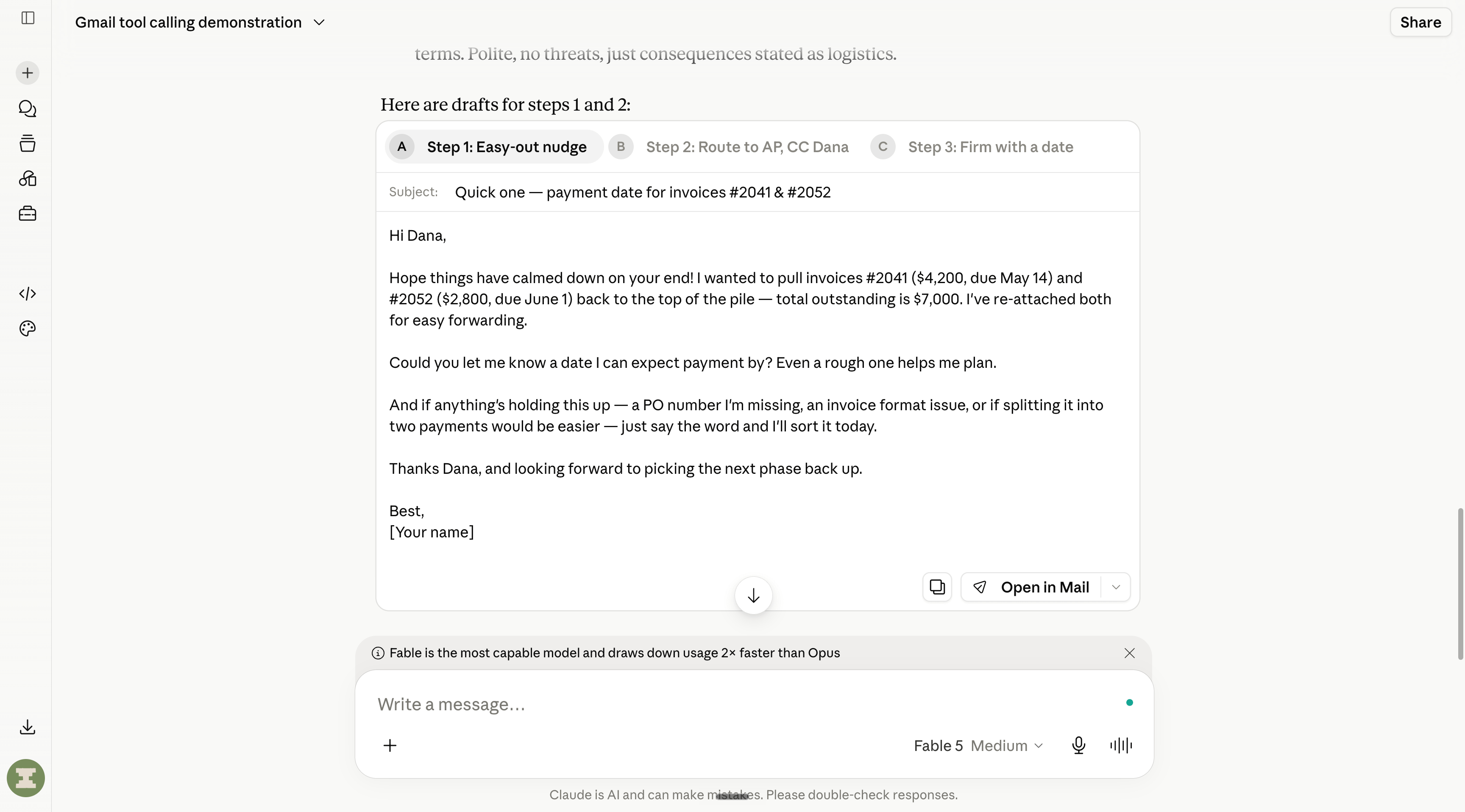
Give it goals. Long ones. Hard ones. Stop giving it tasks.
✘ A task: “Write a follow-up email to this client.”
☑ A goal: “This client owes me 2 invoices and went quiet 3 weeks ago. Here’s the full thread. Goal: get paid without burning the relationship. Plan your approach, draft whatever’s needed, and ask me what you don’t know.”
How do I even know this?
Because I read the docs for you.
An Anthropic’s engineer published another guide on how to talk to Fable-5.
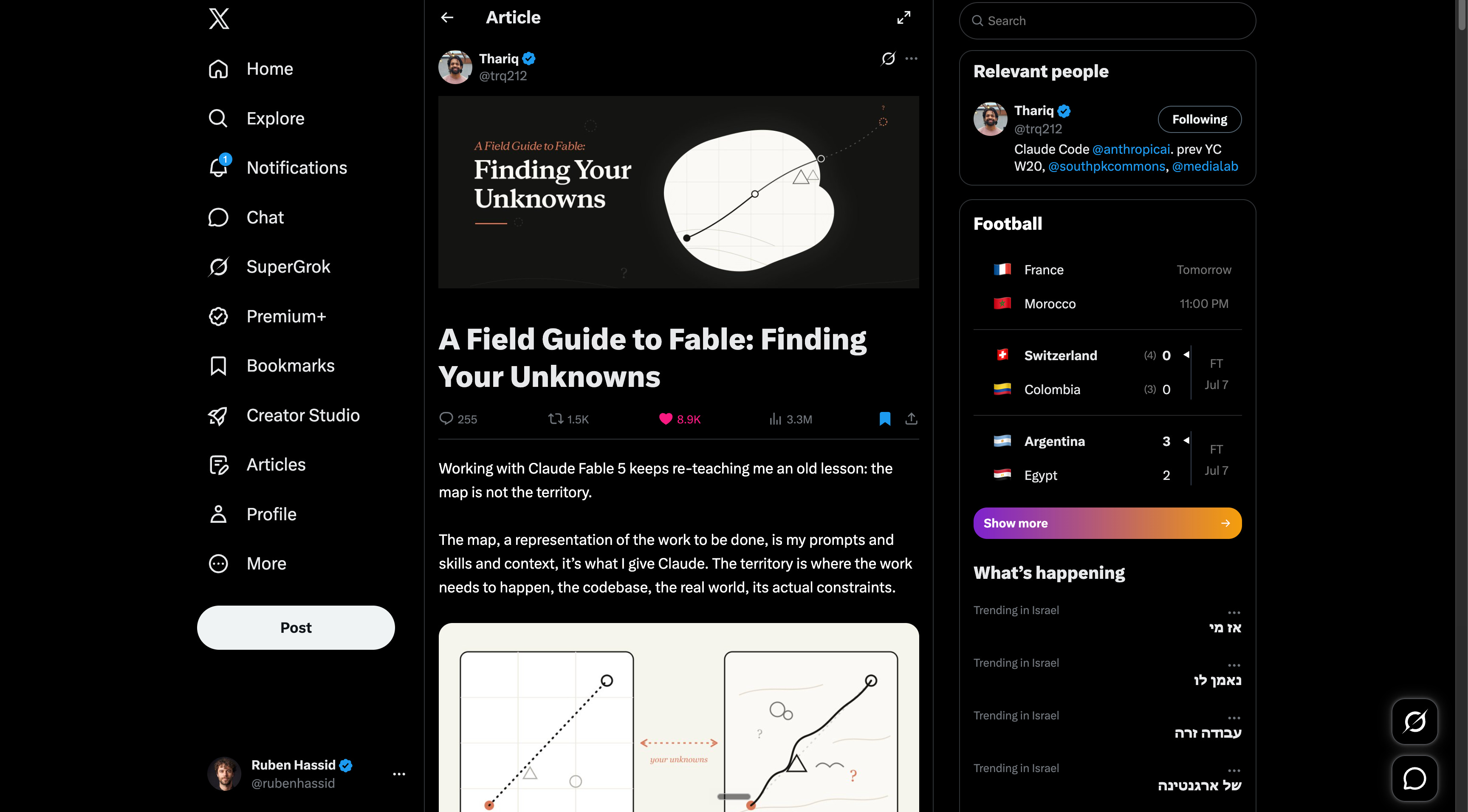
It’s written for developers. Nobody told normal people what to do.
Here are the most important points inside:
Line 1. kill the buried answer.
Lead with the outcome. Your first sentence should answer “what happened” or “what did you find.” Details after.
No more scrolling through methodology to find the actual answer. Every response starts with the bottom line.
Line 2. the anti-bullshit line.
Only report work you can point to evidence for. If something is not yet verified, say so explicitly.
This one is for long tasks. In Anthropic’s own testing, this line nearly eliminated inflated “all done!” reports, even on tasks designed to provoke them. Same standard you’d hold a new hire to: don’t tell me it’s done, show me.
Line 3. draw the line between advising and acting.
Fable is eager. It will write the email when you just wanted feedback on it. So say which mode you’re in:
I’m thinking out loud. Give me your thoughts, don’t write anything yet.
or
Handle this end-to-end. Only check in with me if something is irreversible or genuinely needs my input.
Line 4. the anti-overthinking line.
When you have enough information to act, act. Give me a recommendation, not a survey of options.
For when you want an answer, not a menu.
★ Remember. No more prompting. You’re setting rules. Fable finds the how with your goal in mind.
You have the rules. Now time to create some stuff.
3. Some Fable-5 worthy tasks.
If you handed me an AGI (an AI smarter than any human), I wouldn’t know what to ask for. What’s my AGI-level question?
Some obvious ones:
Cure all diseases.
Make me very rich.
Fix everything wrong in the world.
If you’ve watched the super-duper viral movie “Obsession”, it feels like the make-a-wish object that quickly fires back…

So before we start curing cancers with AI - and some researchers are already on it, creating new drugs at record speed - let’s try to give Fable-5 some worthy prompts to use it best.
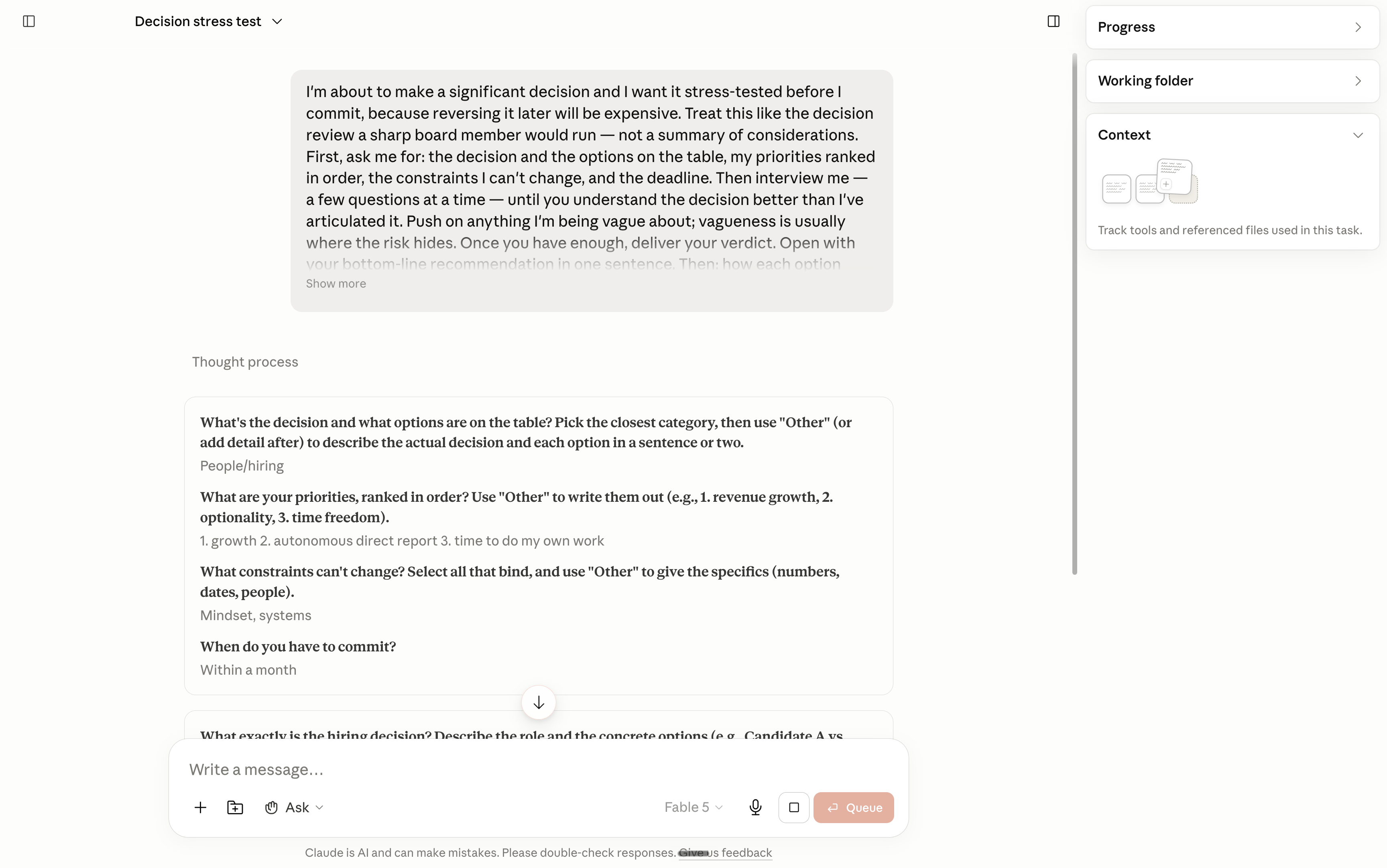
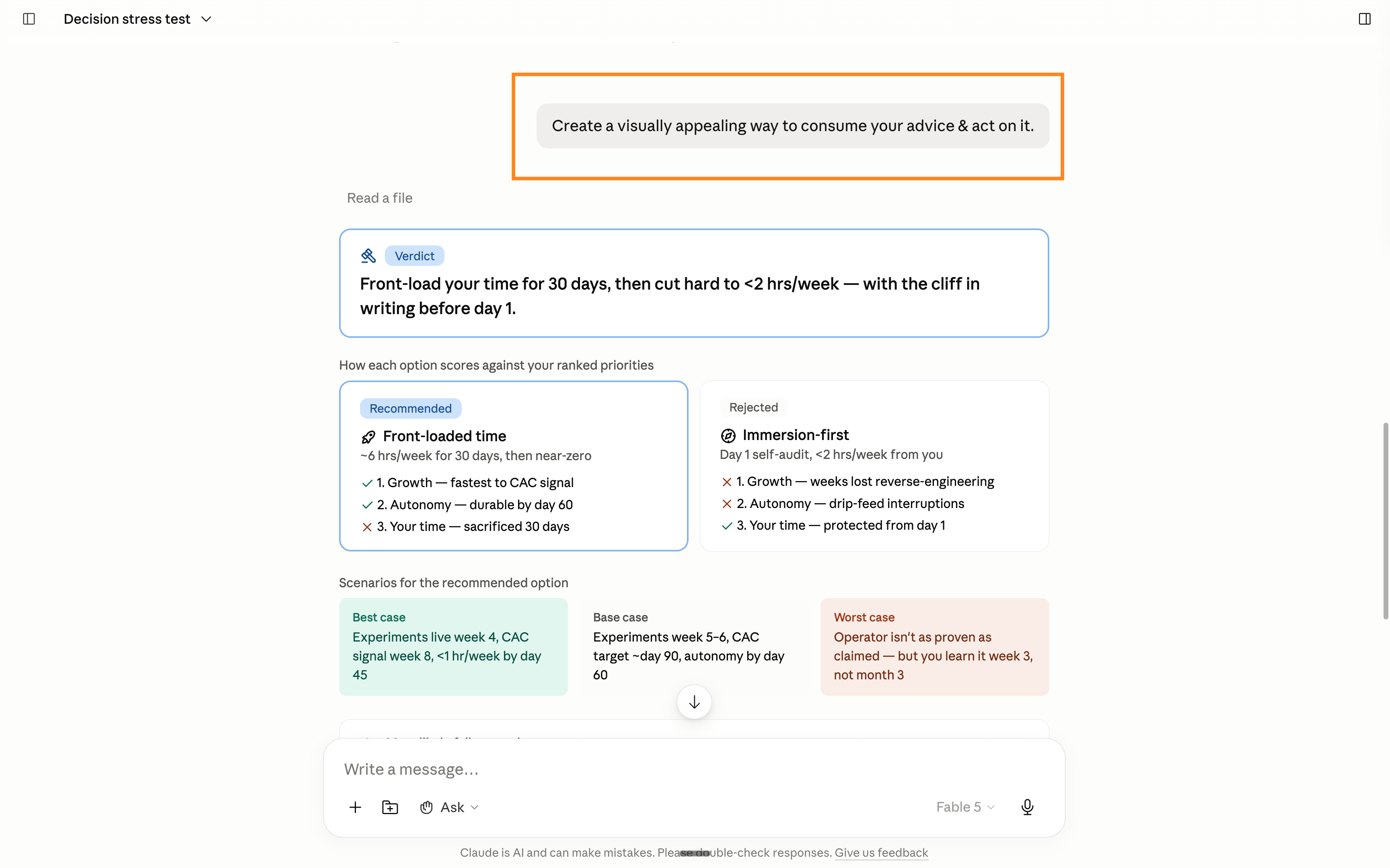
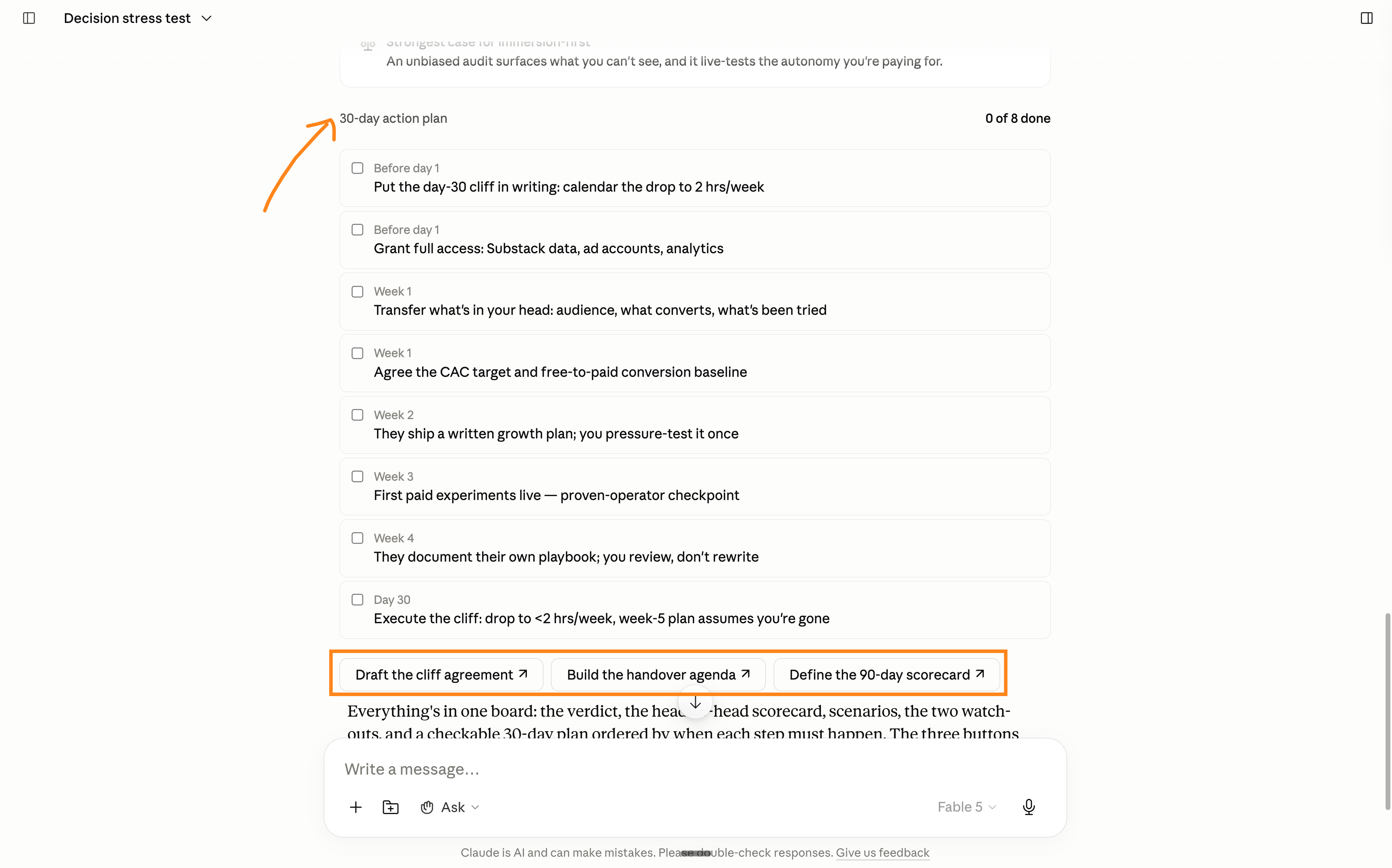
1 - Help me decide prompt.
Why it’s Fable-worthy: it forces the model to hold your stated priorities, run bear/base/bull scenarios, and argue against its own recommendation. I like the multi-angle reasoning. Usually, older models flattened into “it depends.”
I don’t want “it depends”, I need to take a sound decision.
Copy and paste this:
I’m about to make a significant decision and I want it stress-tested before I commit, because reversing it later will be expensive. Treat this like the decision review a sharp board member would run — not a summary of considerations.
First, ask me for: the decision and the options on the table, my priorities ranked in order, the constraints I can’t change, and the deadline. Then interview me — a few questions at a time — until you understand the decision better than I’ve articulated it. Push on anything I’m being vague about; vagueness is usually where the risk hides. Once you have enough, deliver your verdict. Open with your bottom-line recommendation in one sentence.
Then: how each option scores against my ranked priorities, the best case, base case, and worst case for your recommended option, the strongest argument for the option you rejected, and the single most likely way your recommendation turns out to be wrong. Be direct. Don’t hedge with “it depends on what you value” — I will have told you what I value. If my priorities contradict each other, name the contradiction instead of working around it. Before you finish, check your reasoning against my stated priorities and fix anything that drifted.
Use the AskUserQuestion tool for any question.
Here’s an example from this morning:
2. The Deep Research prompt.
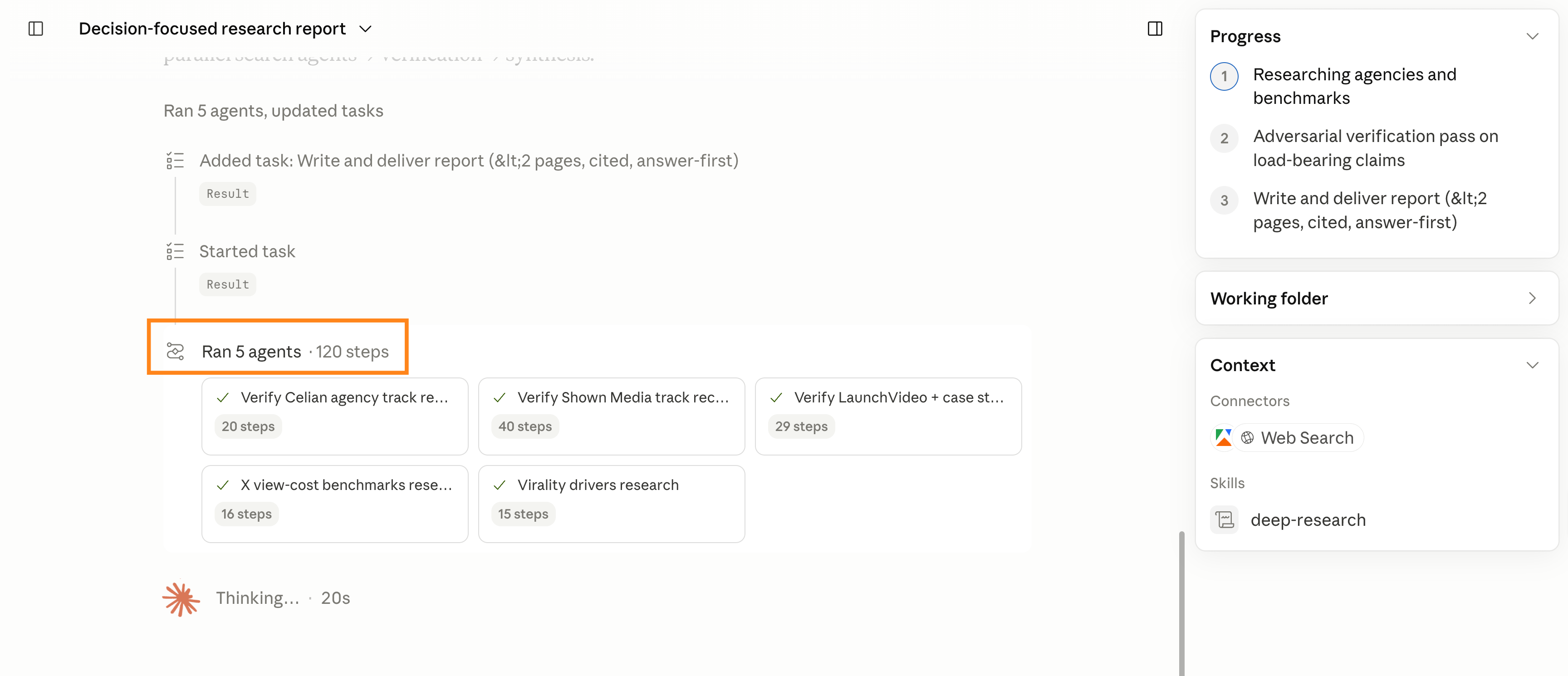
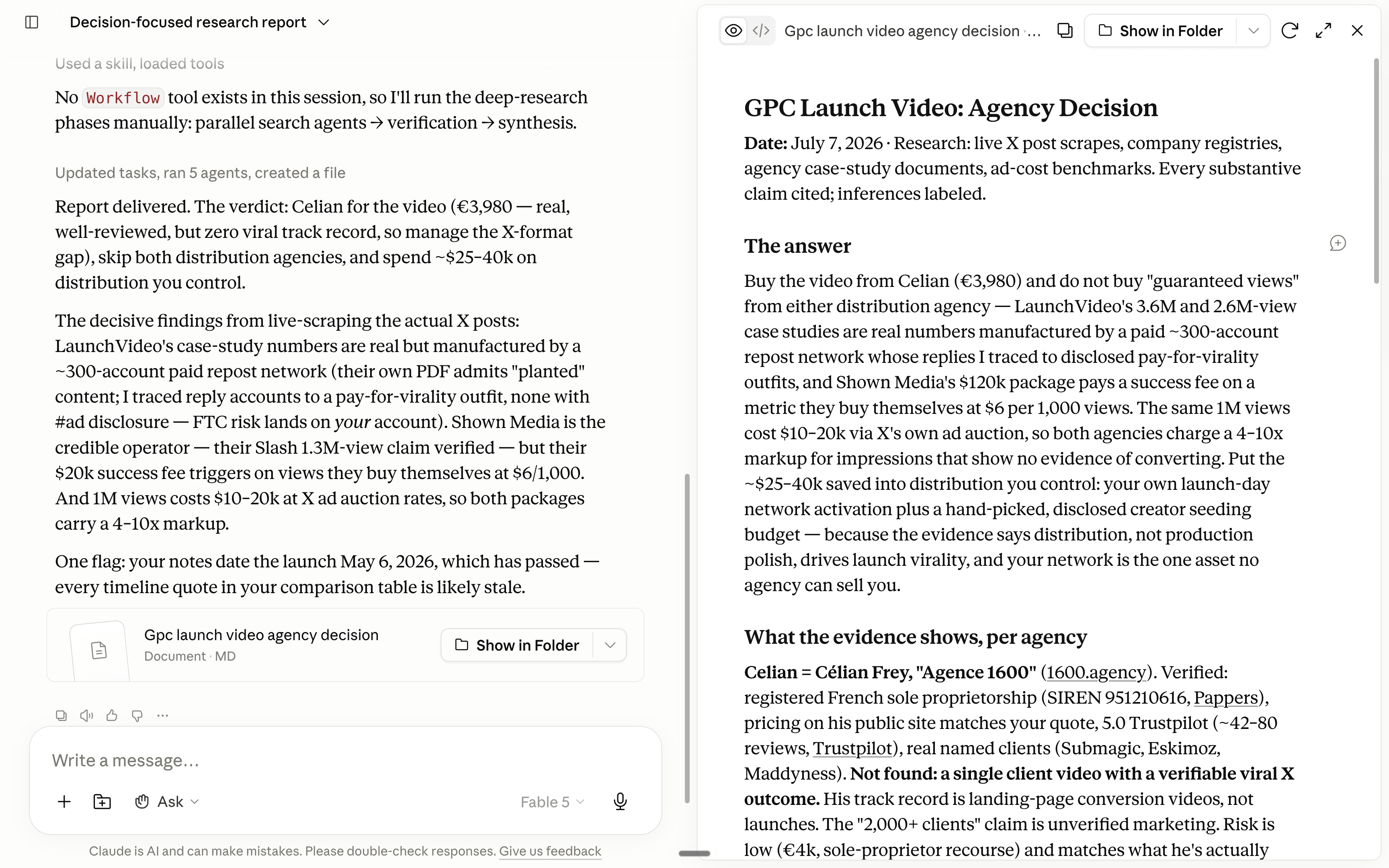
Why it’s Fable-worthy: end-to-end research plus self-verification is exactly the long-horizon, evidence-grounded work Fable 5 was built for.
Here’s the prompt:
I need a research report I can actually make a decision from, not a survey of everything that exists. It will be read by someone busy who will act on it, so wrong claims are worse than missing claims.
Start by asking me for: the question I’m trying to answer, the decision it feeds into, and any sources I already have or trust. Then research it end to end. Use the AskUserQuestion tool for it.
Done means a report that opens with the answer in three sentences, then supports it. For every substantive claim, cite the source. Where sources disagree, say so and tell me which you’d trust and why, rather than averaging them into mush. Separate what the evidence shows from what you’re inferring — label the inferences.
Before delivering, run an adversarial pass on your own draft: attack your three most load-bearing claims as if you were a skeptic paid to find the flaw, and revise anything that doesn’t survive. If a claim can’t be verified, keep it — but flag it plainly as unverified instead of quietly dropping the caveat.
Keep it under two pages. Everything cut should be detail that wouldn’t change what the reader does next.
And my own example:
3. The Archive-to-Argument prompt.
Why it’s Fable-worthy: it explores a large, messy corpus, proposes competing narrative shapes, and pauses at exactly the point where your judgment matters.
Because I don’t trust complete-autopilot-AI yet.
Yes, even me. The prompt right here:
I want to develop a piece of writing from raw material — notes, transcripts, drafts, research — where the argument hasn’t taken shape yet. Your job is to help me find the piece inside the material, not to write a generic article about the topic.
Ask me to paste or attach the raw material, plus: who the piece is for, where it will be published, and what I want a reader to understand or feel by the end.
Then explore before drafting. Identify the most interesting tensions, surprises, and unresolved questions in the material. Ask me about the judgment calls only I can make — what I actually believe, what I witnessed, what I’m willing to say publicly. Propose three genuinely different arguments the material could support, with one line each on what that version emphasizes and what it sacrifices. Then stop and wait for me to choose.
After I choose, write a full draft in the voice of the raw material — my phrasing, my rhythm — not a polished house style. Flag every place where the draft asserts something the material doesn’t support, so I can either supply the evidence or cut the claim. Don’t invent quotes, anecdotes, or numbers to fill gaps; leave a visible gap instead.
And it works:
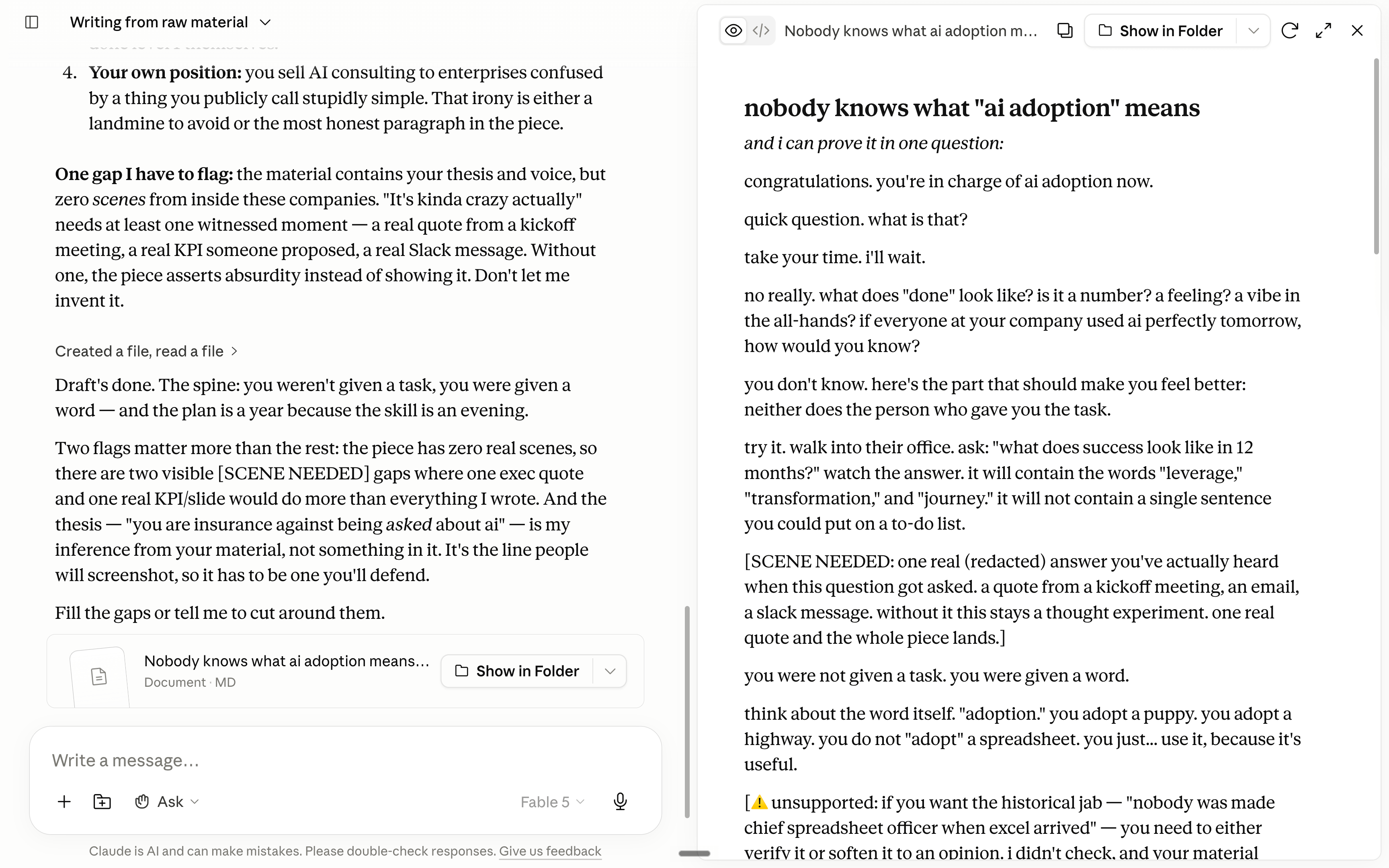
4. The Operating Review prompt
Why it’s Fable-worthy: multi-source synthesis across formats — notes, threads, action items — where the model has to reconcile conflicts and route judgment calls back to you.
Again, I love using smart AI for super messy context.
The prompt:
I’m going to give you the raw exhaust of my work week — meeting notes, message threads, to-do lists, half-written docs — and I need it turned into an operating plan I can run next week from. The point is to stop losing commitments and decisions in the pile.
Ask me to paste or attach everything, plus my top priority for the next two weeks.
Done means one document with four sections. Commitments: everything I promised someone or someone promised me, with who, what, and when — flag anything already overdue. Decisions: what was actually decided this week versus what was merely discussed; if the record is ambiguous about which, put it in the ambiguous pile rather than guessing. Conflicts: places where two meetings, people, or documents point in opposite directions — quote both sides. Next week: the five actions that most advance the priority I gave you, each traceable to something in the material.
Ground everything in the source — if I ask where an item came from, you should be able to point to the line. Don’t pad the plan with sensible-sounding actions that appear nowhere in my material. If the week’s material contradicts my stated priority, say so at the top; that’s the most useful thing you could tell me.
Pro tip: Connect your Granola to get your meeting notes inside Claude.
Ah sorry - you don’t know how? Here’s how:
4. Connect Fable to everything.
I pay for Claude with my company.
So I can safely connect all my apps without worrying about sharing data with Anthropic.
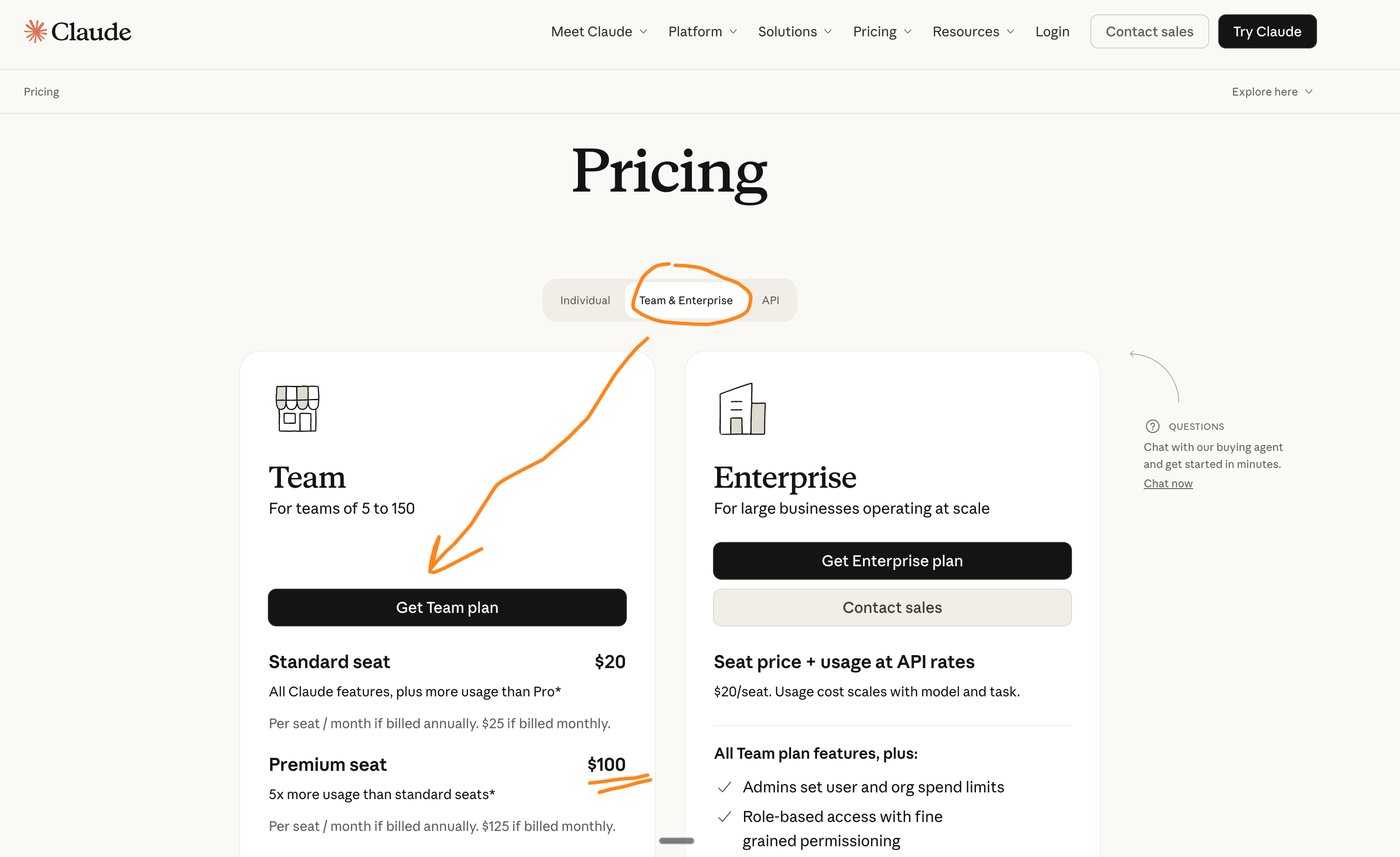
This is how to connect your Claude to the rest:
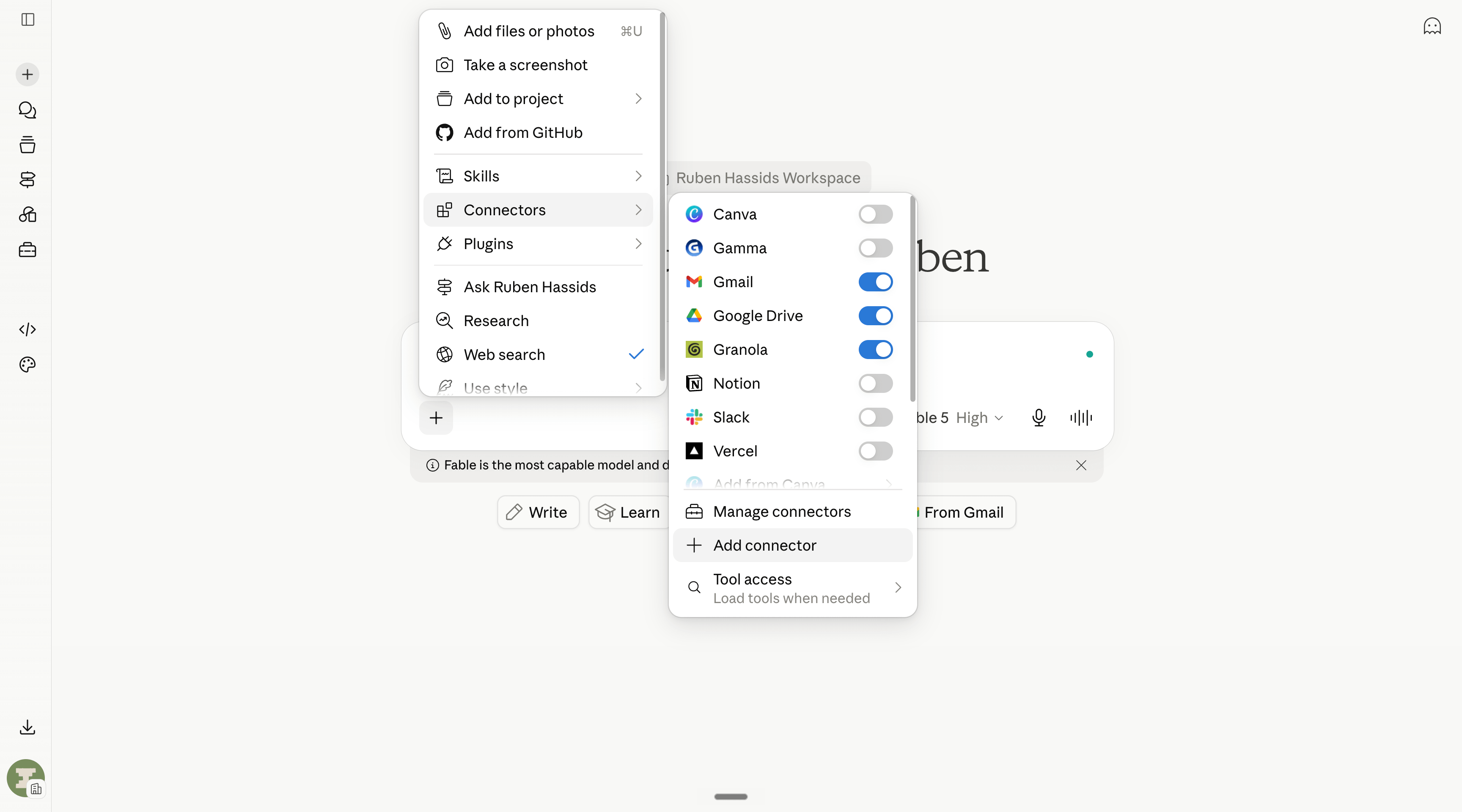
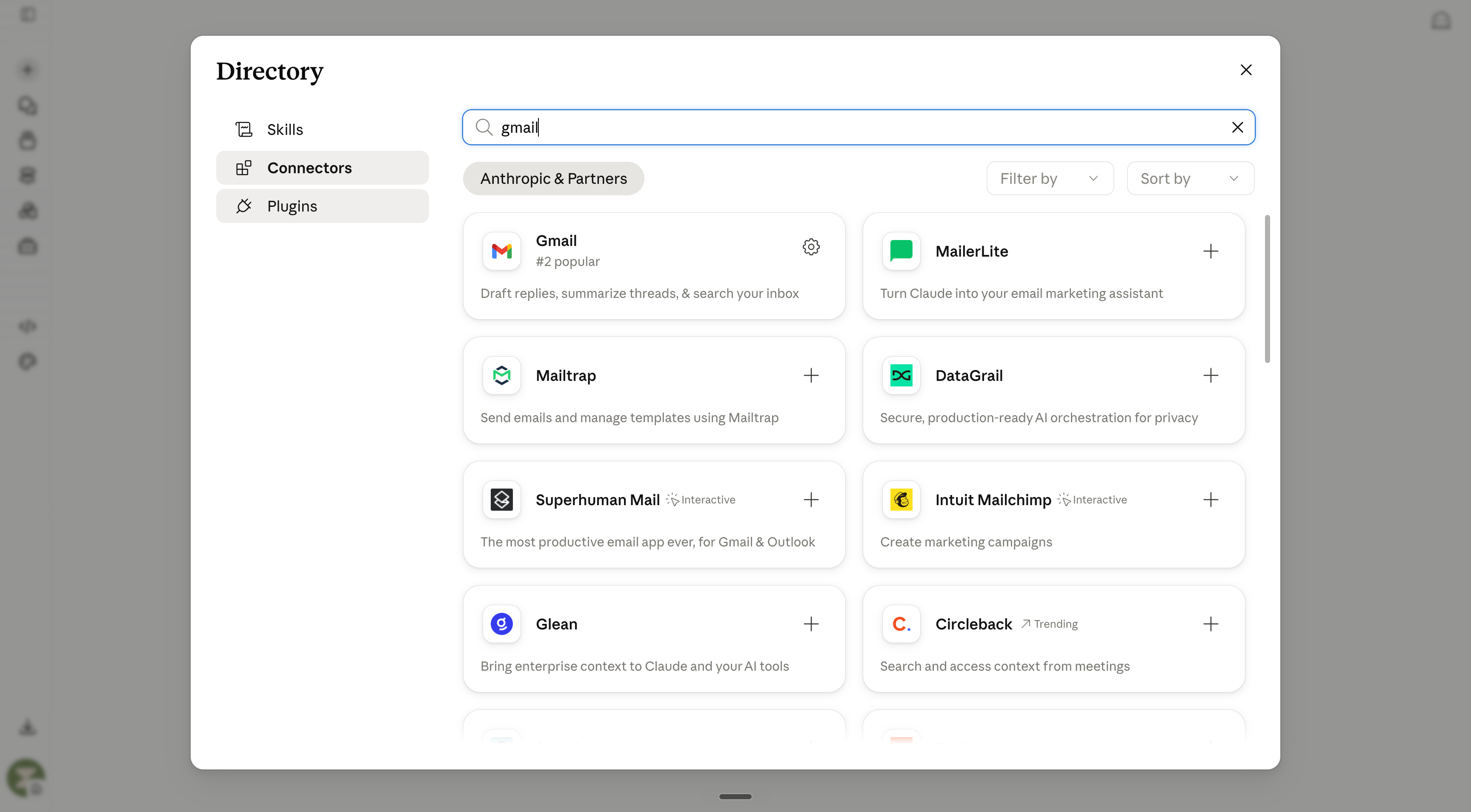
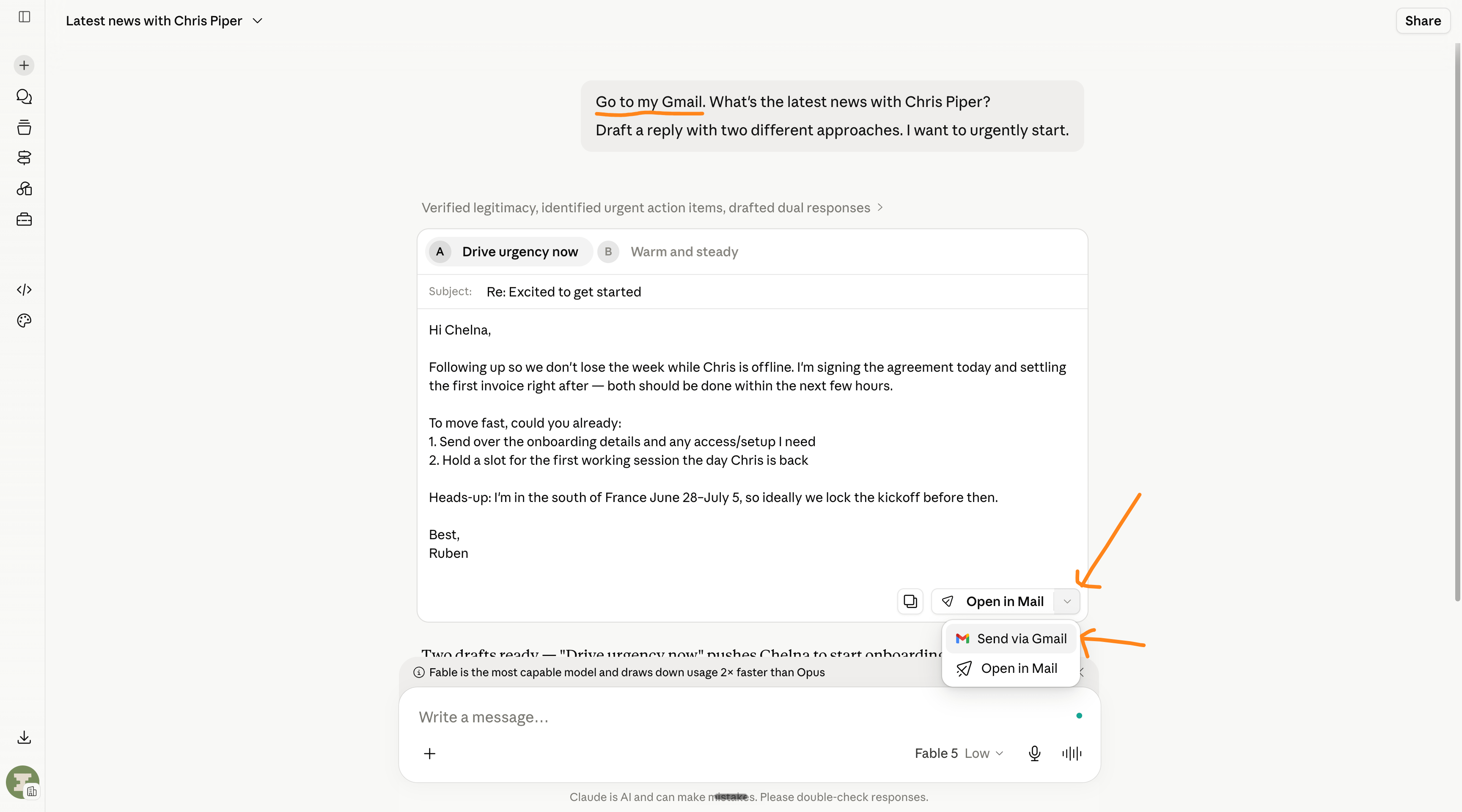
I showed you the example with Gmail.
But connectors are the best way to power up Claude.
Here’s my favorite list:
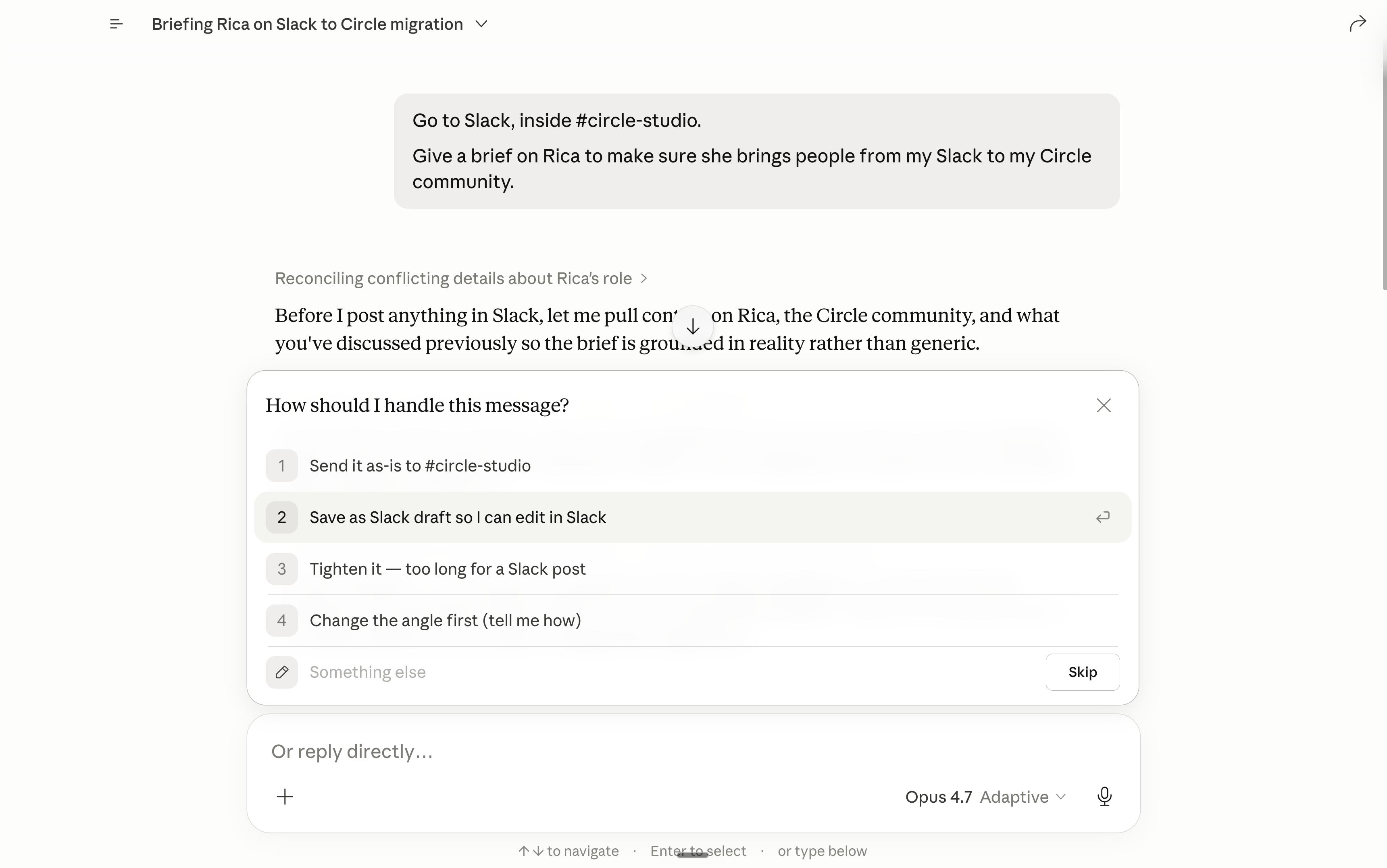
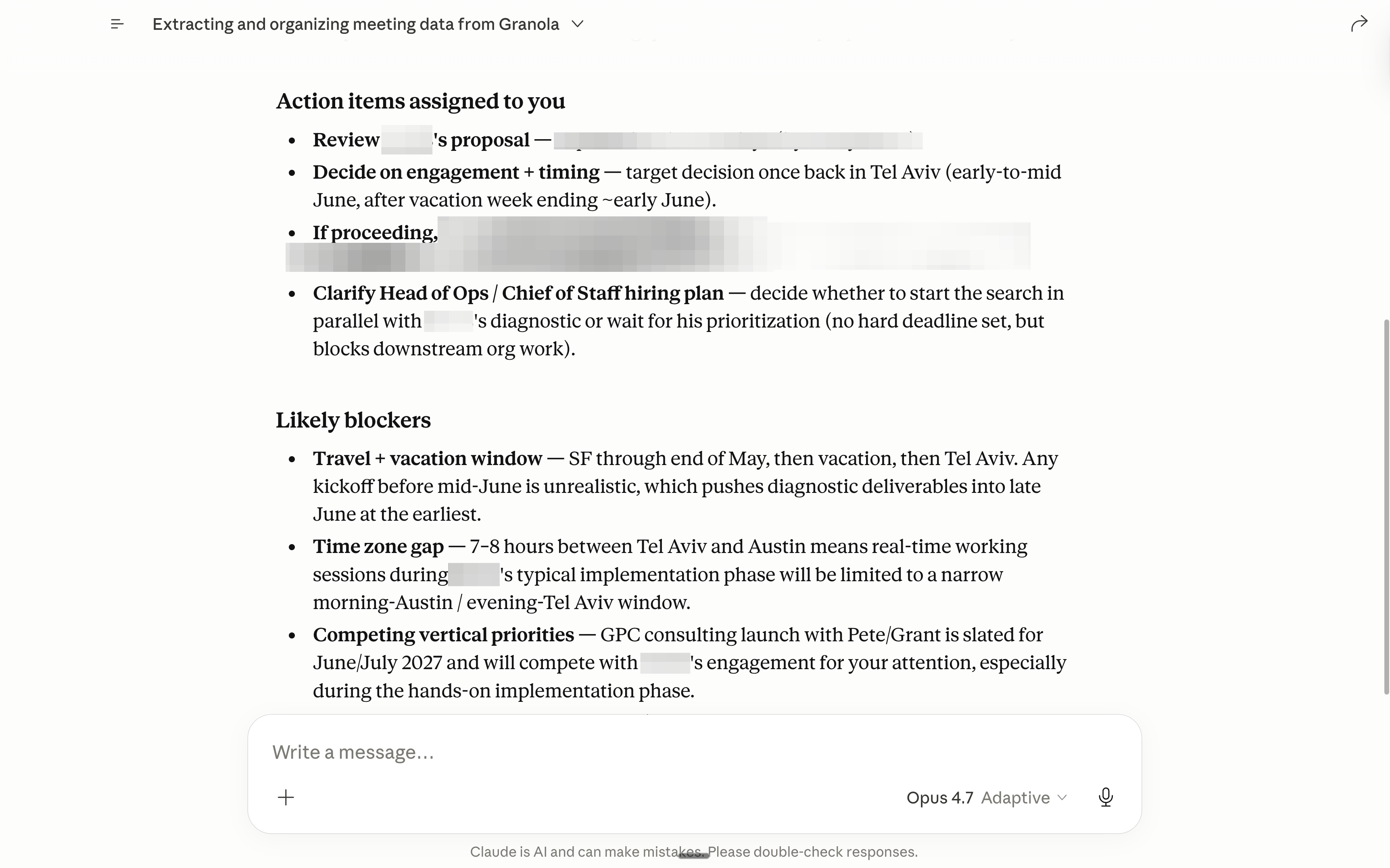
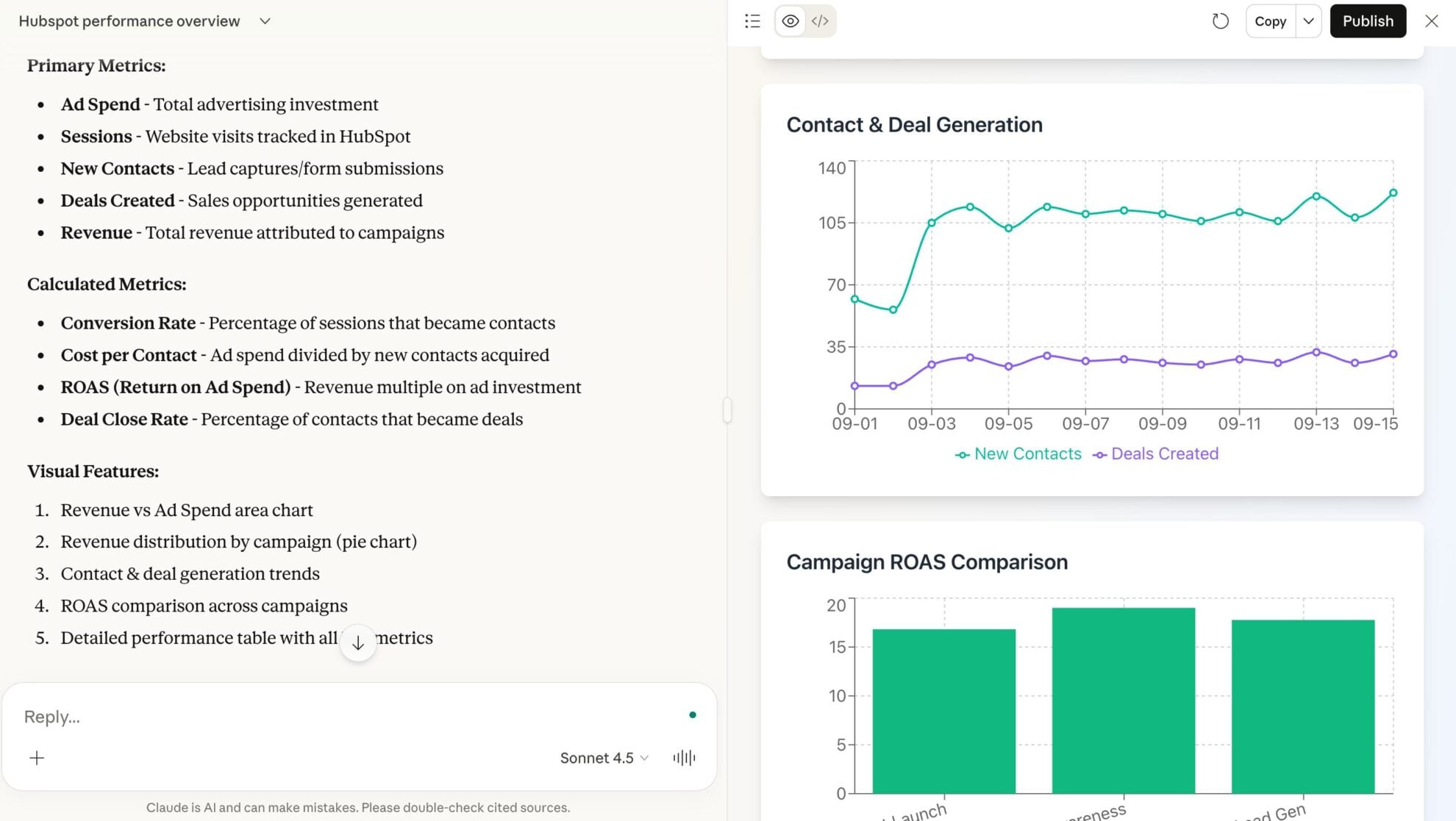
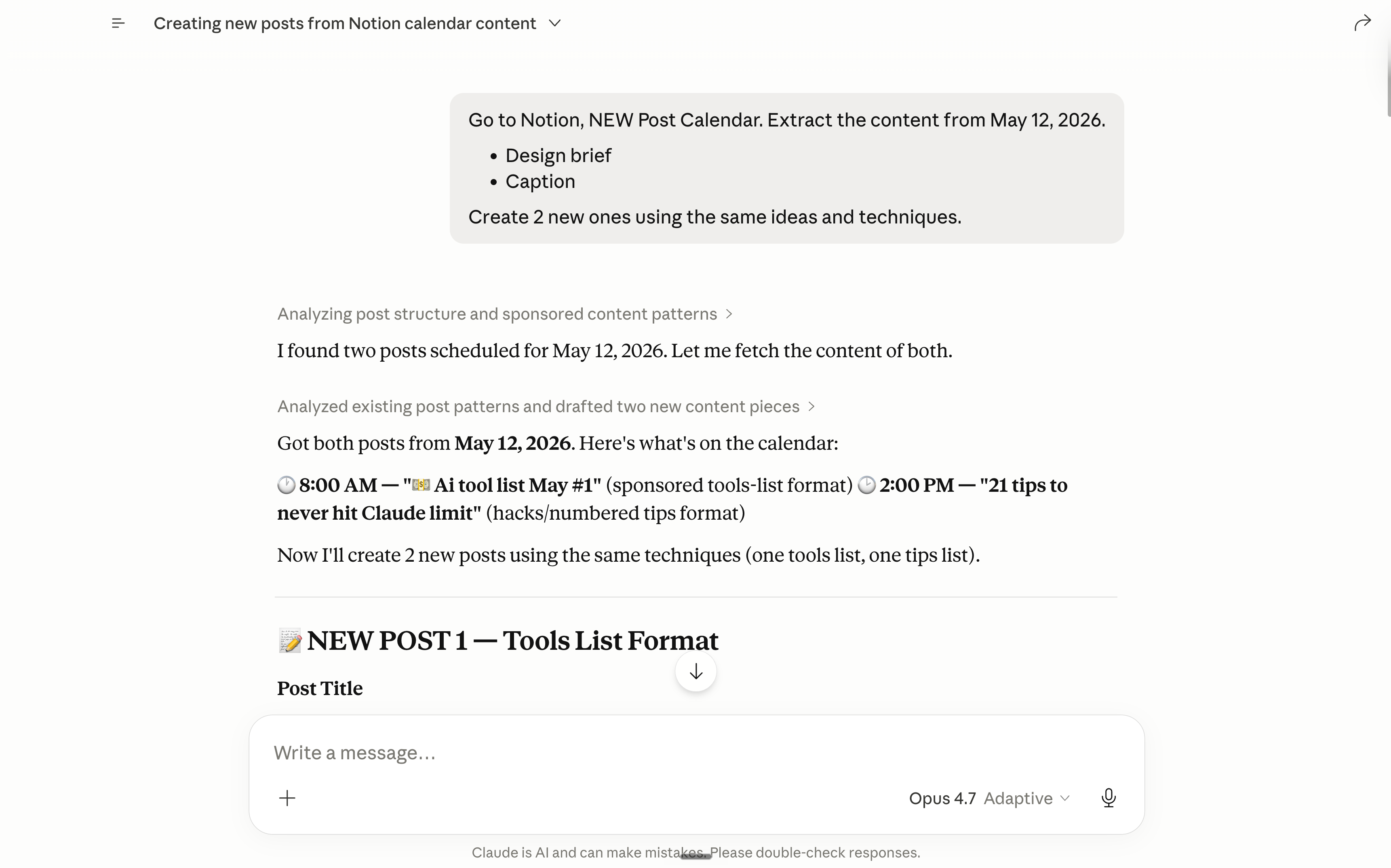
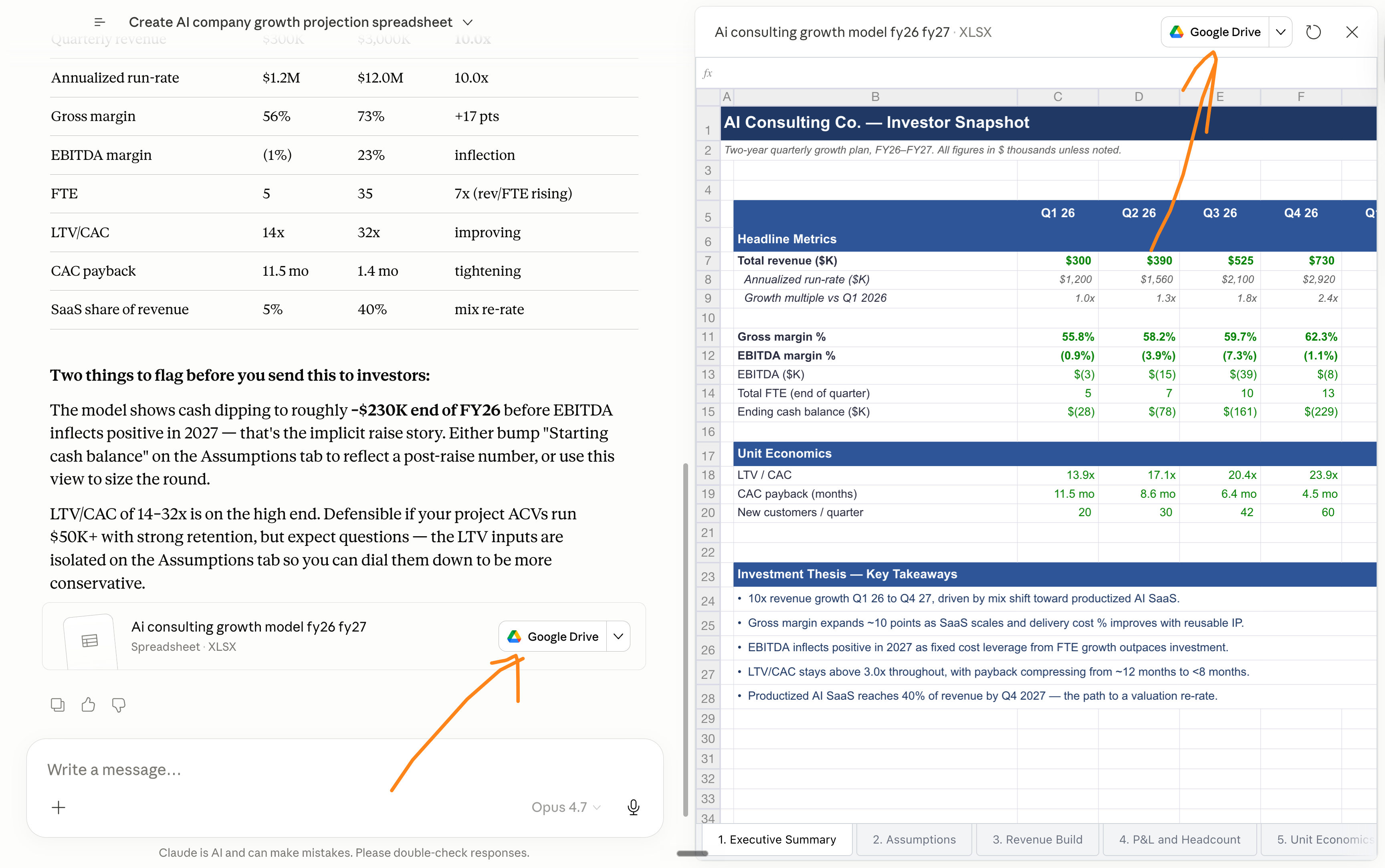
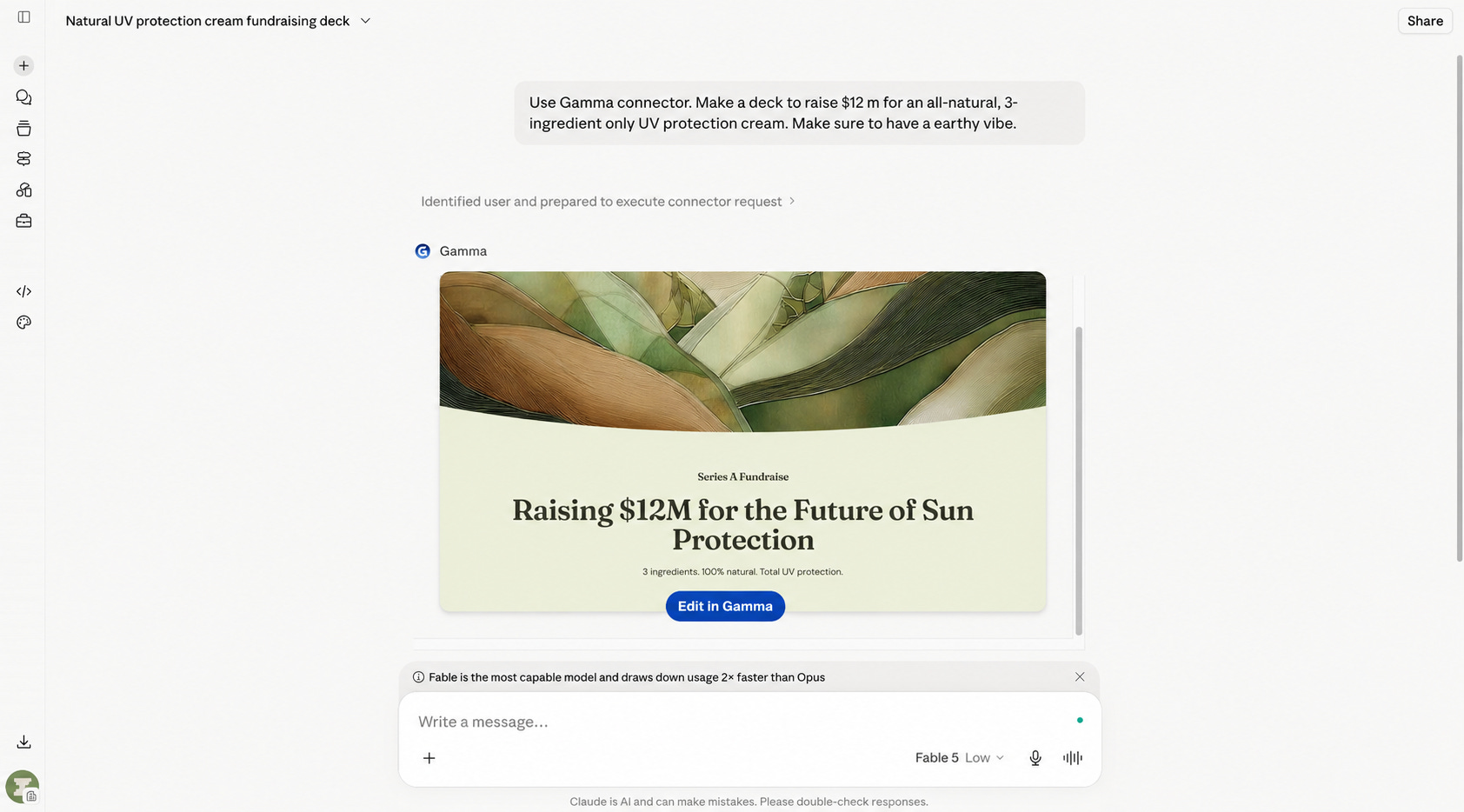
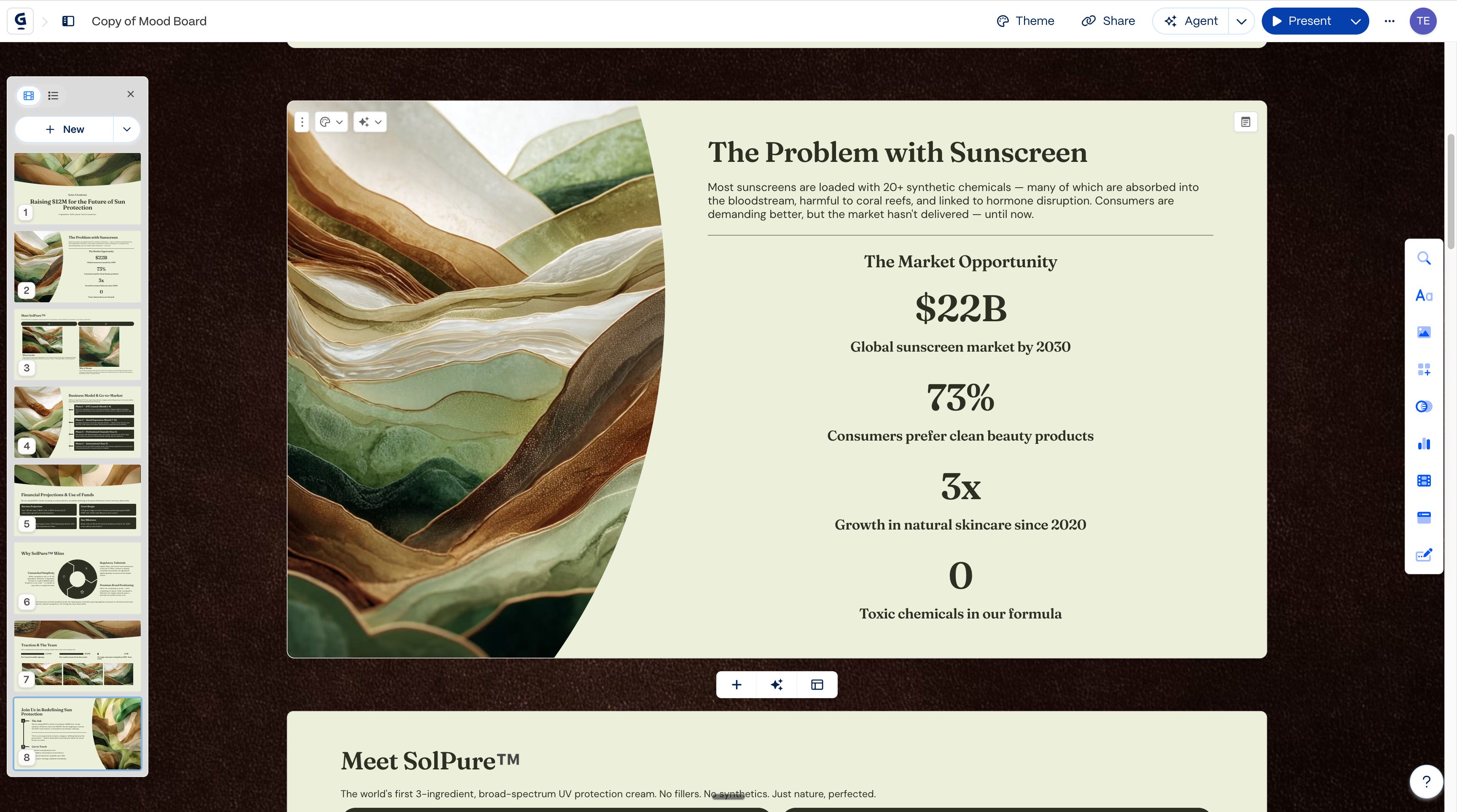
Connecting Claude to apps gives it context.
Because Claude doesn’t know you.
It read most of the internet. It never read your week. Your clients, your deadlines, your writing voice, the deck you half-finished on Sunday: invisible.
Every new chat starts at zero.
Context is everything you hand Claude before it works. Your prompt. Your files. Your examples. The earlier messages in the chat. The tools you’ve connected (Gmail, Drive, your folders).
And context decides everything, for one simple reason:
AI is average by default. It was trained on everyone, so it answers like everyone. Generic in, generic out. Context is how you drag it from “everyone” to “you.”
Don’t prompt…
“Write me a LinkedIn post about productivity”
But prompt…
Paste 3 of your old posts + “here’s my draft idea, write it like me”.
Now the pro move is to stop re-typing your context every time.
You have options, from easy to powerful:
Option 1 - Paste it. Keep an “about-me” google doc. Paste it at the start of any chat that matters, like a pre-prompt.
Option 2 - Projects. A folder inside Claude that remembers your files and instructions across chats. Super easy to use:
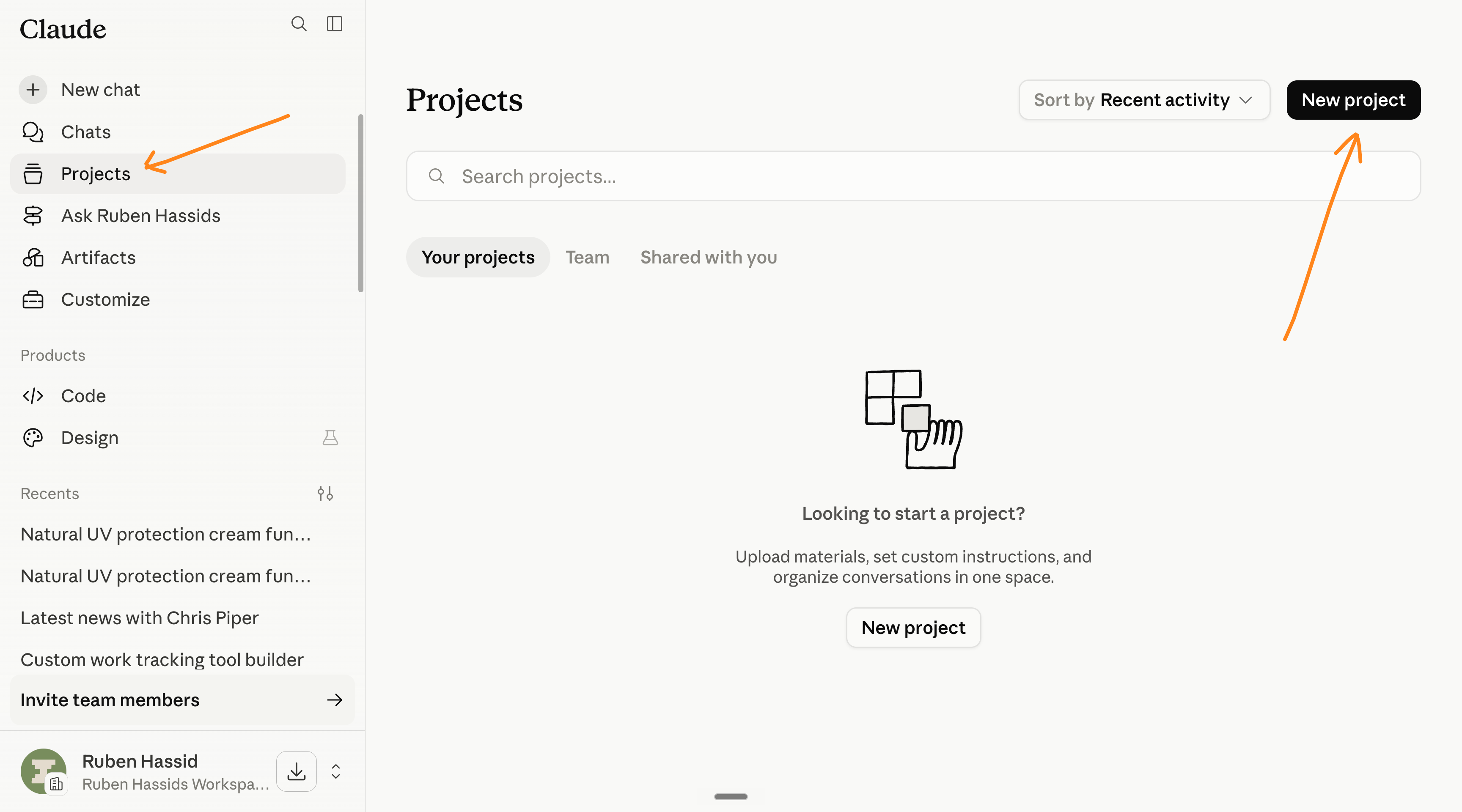
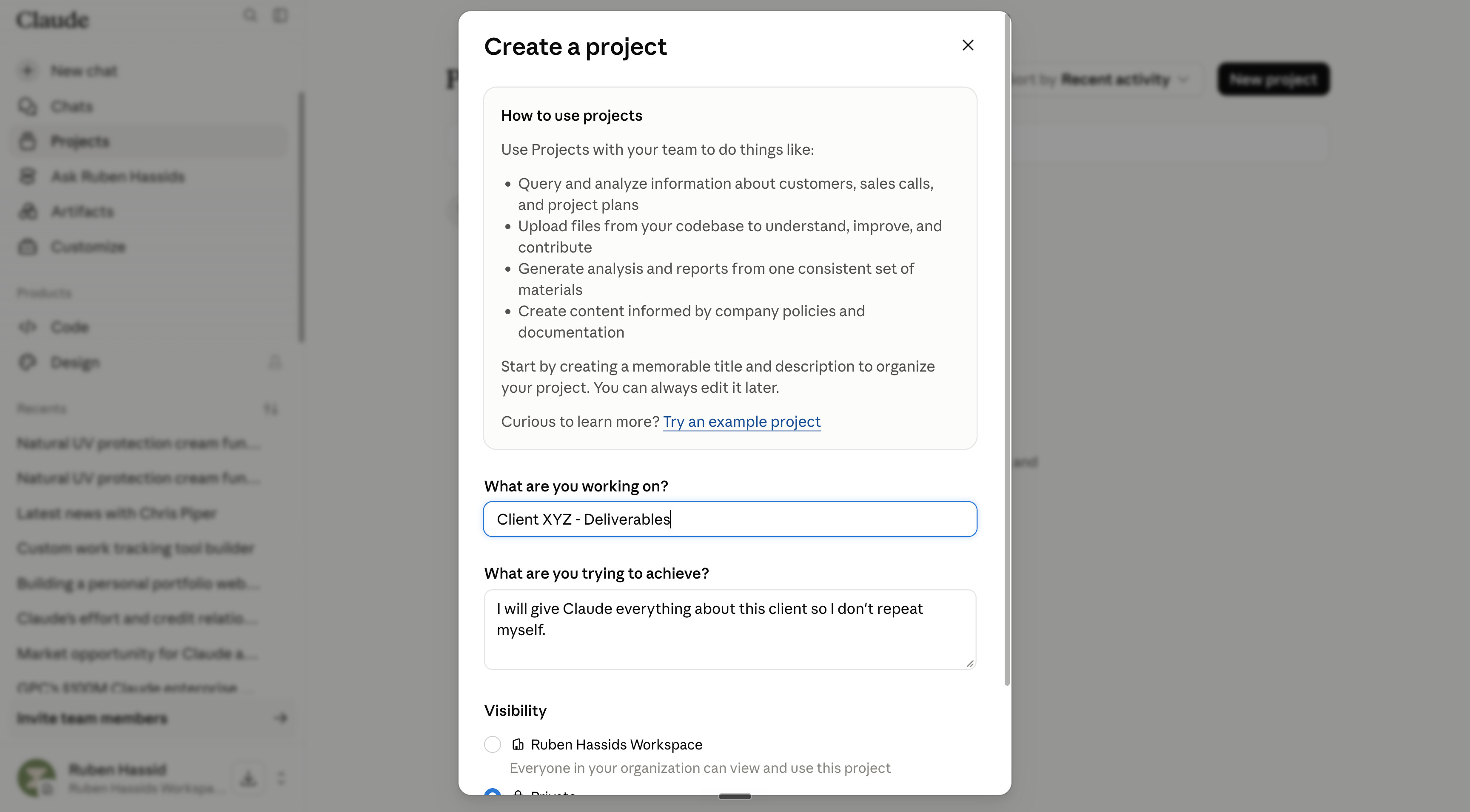
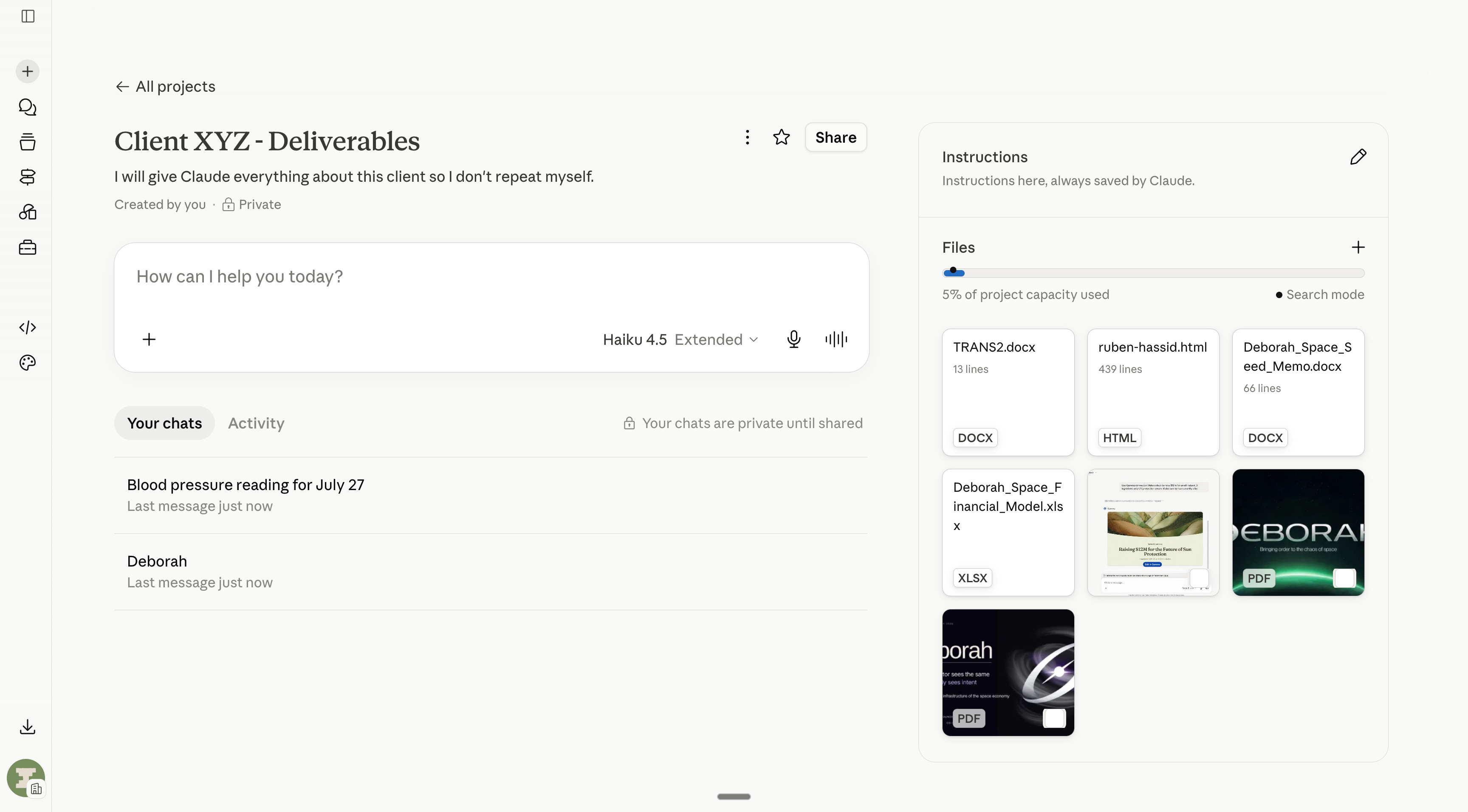
Your chats (bottom left) = your chat history. And Claude remembers that.
Instructions (top right) = a prompt that Claude reads everytime.
Files (middle right) = the most important part. Upload PDFs, excels, docs…
Option 3 - A real folder. On your computer, for Cowork.
5. What the f*** is Claude Cowork?
I am sorry to tell you it was last week’s newsletter.
So go and read it:

I will wait for you patiently.
And once you know Cowork, you will want to know Claude Code:
6. What the f*** is Claude Code?
Claude Code is thing developers won’t shut up about. The #1 reason people pay (a lot) for AI is to code.
But for rookies like you & me, we care about vibecoding.
And I wrote a free guide on it:

Alright, sorry for these articles to read.
Back to Fable-5 guide. I made a skill you can download to prompt it better:
7. /fable-prompter
I spent 4 years learning how to prompt.
You get to skip that (but you still need to understand what’s going on).
First, what a skill is: instructions you save once, and Claude loads them whenever you type their name. You type /name + one line. Claude does the rest. Skills work in the regular chat and in Cowork (and in Code).
Skills exist because repeating yourself is a waste of context (and of your life). Anything you’ve explained to Claude twice should become a skill.
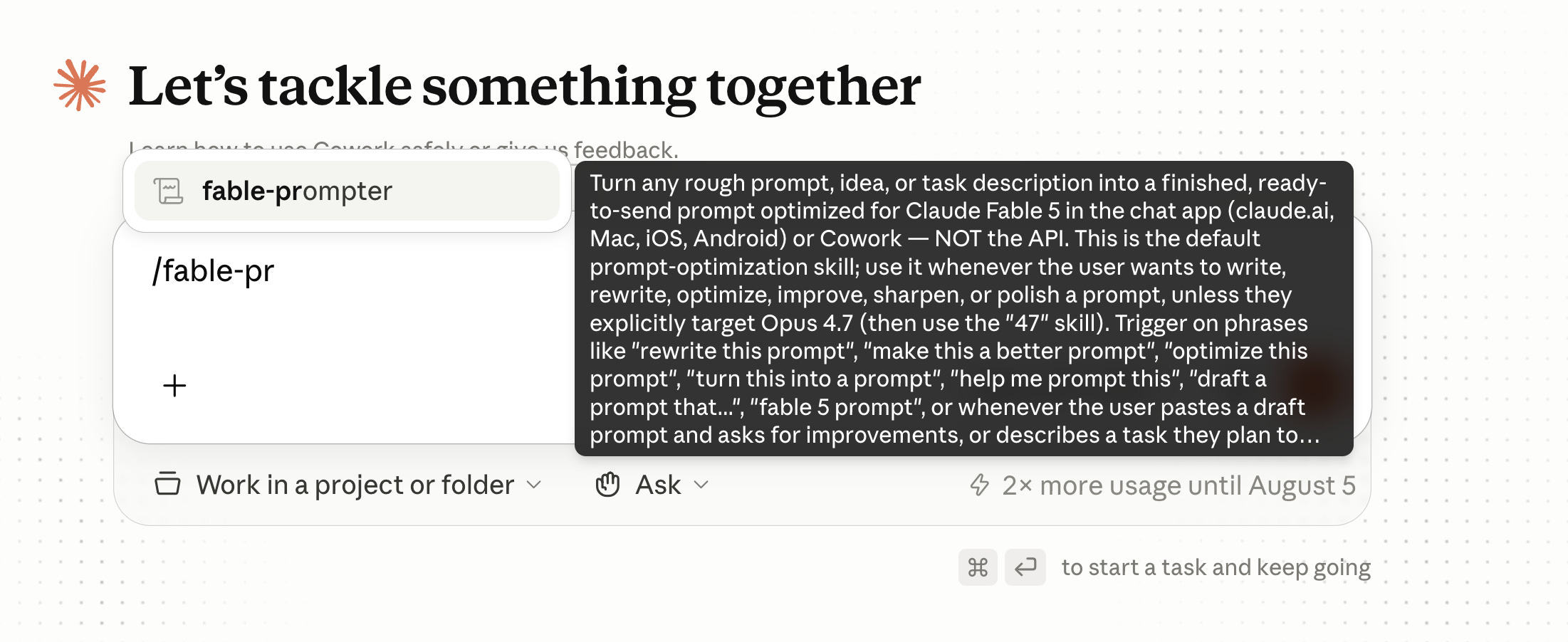
So I built one called /fable-prompter.
You hand it a lazy, half-formed idea. It hands you back a finished, ready-to-send prompt, built exactly the way Fable-5 likes them. Specific. Structured. Reasoning dialed all the way up. You copy it into a fresh chat, hit send, done.
The most important part is to give it to Opus 4.8 (not Fable).
I typed 9 words:
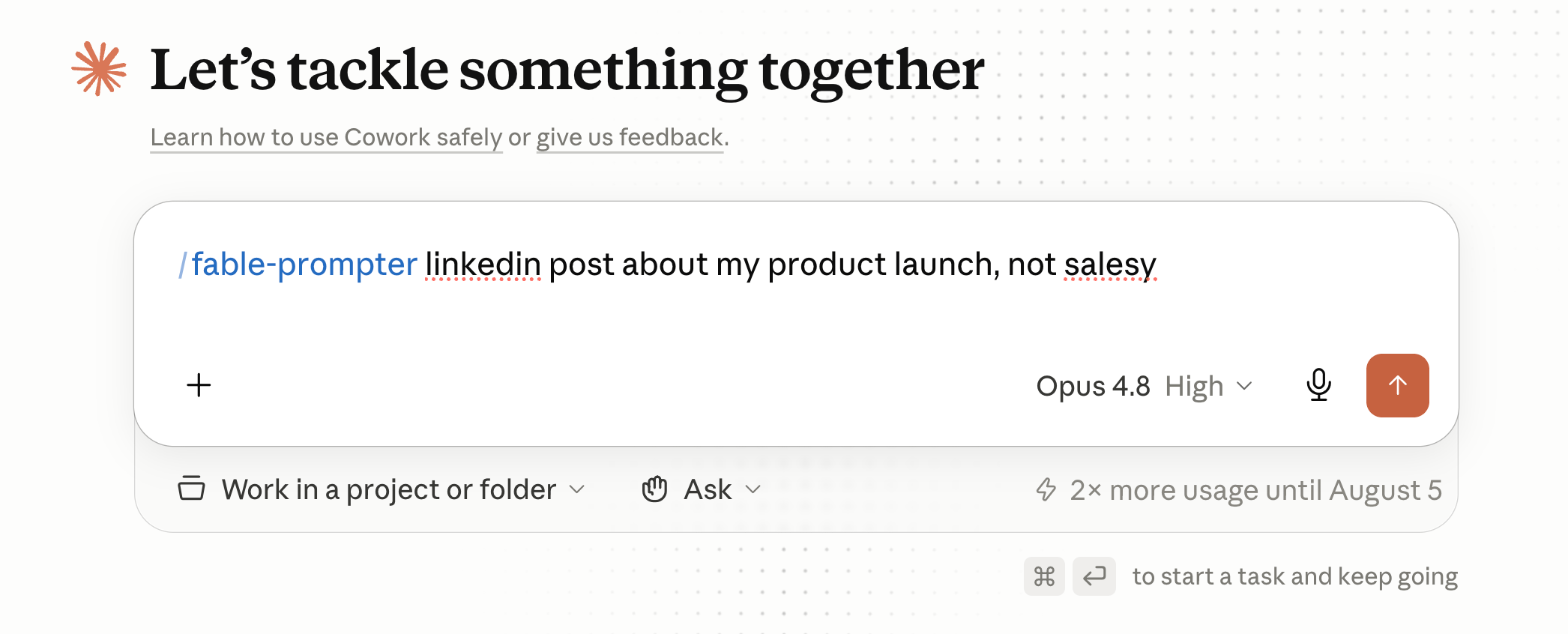
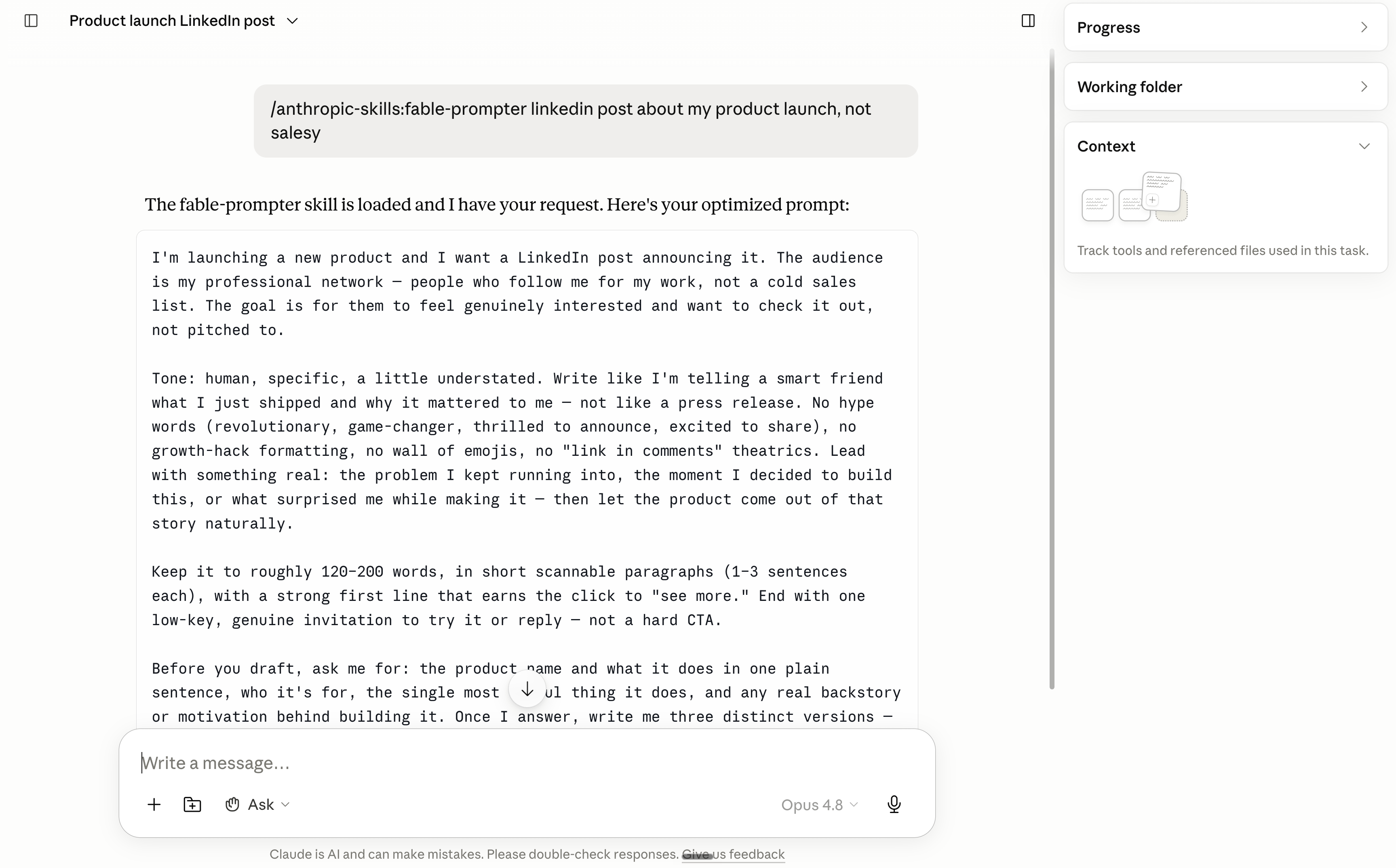
It returned a 15-line prompt: audience defined, hook rules, voice rules, length caps. And it ends by telling Claude to ask ME for the missing details before drafting. I wrote 9 words.
So now you can copy this and paste it into a Fable-5 instance.
How to install a skill (the easiest steps on Earth):
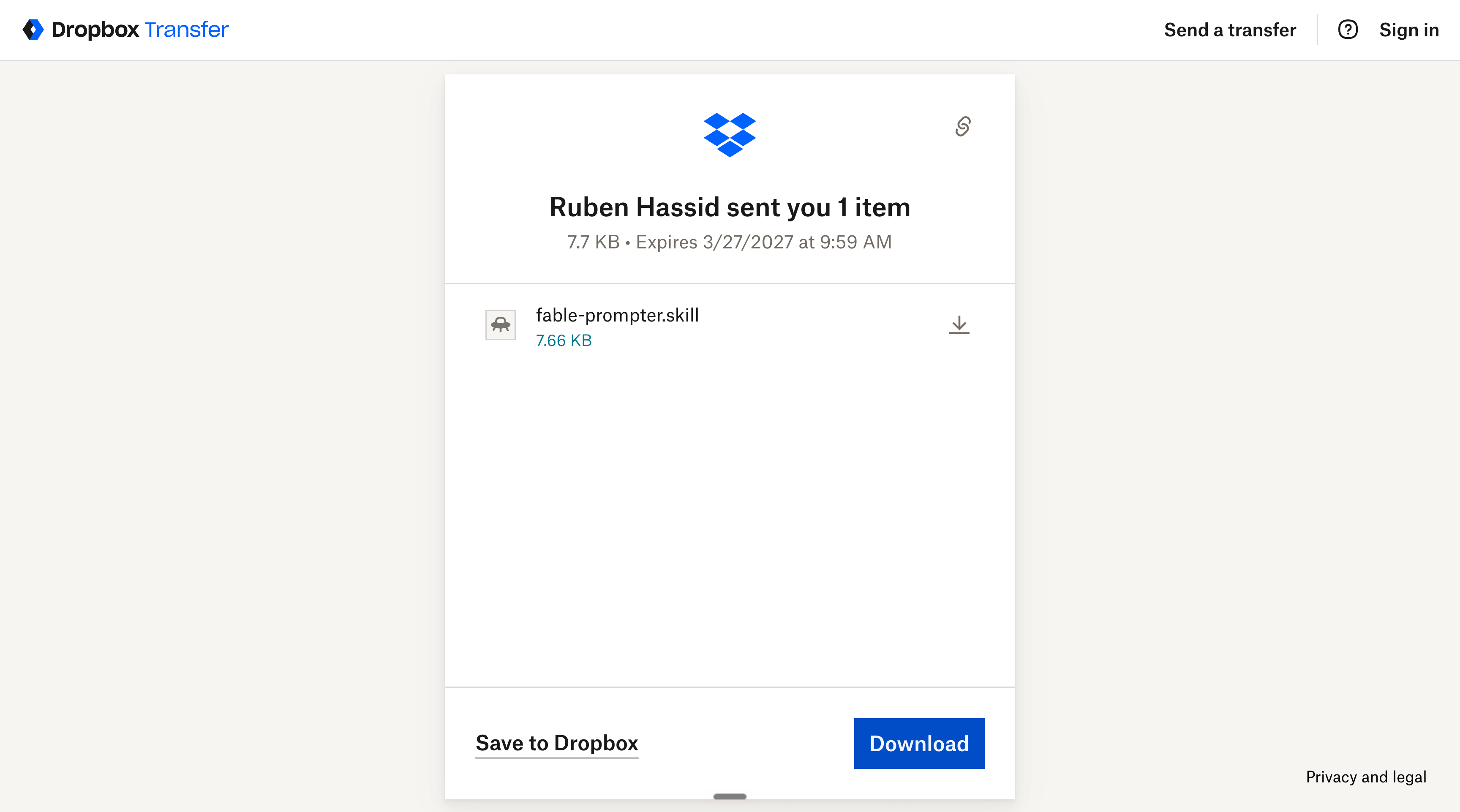
Download the /fable-prompter file.
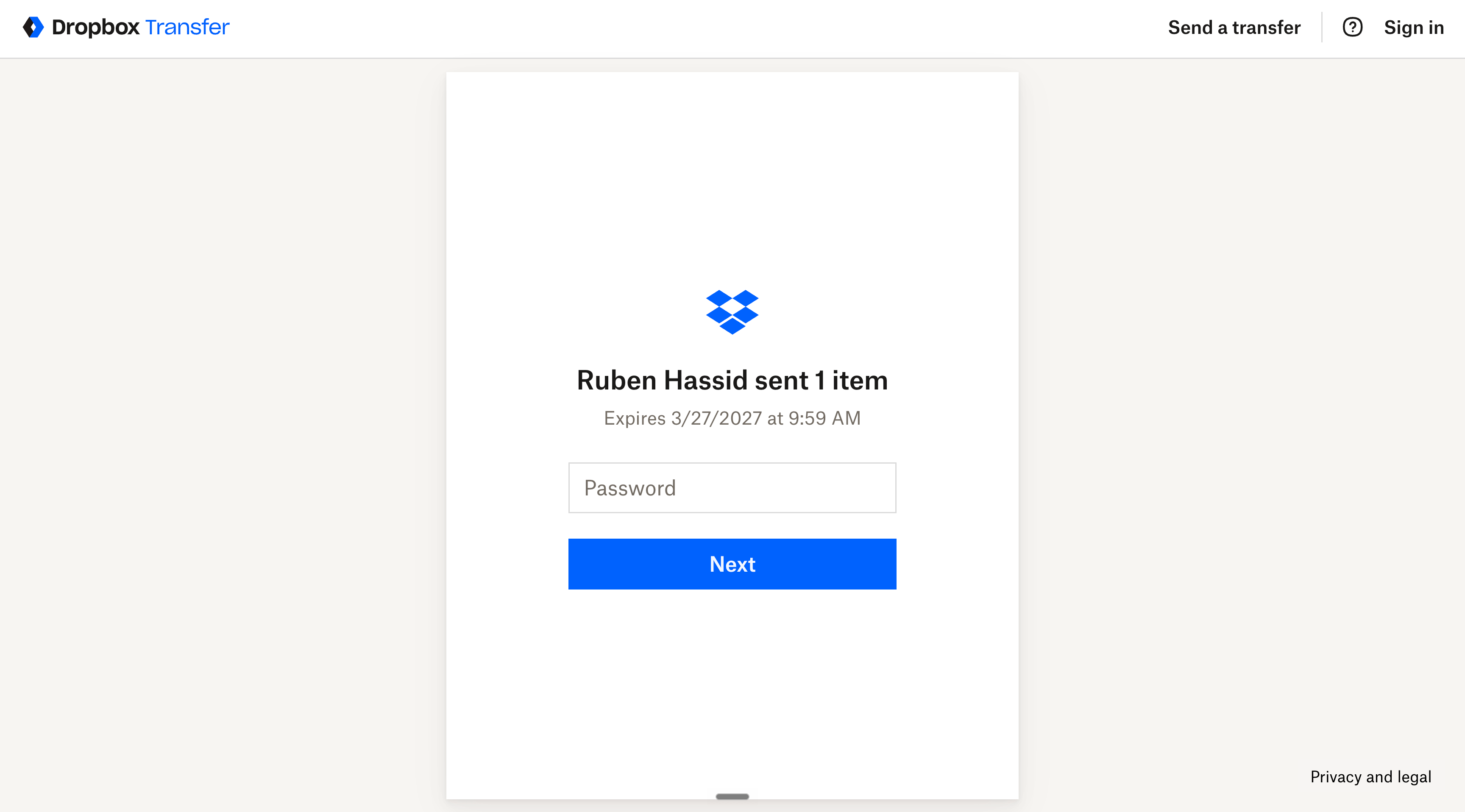
It’s on Dropbox, you will need a password.
Put: RUBEN-HOWTOAI
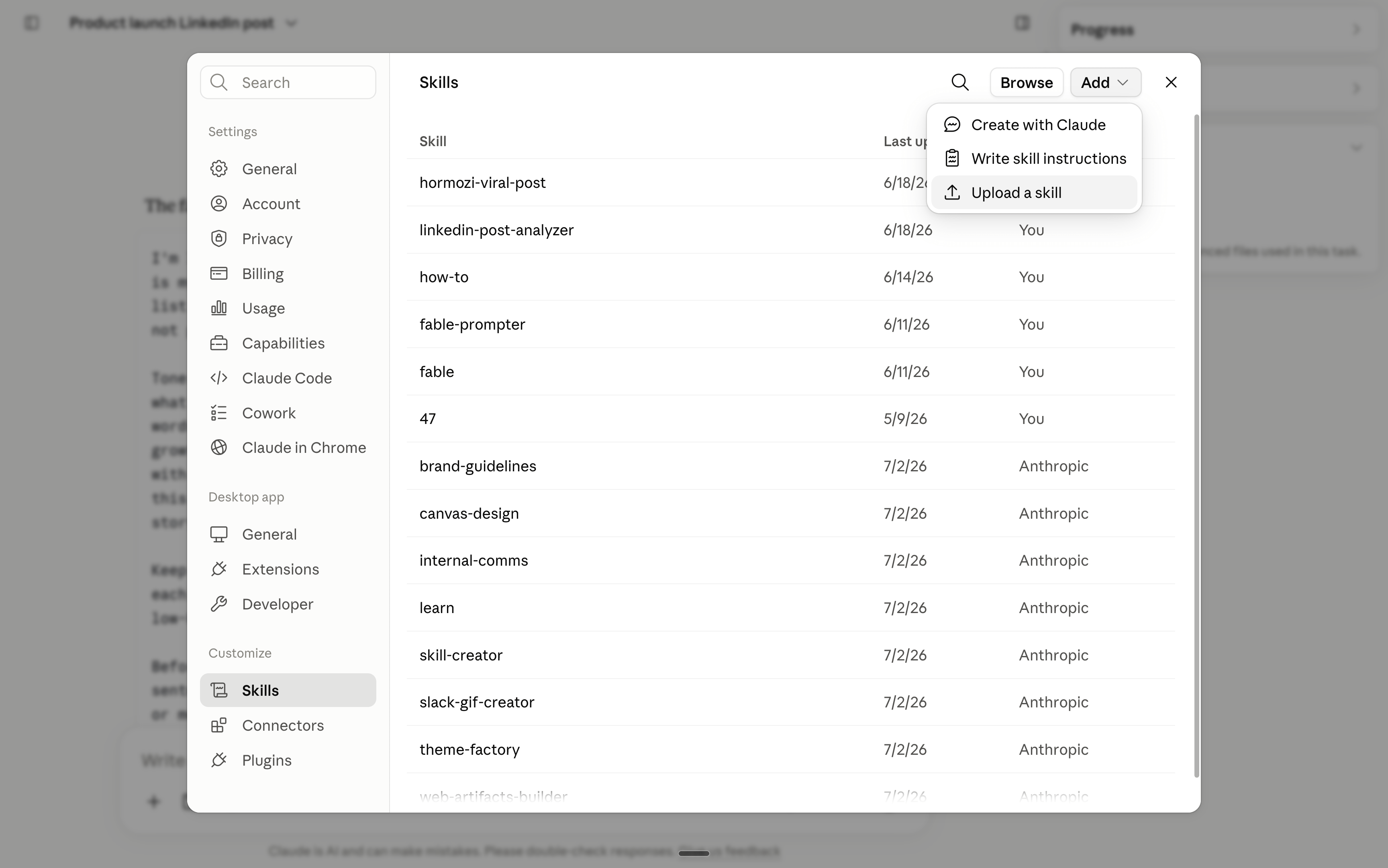
Go to claude.ai → Settings → find Skills (under Capabilities) → click + and upload the file.
Toggle it on. Open any chat. Type /fable-prompter + your idea.
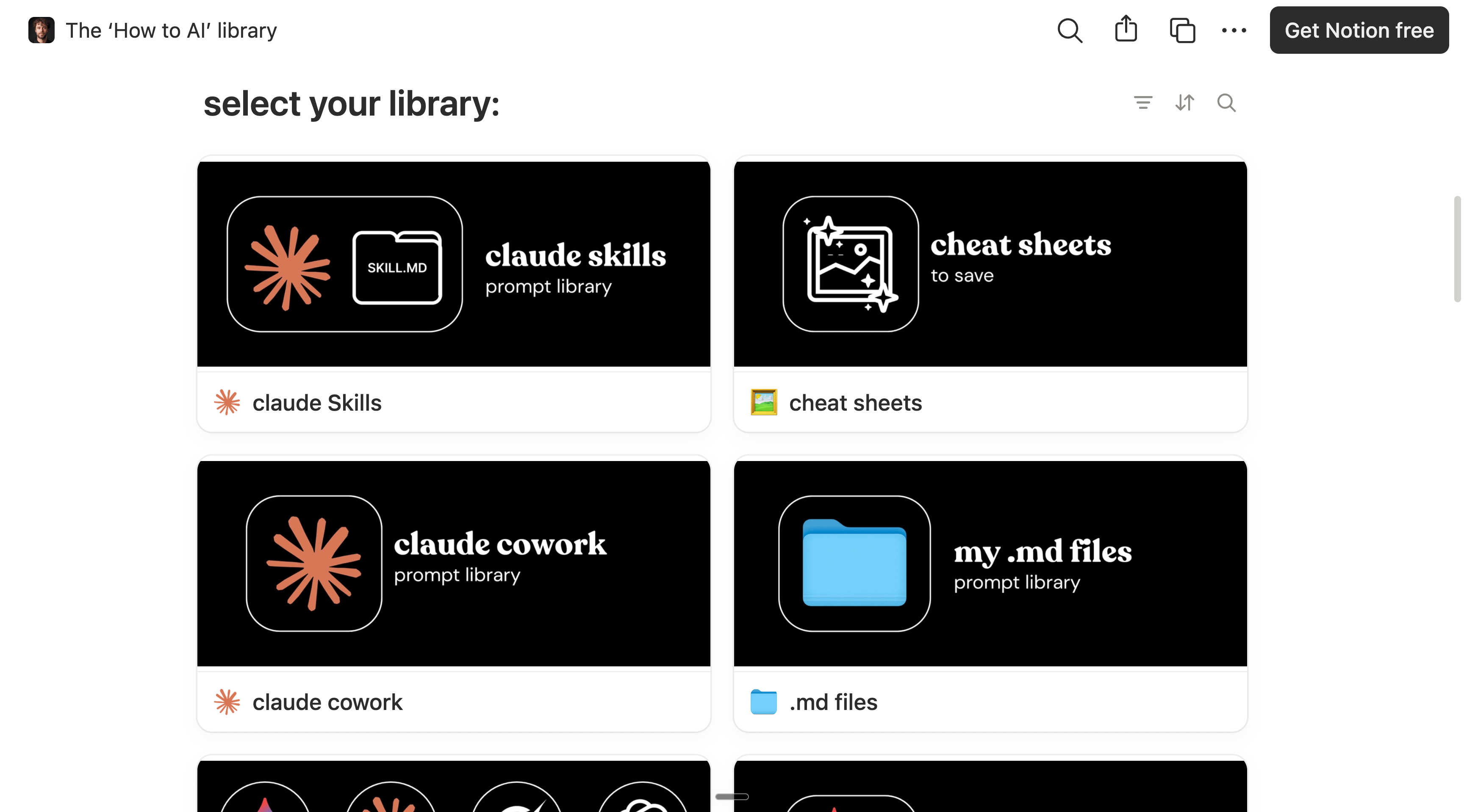
By the way, I gave a library of my favorite skills to Claude.
It’s at my welcome email for people who are subscribers (it’s free).
It looks like this:
If you are already a subscriber, leave a comment & I’ll dm you:
8. Your team’s brain, in a folder.
Your best teammate quits tomorrow. What leaves with them?
Everything.
The way they brief clients. The pricing logic. The 14 lessons they learned the hard way. It all lives in their head and their DMs.
Companies answer this with SOPs. Documents nobody reads, written once, outdated by next quarter.
I could teach you how to save someone’s brain. But 1/ it takes too long, 2/ it’s too industry-specific, 3/ that’s why I built a company around it.
We go into companies, help them extract knowledge from key people.
Now hold up. I see the haters coming at me. “Ruben, you help companies fire people ????” Hum. No. We helped people retire. They stopped working because they wanted to retire but couldn’t because they were afraid of sinking the company.
We call it the Wisdom Walkout.
Here are two quick stories that may sound familiar:
CEO of a family metal processing business knows every customer and metal without a spreadsheet in sight. We interviewed him and reviewed 2 decades of emails. Now anyone can chat with Jim’s AI Twin.
Global engineering design and manufacturing firm has 60 out of 350 employees over retirement age. They have a ticking time bomb of relationship data that’s about to walk out. We are currently indexing their team communication, paired with human-to-human interviews, to create a central knowledge base.
You feel seen? Send me a message to book a discovery call:
I don’t know nothing.
I’m not technical.
I dropped out of university.
I ran a techno music label before all of this (from being 17 to being 24).
If I can hand my week to an AI and get it back with the work done, so can you.
Be part of the 0.36% who actually tried Claude.
Heck, be part of the 0.36% who is doing it well!
I wish to help a tiny percent of humanity to know how to get better at AI. Even 1% of us. That’s like? 82 million people? I’d love to. Help me get there, share it.
PS: This newsletter stays free because you guys share it. Every article crosses 1,000+ shares, and it’s my weekly north star. The best share is your team’s group chat (Slack or Teams): you save them tokens, and you help me spread the word.
I send a welcome email gift to new subscribers. But I created it when I already had 500,000 subscribers. So if you are one of them and you never received the gift, leave a comment and I will dm you.
Hey ruben, I have finally read all your articles ever posted, and made a lot of changes and implemented a lot of things. Also made an personal archive with notes & bookmarks in a notion page.
I really appreciate all your efforts to post learning articles every week, without any cost. Just can't thank you enough man. Thank you so much for your work. Have a good day!!!!!!!!
(And don't stop writing articles please.)
I’m a novice, not a techie, and I’ve already made 3 dashboards, assets for my coaches, and numerous daily sweeps. Thanks Ruben. You give me courage…