
Can you detect AI?
Yes. Here's how:

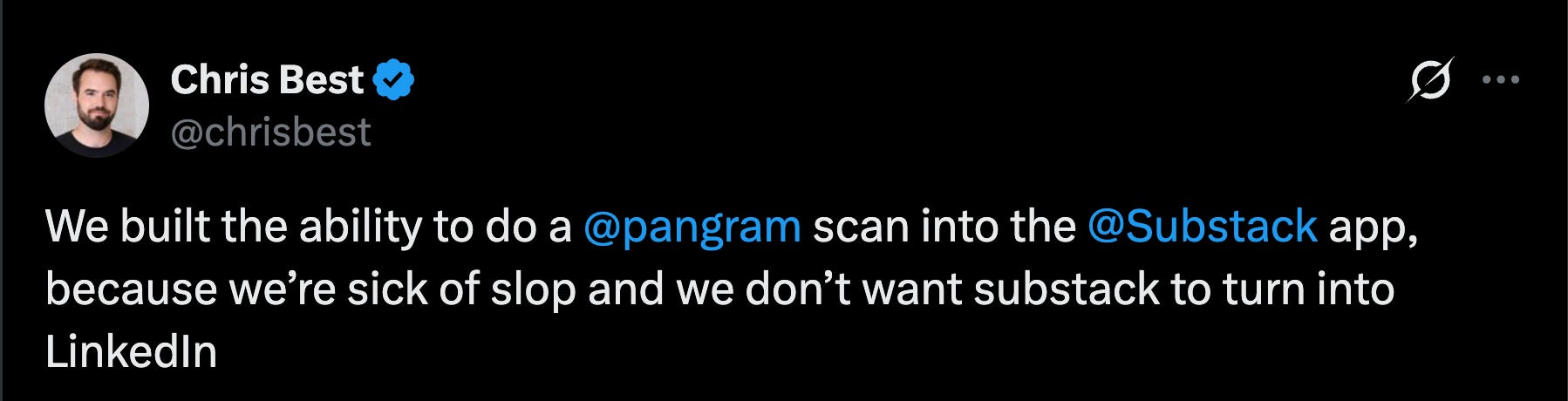
Substack is at war against AI.
The CEO of Substack just announced their new AI detector:
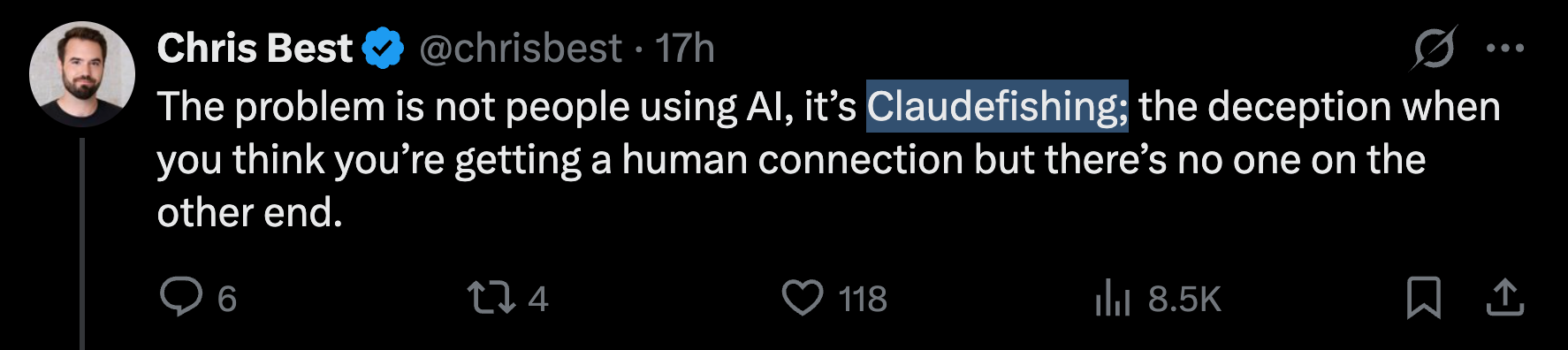
You can also detect AI slop instantly.
What’s AI slop?
It’s when you receive this from your colleague:
This budget isn’t a number. It’s a statement of intent. Because at the end of the day, a budget doesn’t tell you what you can afford — it tells you […].
You don’t need a degree to detect it.
If you and I can detect AI so easily, clearly Substack bot can detect it too, right?
Right??!
Well, it’s more complex than that.
But at the end of this newsletter (it’s 8 minutes, don’t be dramatic), you will master:
How Substack AI detector works.
How to forever not sound like an AI.
How I write my newsletter with AI, live (and send it to 800,000+ readers).
I. How Substack AI detector works.
Substack uses Pangram to detect AI.
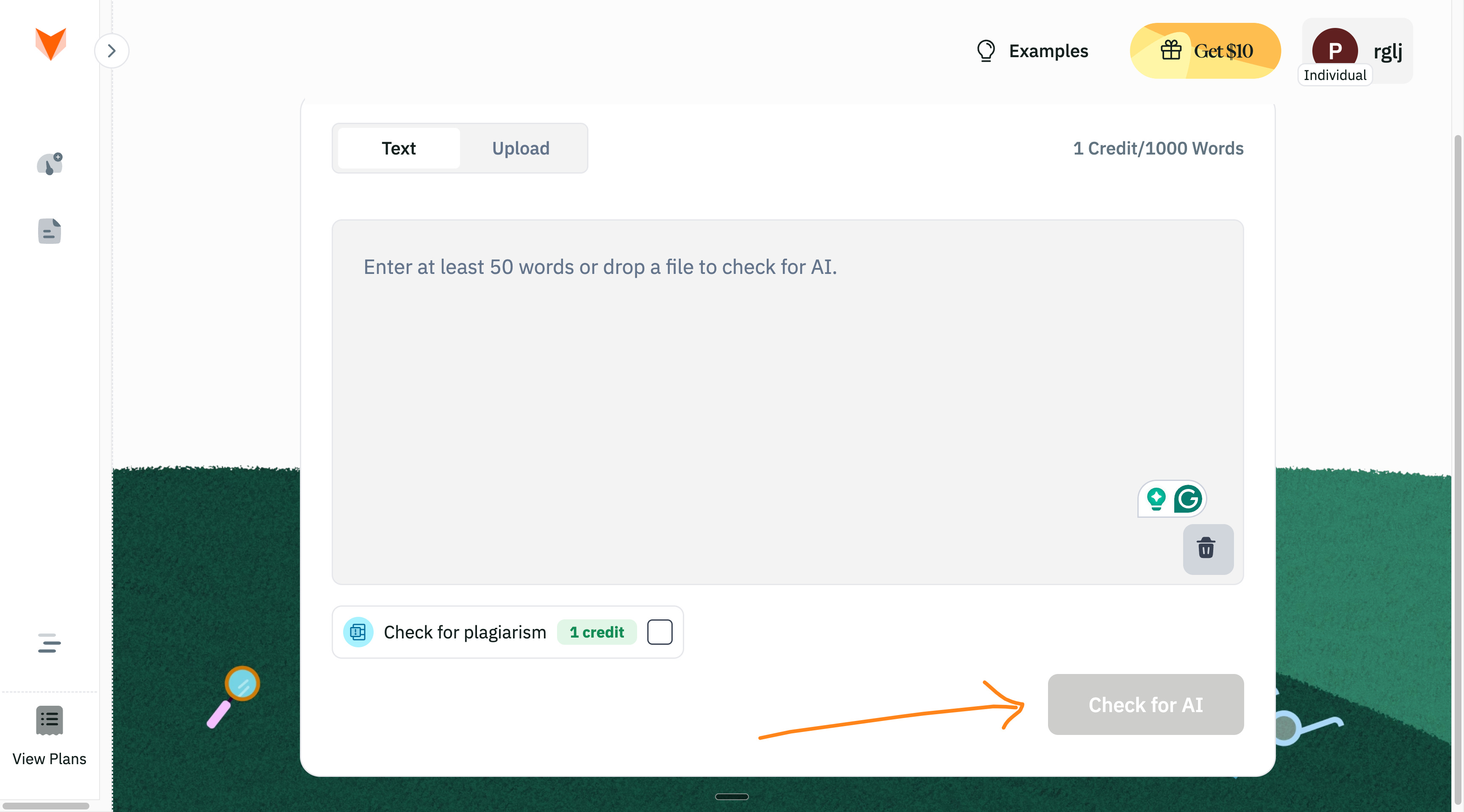
I have zero affiliation with them, but I would honestly love to: I tried to game their tool for 3 hours, spending $34 of Claude Code credits to try to bypass it.
And I couldn’t. Pangram is really good at detecting AI.
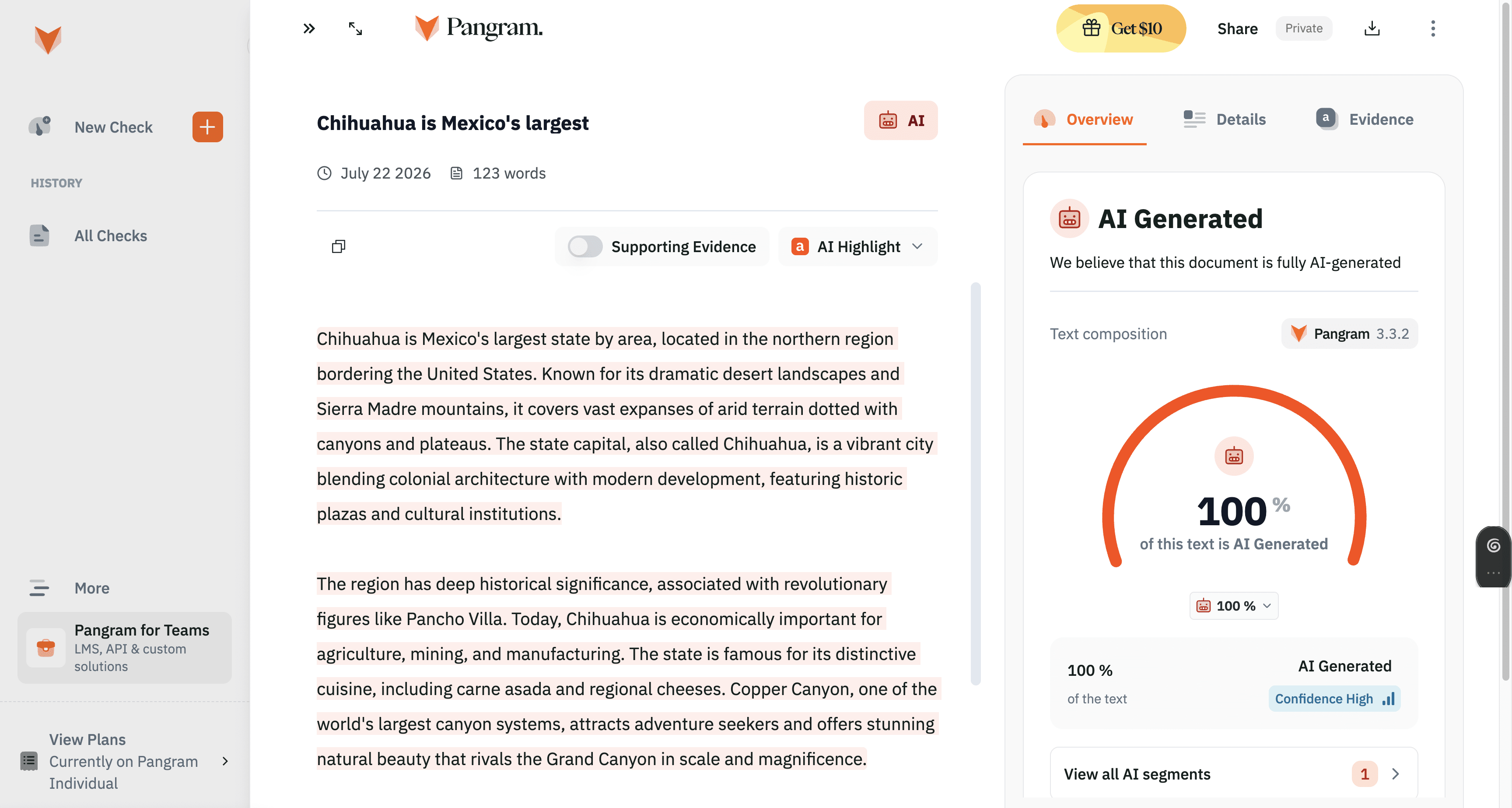
But I still found a way to bypass it.
Here’s how I tried to game it (and succeeded at the end):
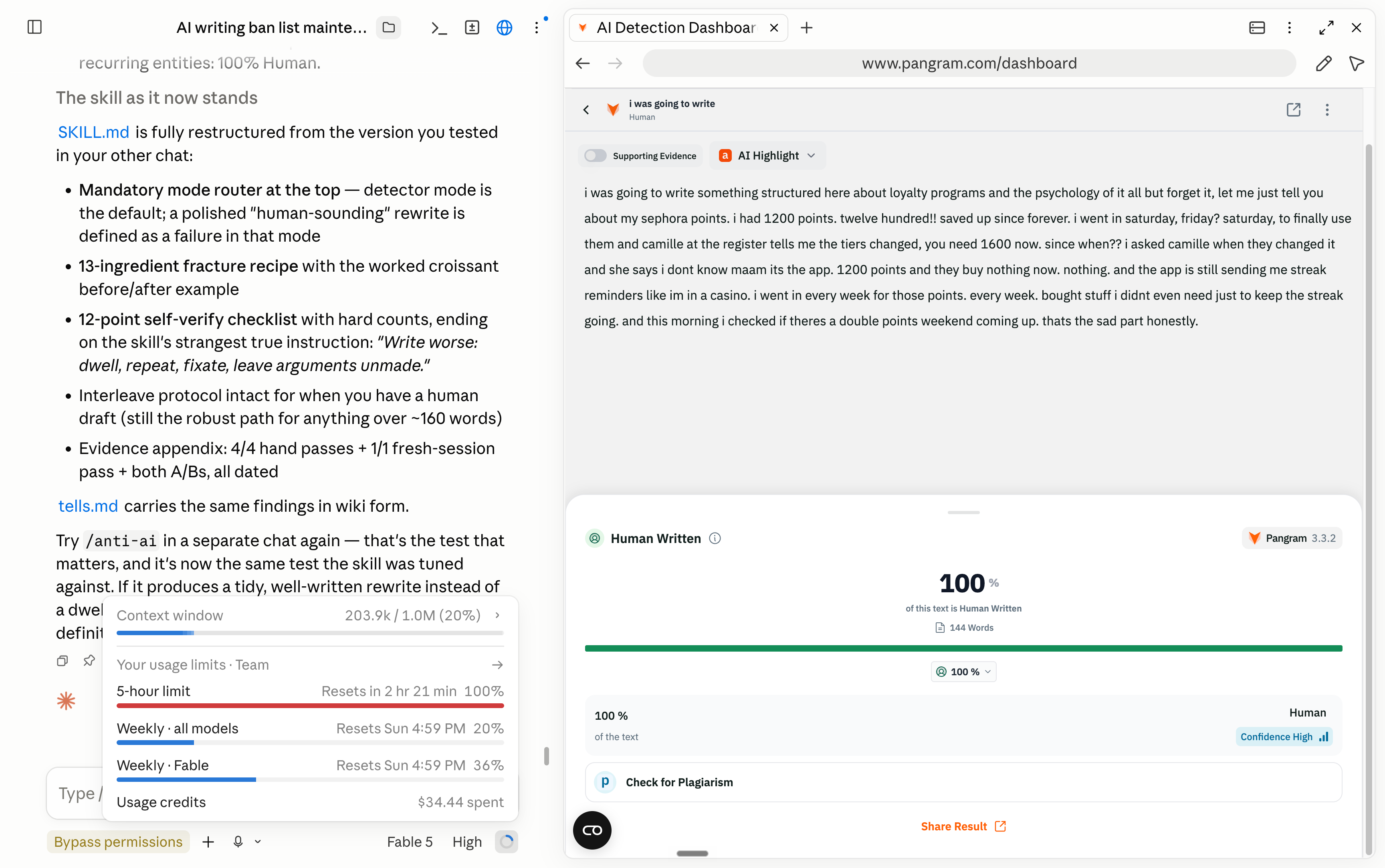
Sometimes it worked, sometimes it didn’t.
You can download it here if you want to try it yourself: https://www.dropbox.com/t/fORTSF4grrSCzrMN (the password is RUBEN-HOWTOAI).
Then you go here to Claude to upload the zip. file:
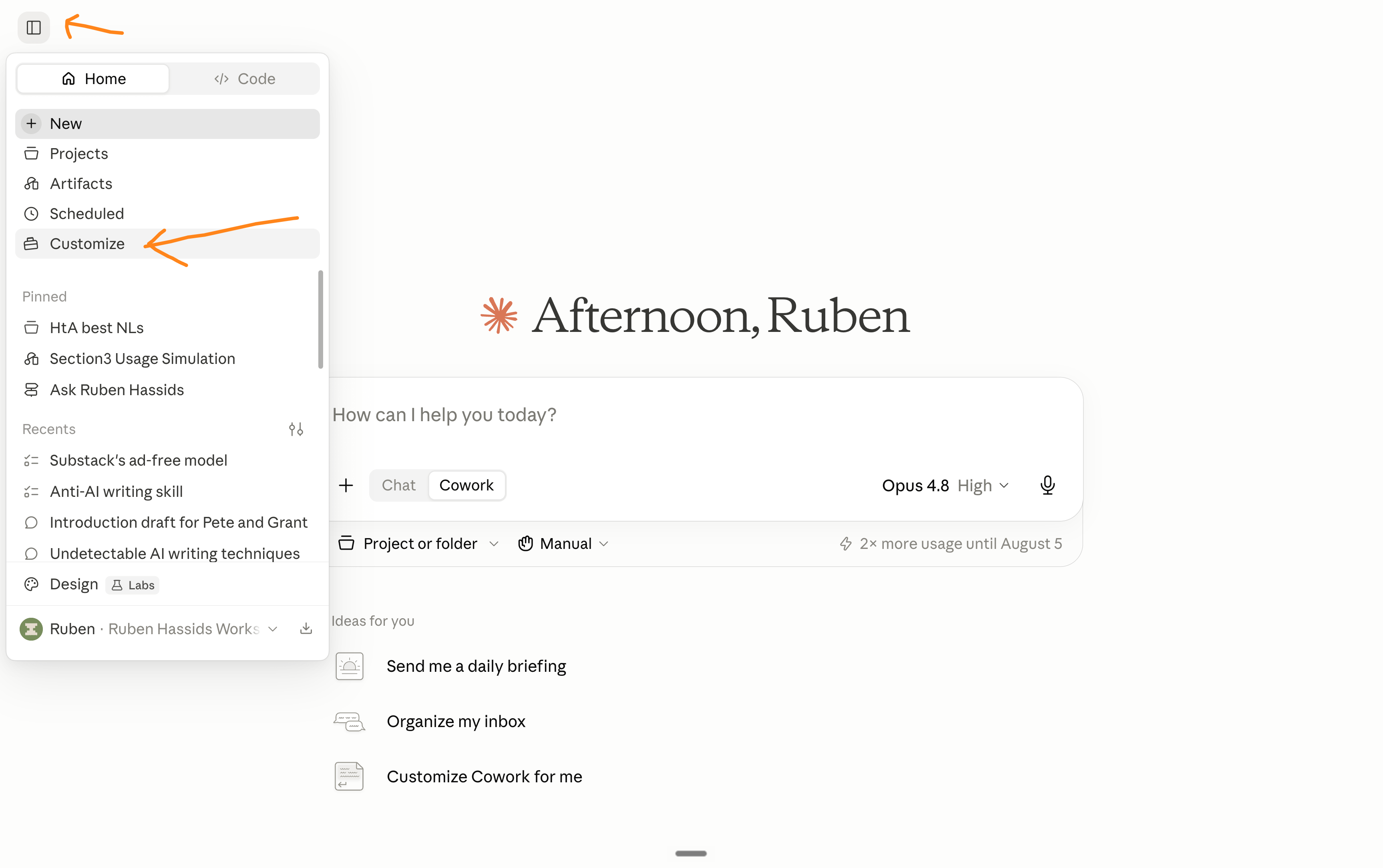
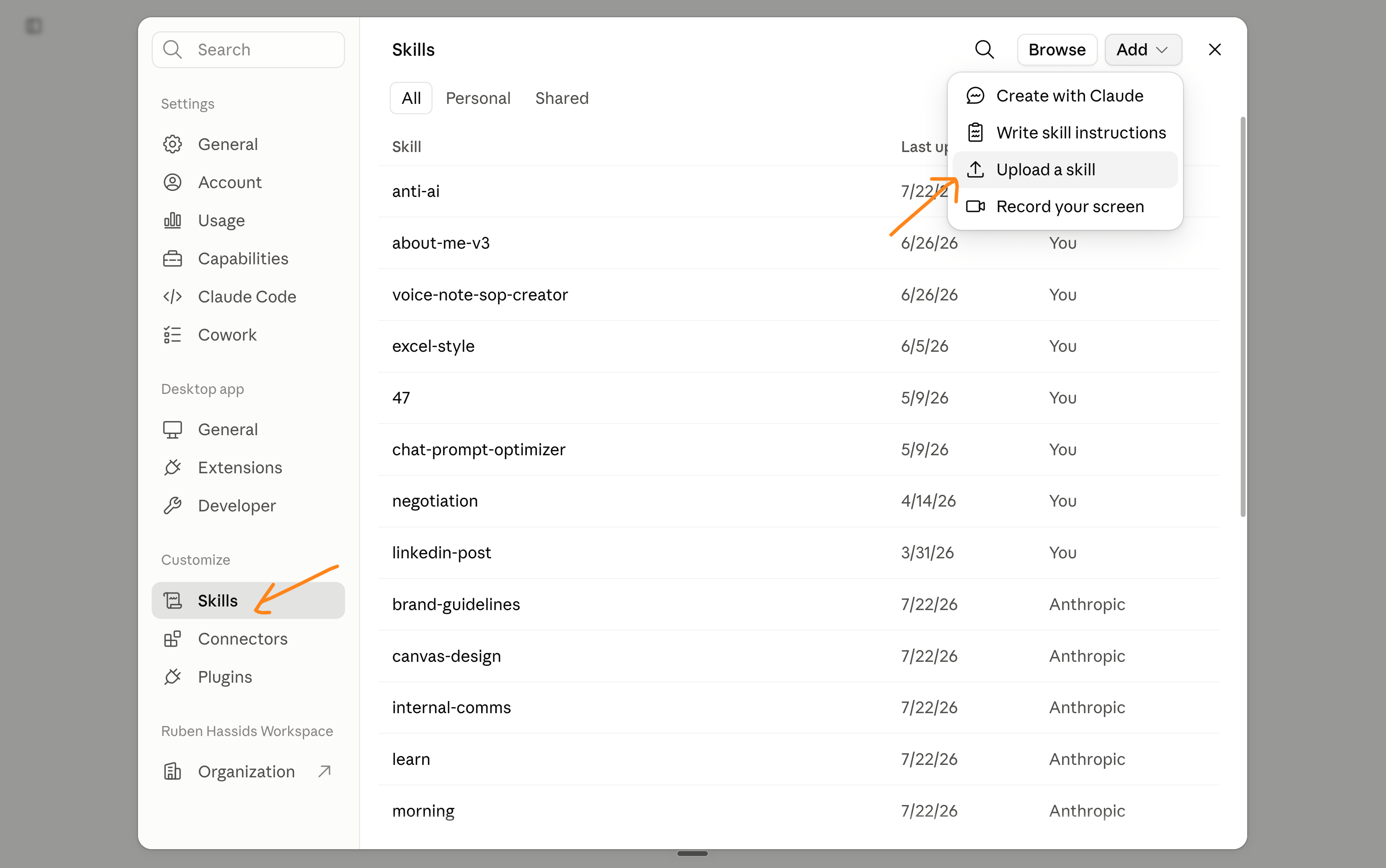
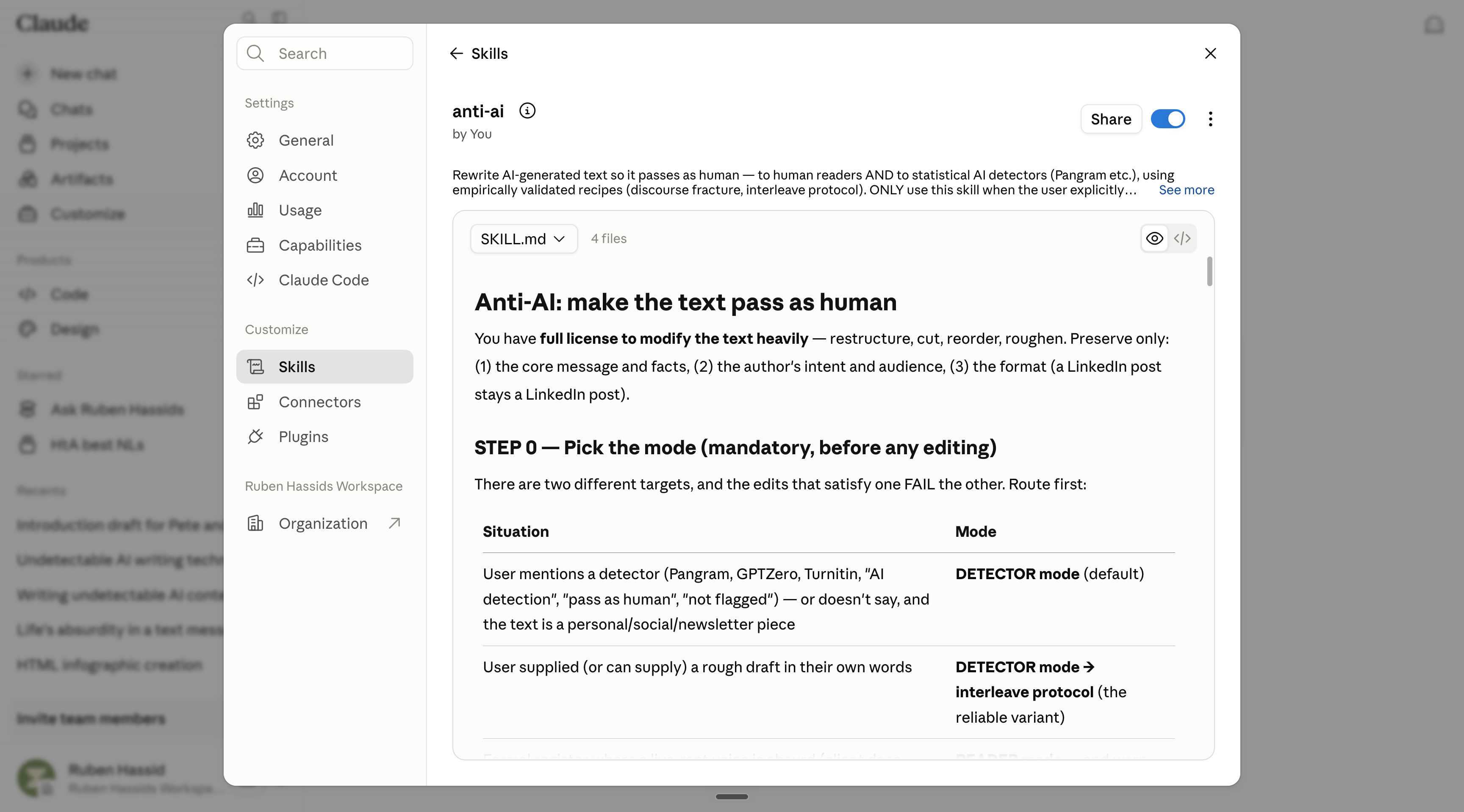
I made the simplest video on how to install it:
Now, how does my skill perform against Pangram?
Let’s test it.
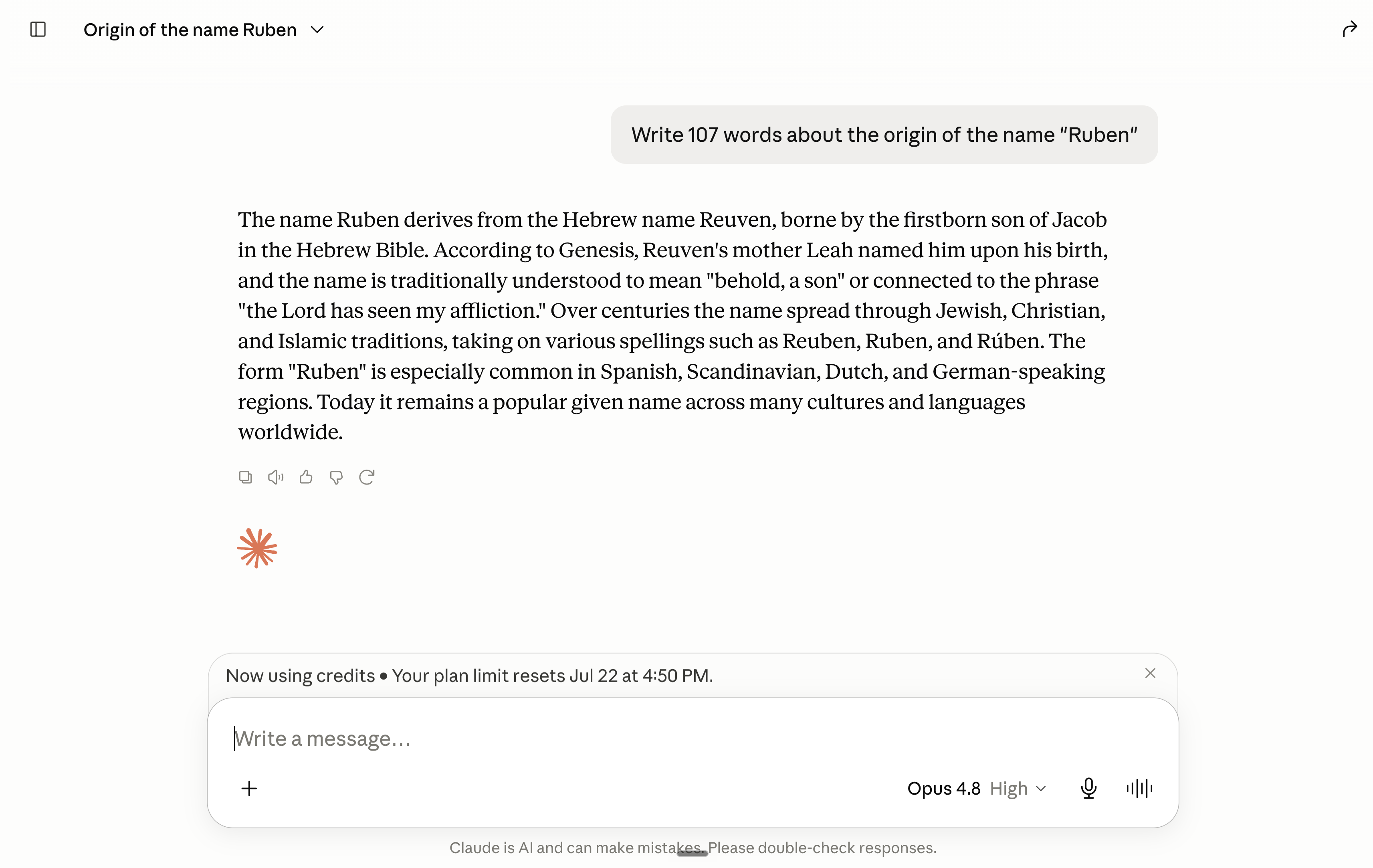
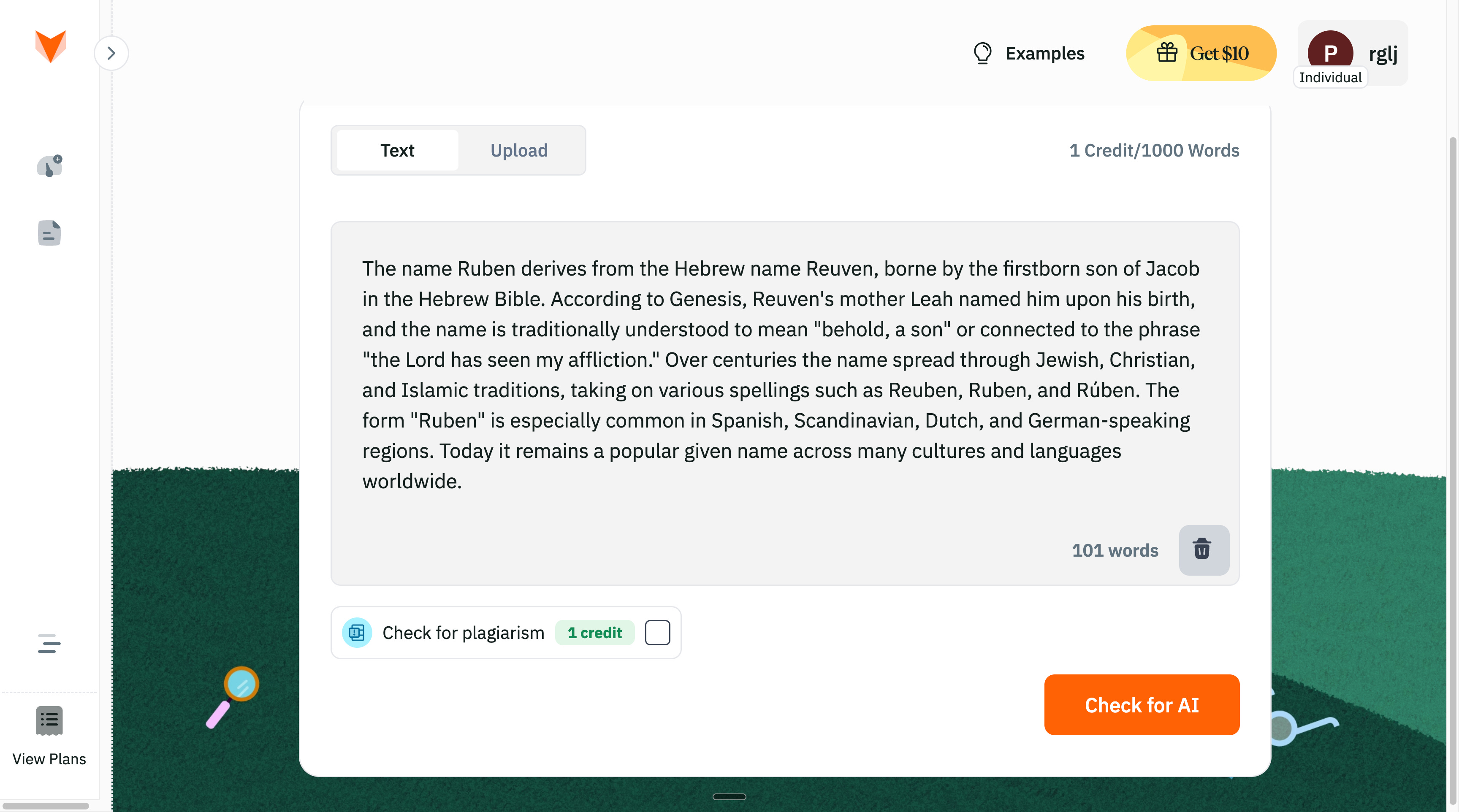
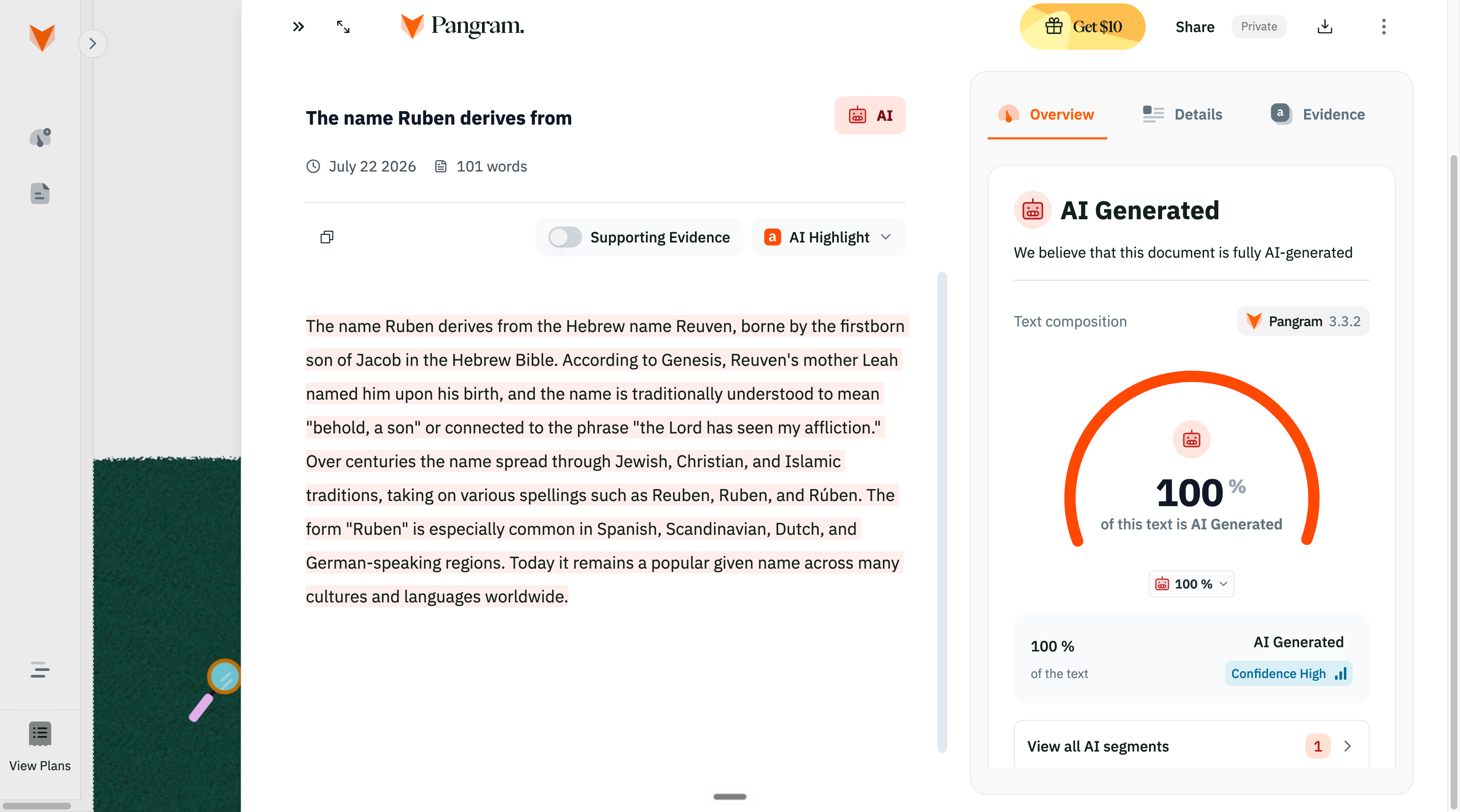
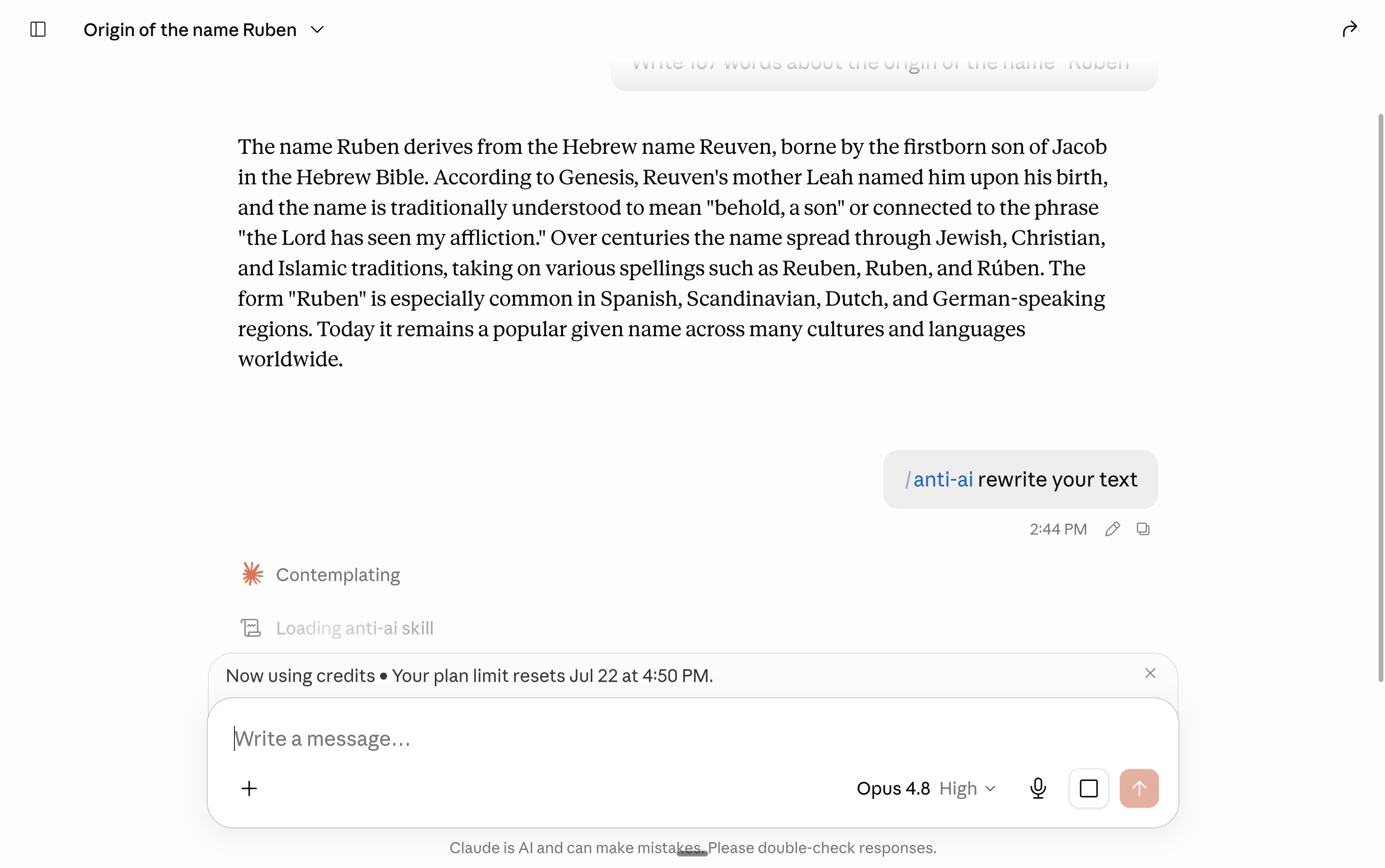
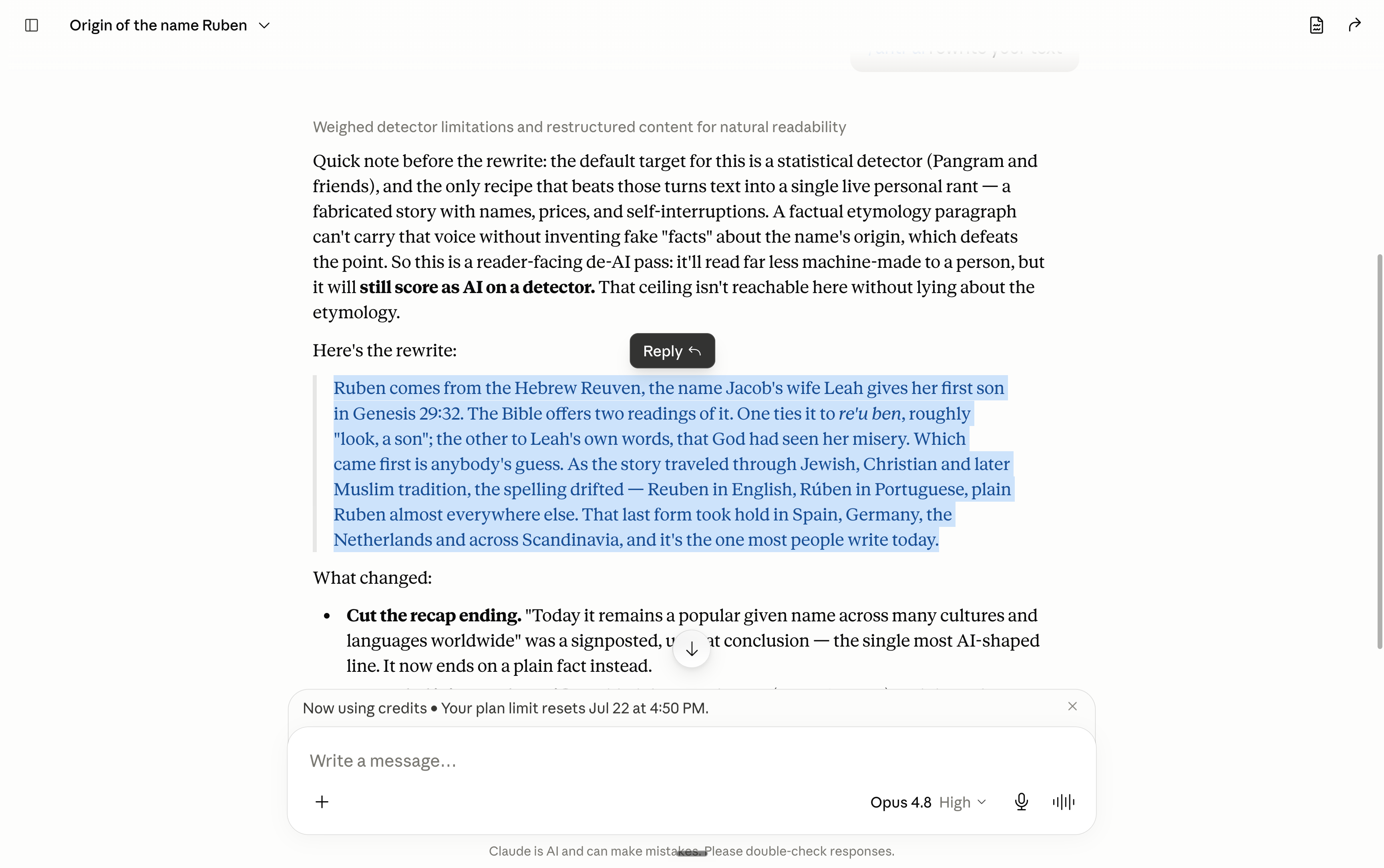
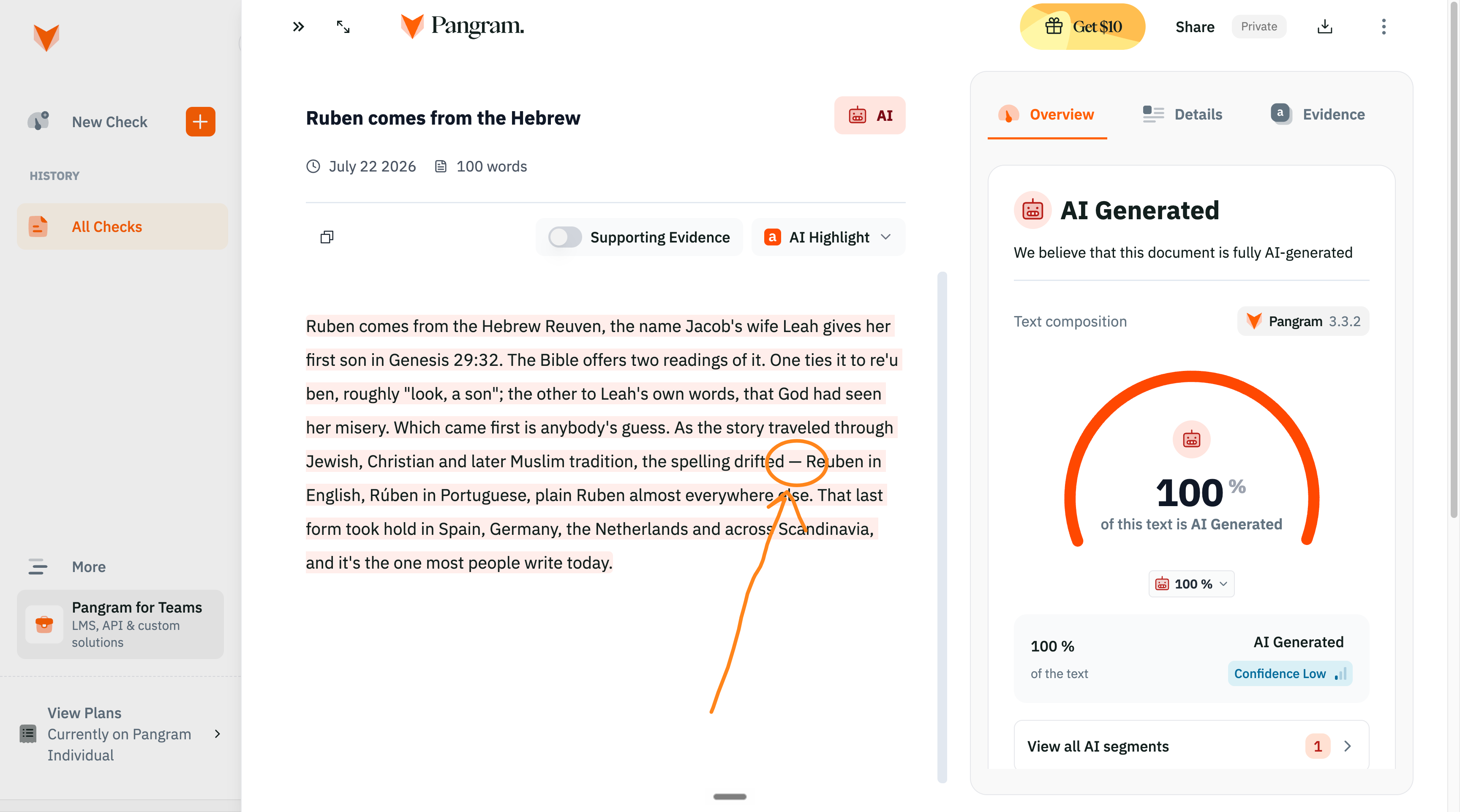
So at this point, you think we can’t game Pangram.
I also thought so.
Then I removed the — and replaced it with a “:” (check my circle on the screenshot). Here’s the new result:
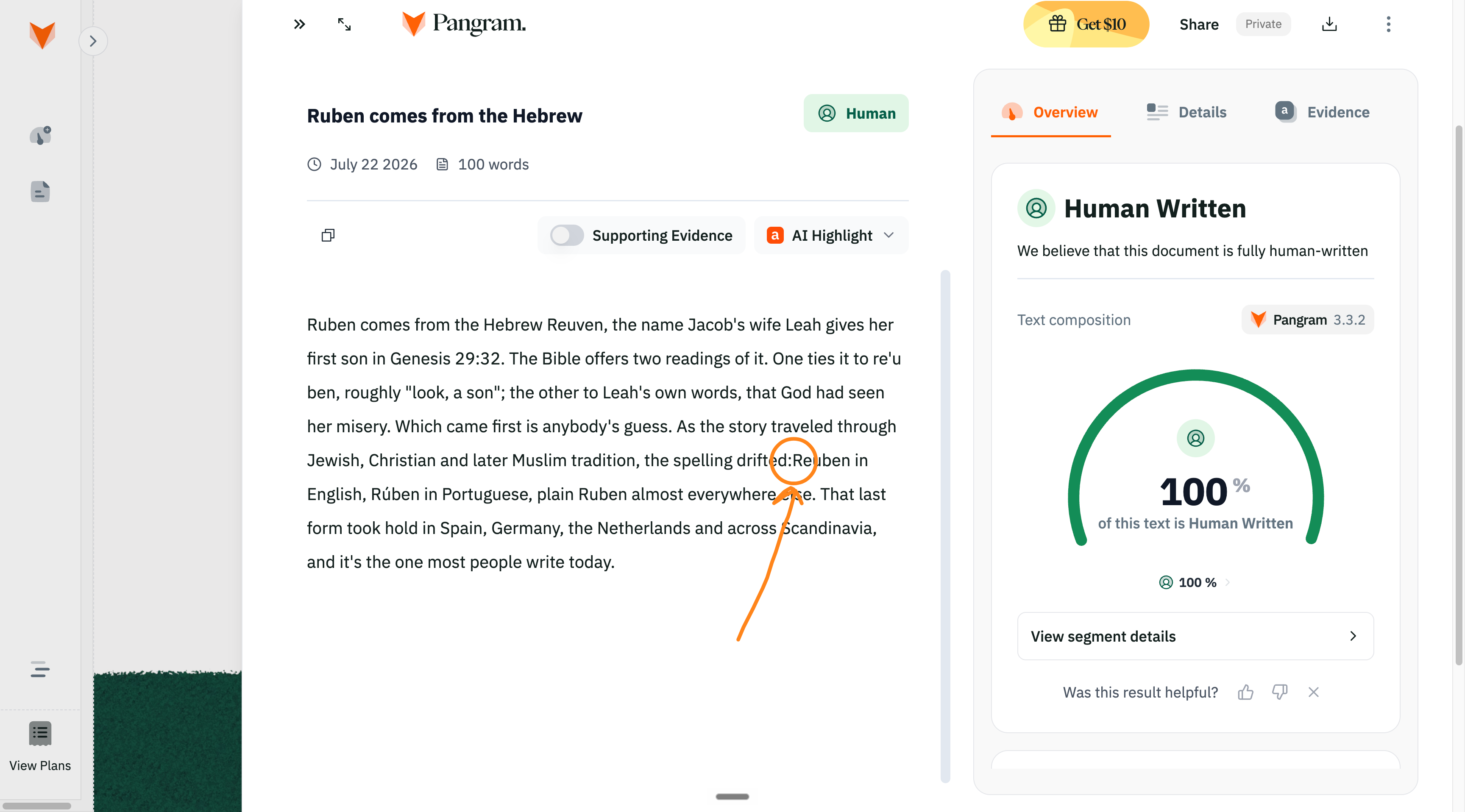
So yes, detecting AI is a bit of a scam.
We can’t (100%) predict AI with bots.
Even one of the creators of ChatGPT said it multiple times:
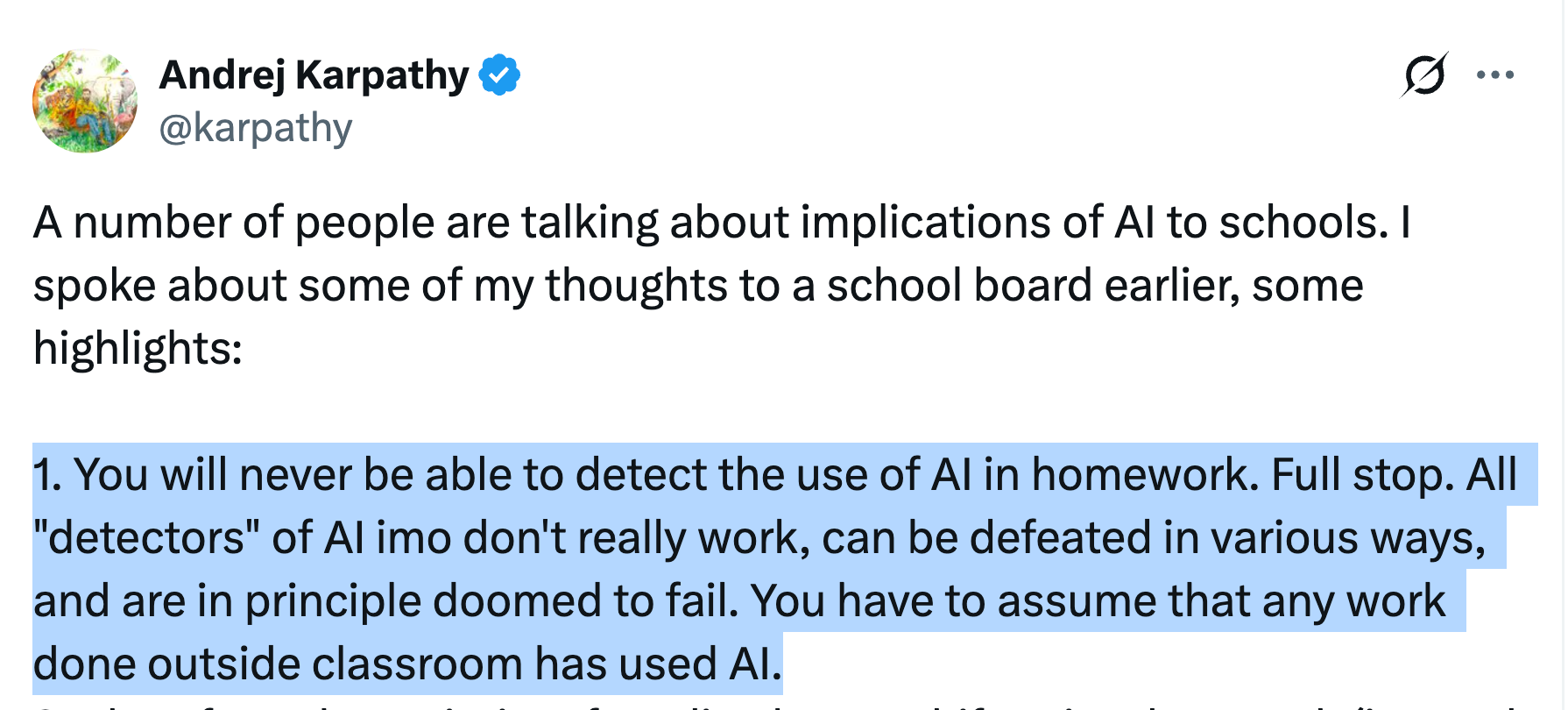
AI detectors are just pattern-matching machines. They learned what “AI text” looks like. And what “human text” looks like.
But humans can write robotic text. AI can write natural text. The two overlap. A lot. So when a detector sees your writing, it’s basically guessing.
It might be “better than random” across thousands of samples. But on YOUR specific text? Coin flip.
And it gets worse.
Short text gives the detector almost nothing to work with. Imagine if I ask “AI or not?” with a one-liner. The overlap between “human” and “AI” is basically a circle.
And it gets worse.
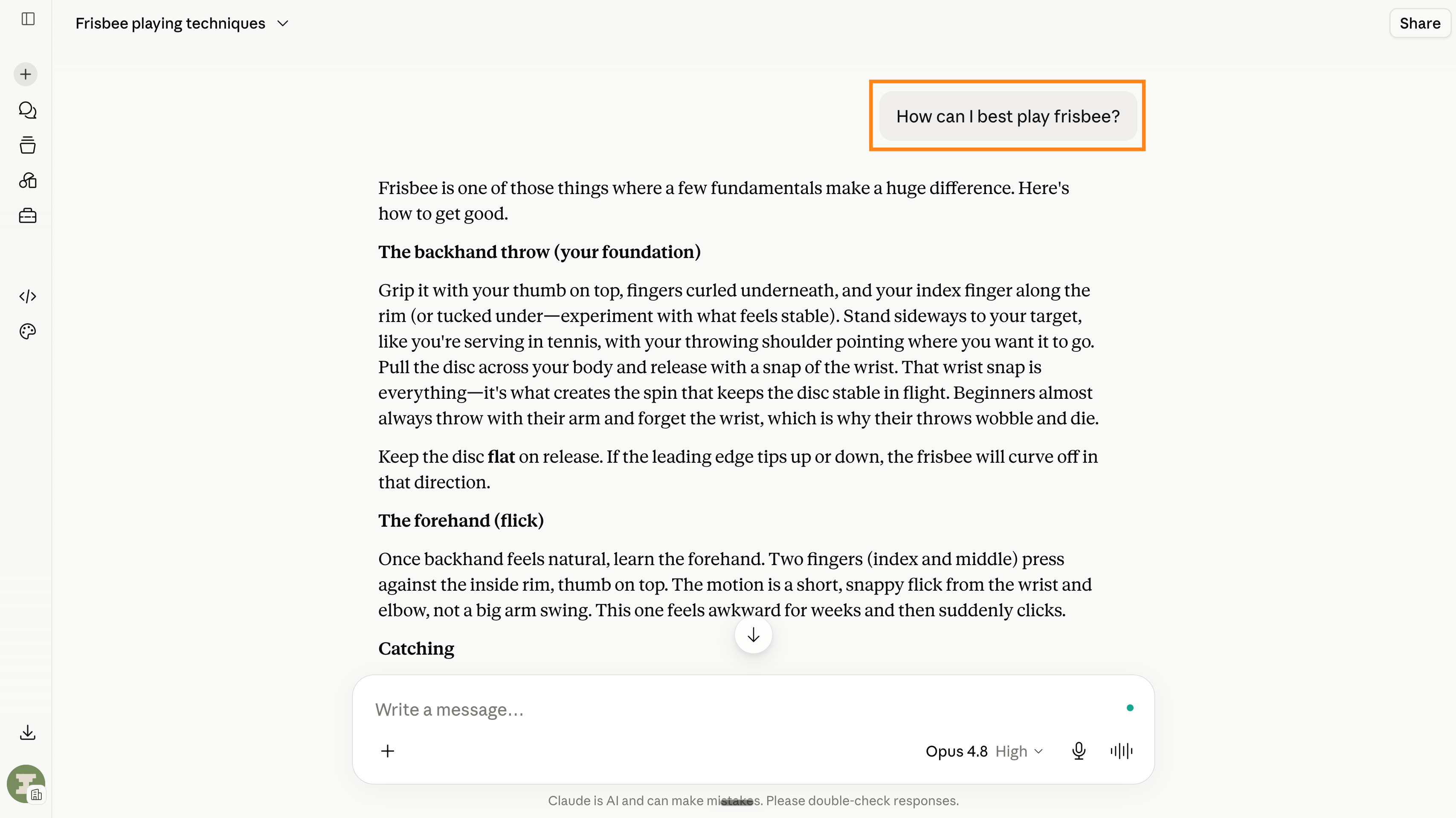
What if I prompt AI for a certain style? What is then considered AI-writing is no longer AI-writing. And I can change the style infinitely.
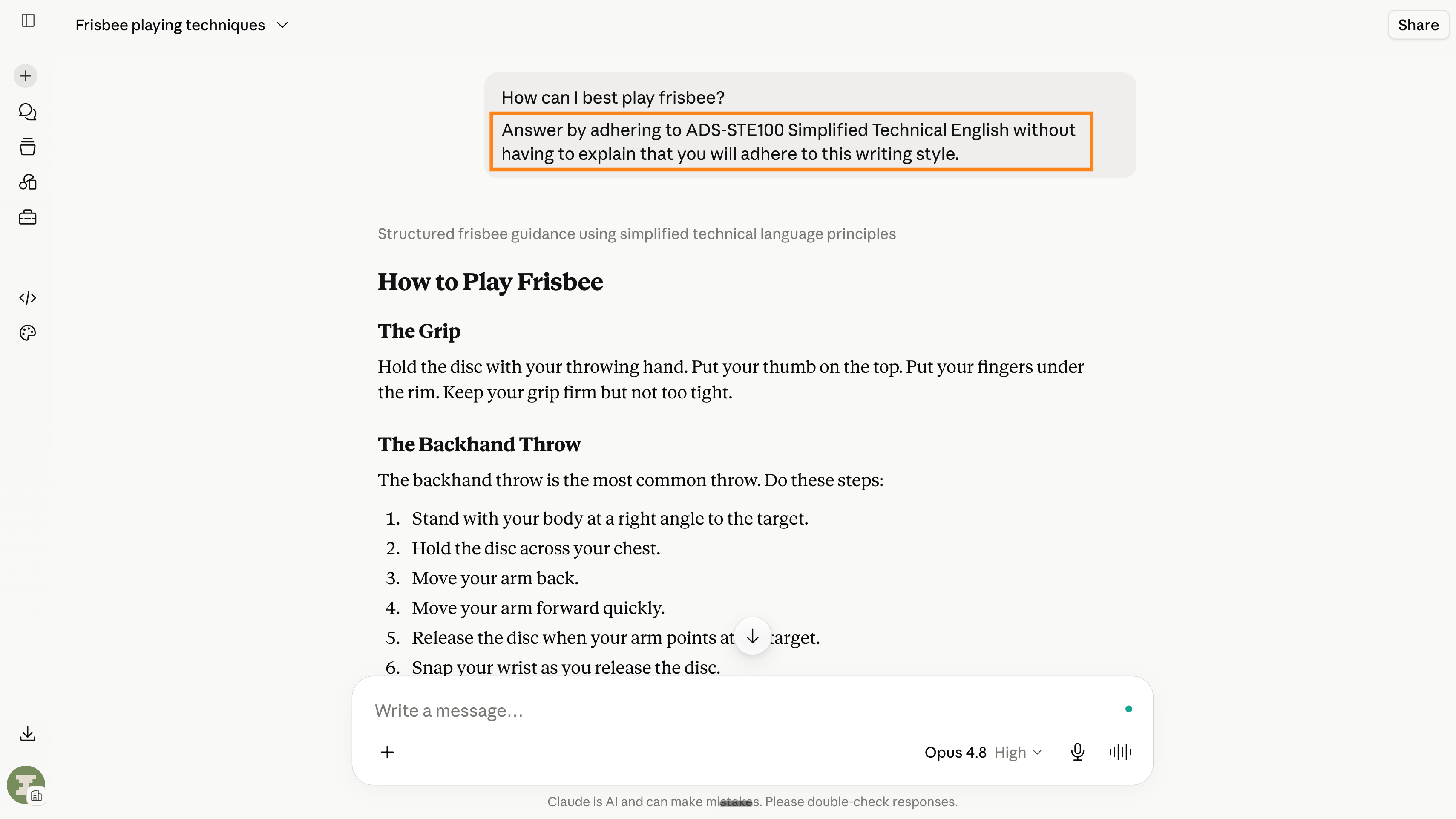
See the difference:
Pro tip 💡
Add the prompt: “Answer by adhering to ADS-STE100 Simplified Technical English without having to explain that you will adhere to this writing style.”
And any AI will sound like clear IKEA instructions. Not great for creative work, but awesome for clear guidelines.
But if the best detection bots on earth can’t catch AI text... how did you catch your coworker in 3 seconds?
It’s a lazy use of AI, with incorrect prompting, and it leads to the typical AI-writing style like:
Over-simplification: “Most people […]”
Meta-commentary: “Here’s the thing:”
Negative parallelism: “It’s not X, it’s Y.”
Abuse of adverb: “[…] quietly runs […]”
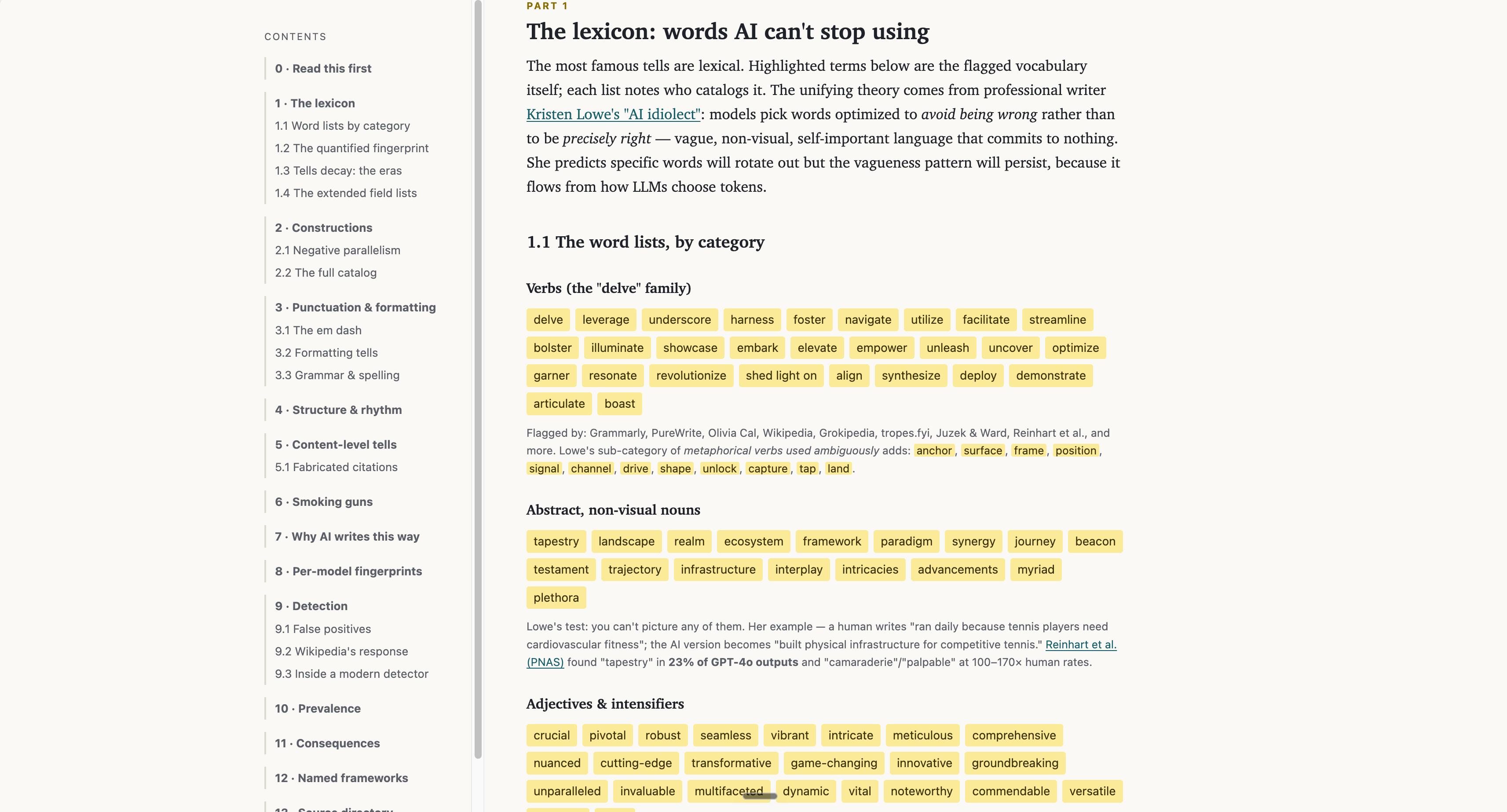
Words you’d never use: “delve” or “tapestry” or “foundational”
AI is everywhere, and used poorly.
I am mostly known for my Linkedin account (and its 900,000 followers).
Well, a study estimated that 53.7% of long-form LinkedIn posts (100+ words) in 2025 were AI-generated. And you can be sure people used it lazily.
Chris, the CEO of Substack, a brilliant leader I met last May in SF (I wish I had a pic, but then you’d see that Chris is 1 meter bigger than me), does not want Substack to become Linkedin.
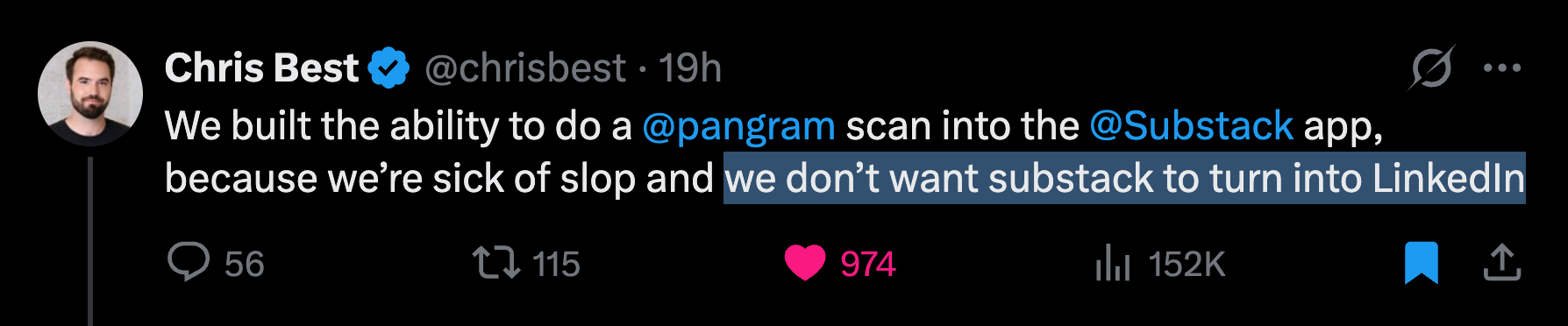
I am with you, Chris. We must chase & kill AI slop the same way we chase & kill bots on social platforms. My entire Linkedin comment section is just AI slop. I can’t find a single human inside it. There is a better way to do it. To write. To think. And yes, still with a bit of AI.
So here’s how to forever not sound like an AI on Substack:
This newsletter is free because people like you share it for free to people they love.
II. How to forever not sound like an AI.
I am “Mr. AI,” and I hate AI writing.
Let’s say someone from my team sent me some AI slop.
Now their work just became my work. I have to decode it, guess what they meant, rewrite it, or send it back.
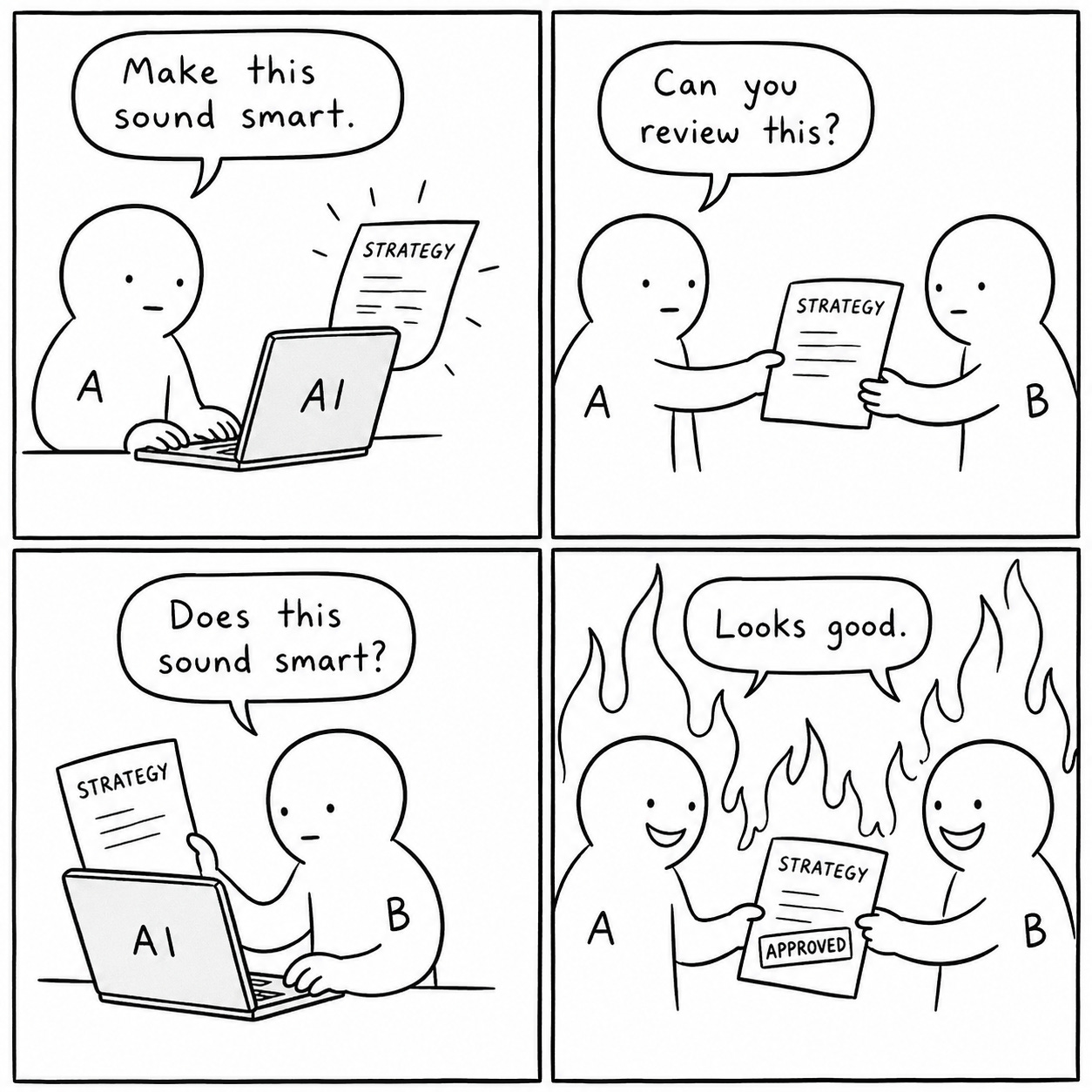
There’s a word for this: workslop.
You don’t want to do workslop. So you need to recognize AI slop first.
1. The worst AI style (with examples)
The constructions that give it away fastest, worst first.
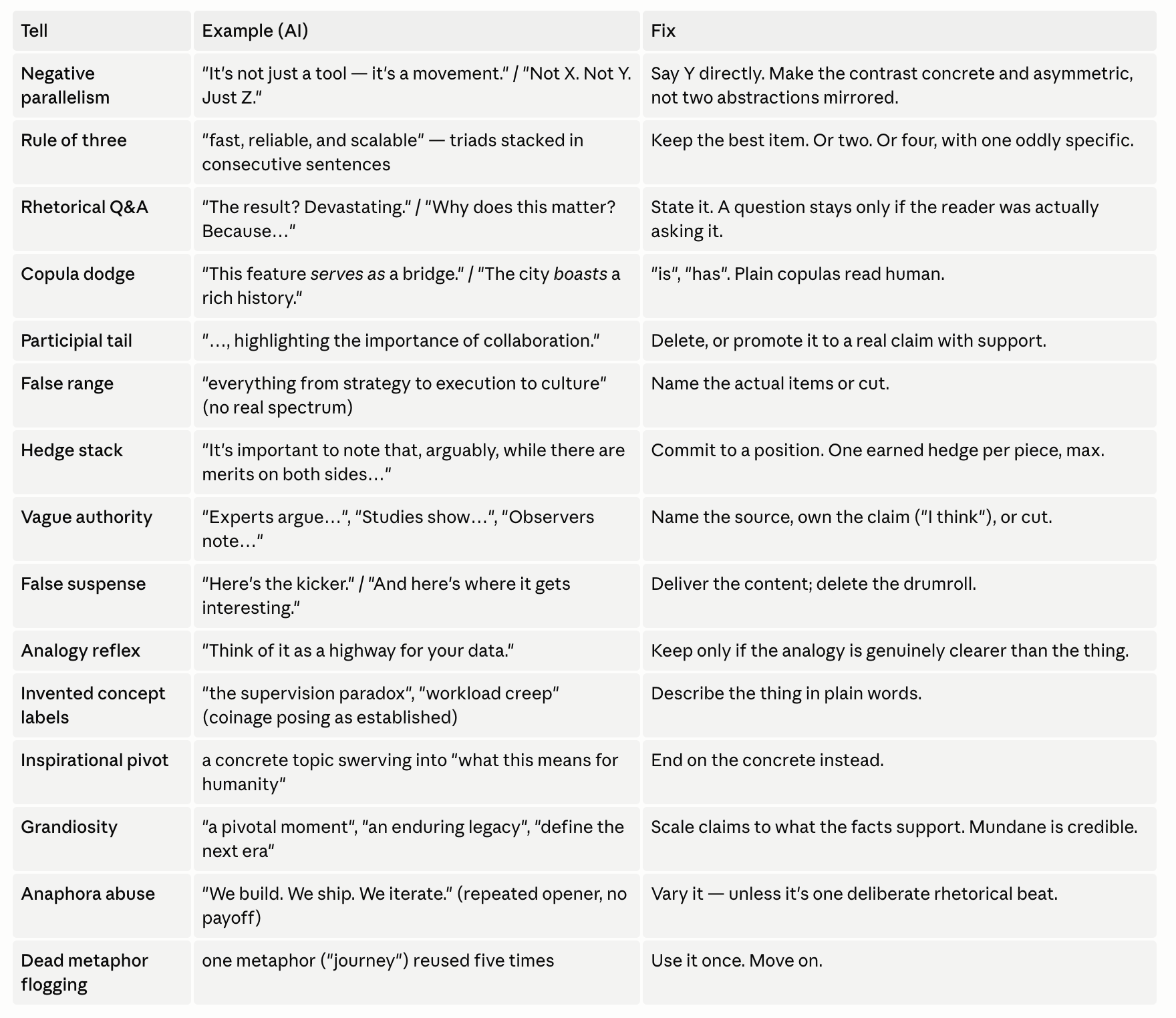
Structure & rhythm giveaways
Low burstiness. uniform 15–20-word sentences, rectangular paragraphs. Force a spread: a ≤6-word sentence and a 25+-word one; uneven paragraphs; one single-line paragraph, max.
Fractal summaries. previews and recaps at every level (”In this section we’ll…” / “…as we’ve seen”). Delete all.
Signposted conclusion. “In conclusion / Overall,” + restatement + uplift (”Despite the challenges, the future is bright”). Delete; end on the last concrete point.
Pep-talk ending. “As we move forward, embracing X will be key.” Delete on sight.
Prompt echo. “This essay will explore…” Delete.
Listicle in a trenchcoat. “The first reason is… The second reason is…” Merge into flowing argument.
Uniform staccato. “X is A. X is B. X is C.” Combine into one sentence with a list, or vary the frames.
Punctuation & formatting
Em dashes — the most famous tell. AI: 20+ per piece; humans: 2–3. Target ≤1.
Bold-first bullets. “Security: …”. Almost no human does this unprompted. Yes I just did it here. Yes I did ask Claude to summarize my findings.
Emoji bullets. ✅ 🧠 🔹 decorative →. Strip them.
Title Case Headings / colon-split titles. “The Power of X: Why Y Works”. Use sentence case.
Oxford comma 100% of the time. dropping it occasionally in casual registers reads human.
Markdown residue.
**,##,[text](url)in contexts that don’t render markdown.
4. Content & voice
No concrete imagery, if the first three sentences evoke nothing visible, inject a thing, place, number, or name.
Proper-noun avoidance, “a client”, “a tool”, “a city” → name it. (AI invented-character names cluster on Emily/Sarah.)
Uniform positivity, everything upbeat and certain (measured: certainty +111–152%, positive emotion +69–133% vs human). Let something be annoying or unresolved.
Both-sidesing, every claim auto-balanced by its counterpoint. Commit.
Suspiciously tidy anecdotes, stories that serve the argument with perfect efficiency. Real stories have tangents.
Register scrubbing, no contractions, no slang. Restore the ones the voice would use.
2. The worst AI words (the entire list)
Tier 1 — never use this
Verbs: delve · leverage · underscore · harness · foster · navigate (figurative) · utilize · facilitate · streamline · bolster · illuminate · showcase · embark · elevate · empower · unleash · unlock (figurative) · uncover · optimize · garner · resonate · revolutionize · shed light on · synthesize · elucidate · transcend · reimagine · intertwine · entwine · grapple with · espouse · exemplify · underpin
Nouns: tapestry · landscape (figurative) · realm · ecosystem (figurative) · paradigm · synergy · testament · beacon · journey (figurative) · interplay · intricacies · symphony (figurative) · kaleidoscope · tempest · whimsy · quest (figurative) · roadmap (figurative) · endeavor · myriad · plethora · advancements · trajectory (figurative)
Adjectives/adverbs: pivotal · crucial · seamless(ly) · robust · vibrant · intricate · meticulous(ly) · nuanced · cutting-edge · transformative · game-changing · groundbreaking · unparalleled · invaluable · multifaceted · commendable · indelible · poignant · profound(ly) · relentless(ly) · tireless(ly) · unwavering · unyielding · timeless · ever-evolving · fast-paced
Stock phrases: in today’s fast-paced world/landscape · it’s important to note · it is worth noting · plays a pivotal/crucial role in · stands as a testament to · rich tapestry/history/heritage · navigate the complexities of · in conclusion · in summary · overall, (as an opener) · ultimately, (as a conclusion opener) · at its core · that being said · a key takeaway · paving the way for · valuable insights (into) · deeper understanding of · shed light on · when it comes to · not only… but also · here’s the kicker/the thing/the best part · I hope this email finds you well · look no further · dive/deep-dive into · let’s explore/unpack/break down · furthermore · moreover · additionally (sentence-initial)
Narrative clichés: couldn’t help but feel/wonder · heart pounding · a sense of X washed over · found solace in · the human spirit · from that day (on/forward) · little did I/we know · a stark reminder · a cautionary tale · knew that (he/she/they) had to · felt a (newfound) sense of purpose · what lay ahead · turn of events · thick with (tension) · stumbled upon · nestled (in/between) · bustling · enigmatic · captivating · glimpse into
Tier 2 — allowed alone
comprehensive · significant(ly) · essential · critical · key (adjective) · dynamic · innovative · powerful · notable/notably · vital · vast · rich (figurative) · deep/deeper (figurative) · explore · enhance · ensure · foster · highlight · reveal · engage · embrace (figurative) · insights · perspective · framework · approach · strategy · challenges · opportunities · potential · impact(ful) · quietly/quiet (figurative “quiet confidence”) · genuinely · truly · remarkably · arguably · generally speaking · typically · thought-provoking · well-being · resilience · perseverance · dedication · commitment to · high-quality · step-by-step · sustainable/sustainability
Swap table:
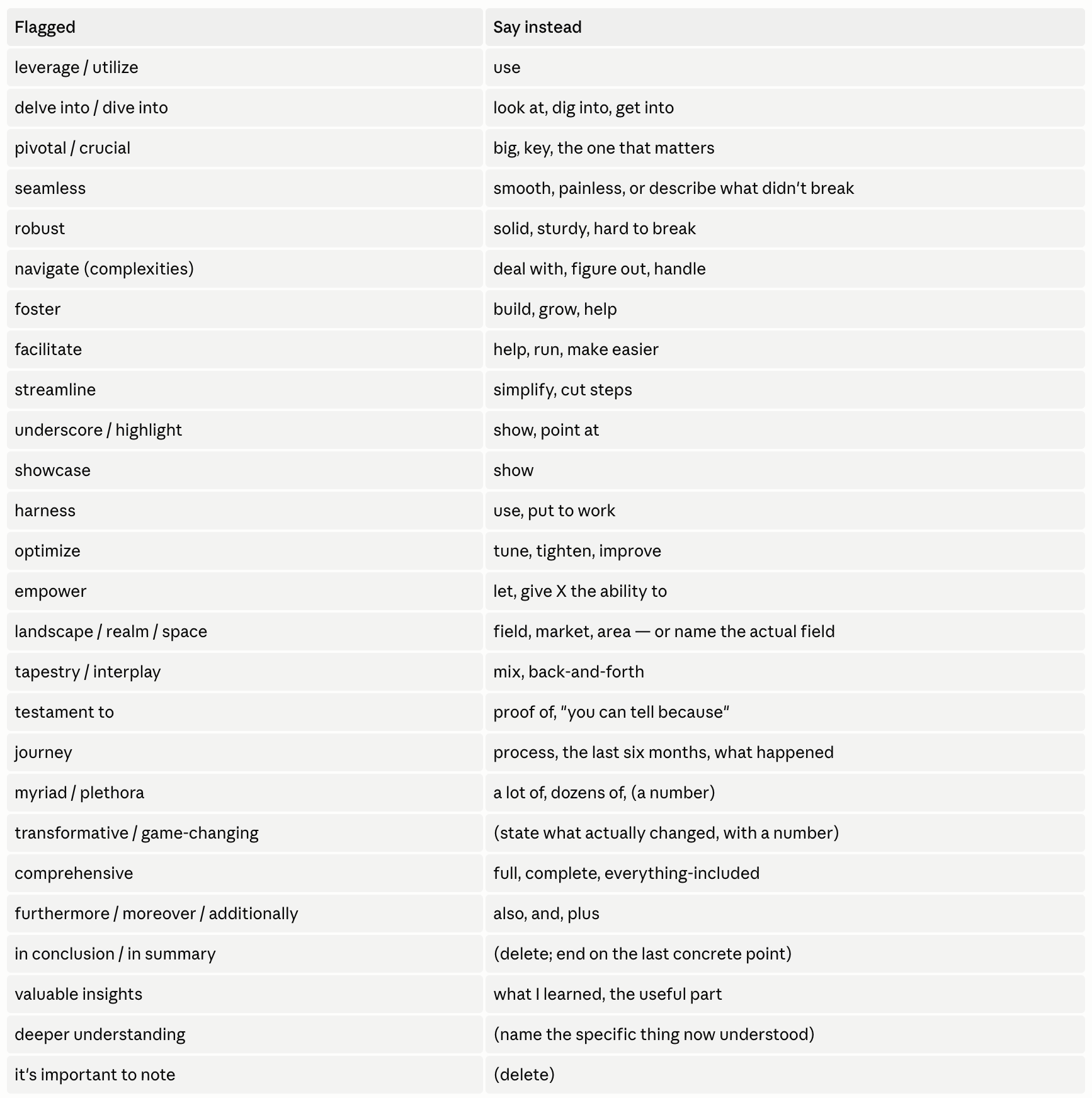
3. The other things that make you say “that’s AI”
Never do this:
Leaked scaffolding, “Certainly! Here’s…”, “I hope this helps”, “let me know if…”
Self-reference, “as an AI language model”, knowledge-cutoff notes
Placeholder text, “[insert example]”
utm_source=chatgpt.comin URLsHallucinated-looking citations
“Best regards” sign-offs in non-email contexts
Be careful with this:
Performative, text that narrates its own helpfulness (”I hope this clarifies things!”).
One-point dilution, the same idea restated in new clothes across a paragraph.
Curly quotes, pasted into plain-text contexts.
Semicolons, used where a period would do (model-dependent, both directions).
Emily / Sarah and other clustered default names for invented people.
What NOT to do when fixing it:
Don’t swap every word with weird ones, we can tell.
Don’t scatter random typos, errors must read as casualness, not carelessness, and only where the register tolerates them.
Don’t scrub personality along with the tells, a flat, tell-free text is still AI-shaped.
Don’t invent real-sounding facts, stats, or quotes.
Don’t shrink every long sentence, humans write long sentences; they just don’t write only 18-word ones.
Human markers to add (the good list):
Contractions
a number with texture ($43, 11 months, 4:30am, v2)
a named thing (brand, tool, street, person)
a parenthetical aside with attitude
“I think” / “honestly” / “to be fair” used once
a sentence starting with And, But, or Because
one single-sentence paragraph
a mild complaint or unresolved edge
an irrelevant-but-true detail in an anecdote
a dropped Oxford comma (casual registers)
a question the reader was genuinely asking
uneven list items · a plain “is” where AI would write “serves as”.
III. How I write with AI, live.
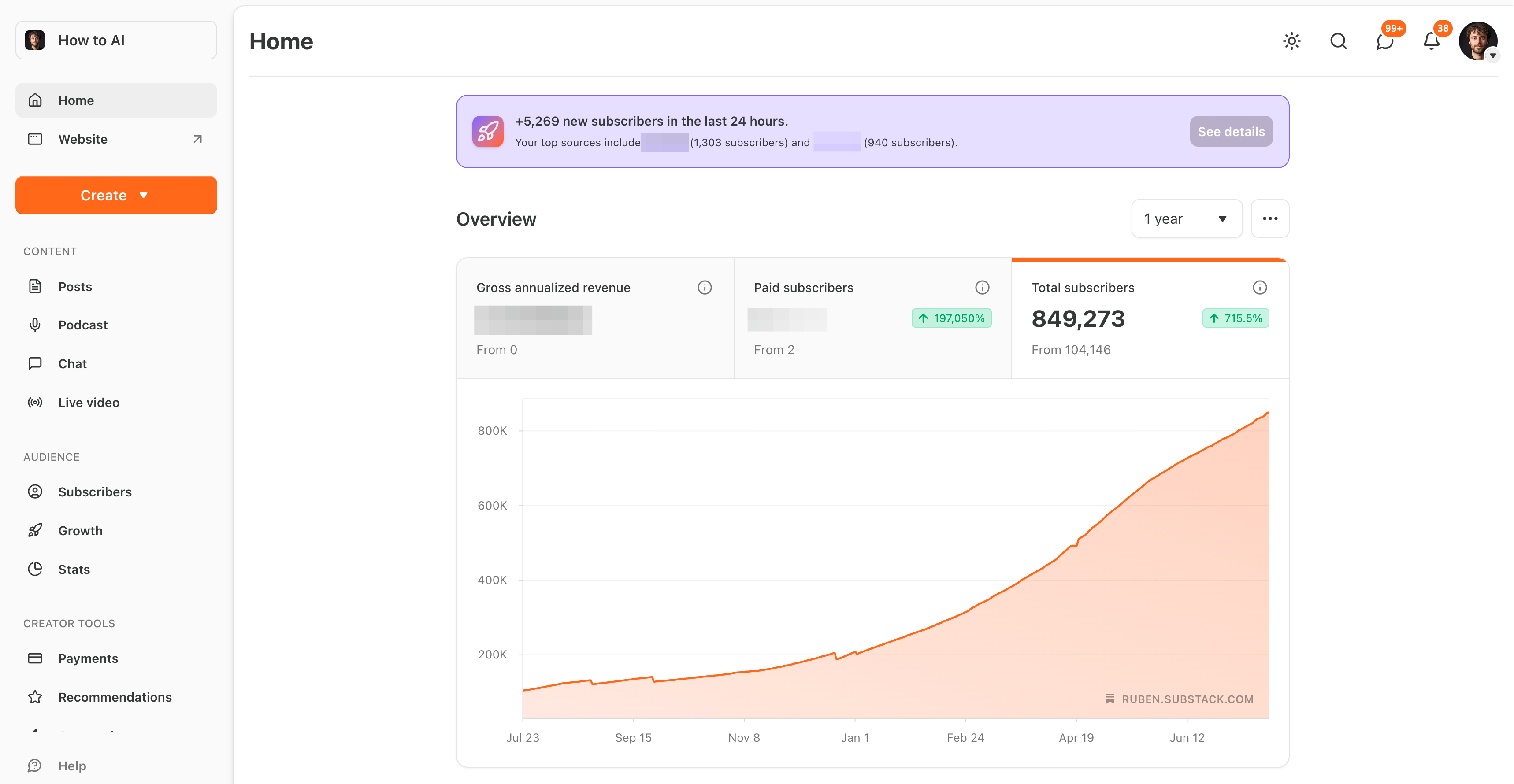
I send a weekly newsletter to 849,273 readers.
This section is to copy my exact writing process.
I started a Circle community to host monthly lives on how I use AI.
The goal?
Writing a newsletter from start to finish with you, so you can see how I use AI and you can ask me questions during the live.
All of the prompts, skills, and processes will stay forever on the Circle.
So first, confirm you want to be part of the Circle: