

Think back to 2023.
ChatGPT had just come out. Viral sensation. So you tried it.
It was good, but was it this good? Like, good enough for OpenAI to be worth $830 billion, while losing $17 billion a year?
You thought, “AI must be a bubble”.
And you were not wrong to feel that way. But that was 3 years ago. In AI time, that is ancient history. And the gap between what you think AI is and what AI actually is might be the most consequential misunderstanding of your career.
The belief that “AI is a bubble” is a coping mechanism.
Listen, I’ve spent the last few years writing in this space. I’m not a researcher at OpenAI or Google DeepMind. I don’t have inside access to what’s coming next.
But I use these tools every single day, I talk to people across industries, and I watch the numbers closely. What I’m seeing — in the technology, in the money, in the pace of change — is something I can’t keep to myself.
Not because I want to sound dramatic (I am dramatic). Because the people I care about keep asking me, “So is AI actually a big deal or is it just a bubble?”
And I keep giving them the polished version. The safe version. The fake version.
This is the honest version.
Thinking AI might be a bubble is the most dangerous belief you can hold in 2026.
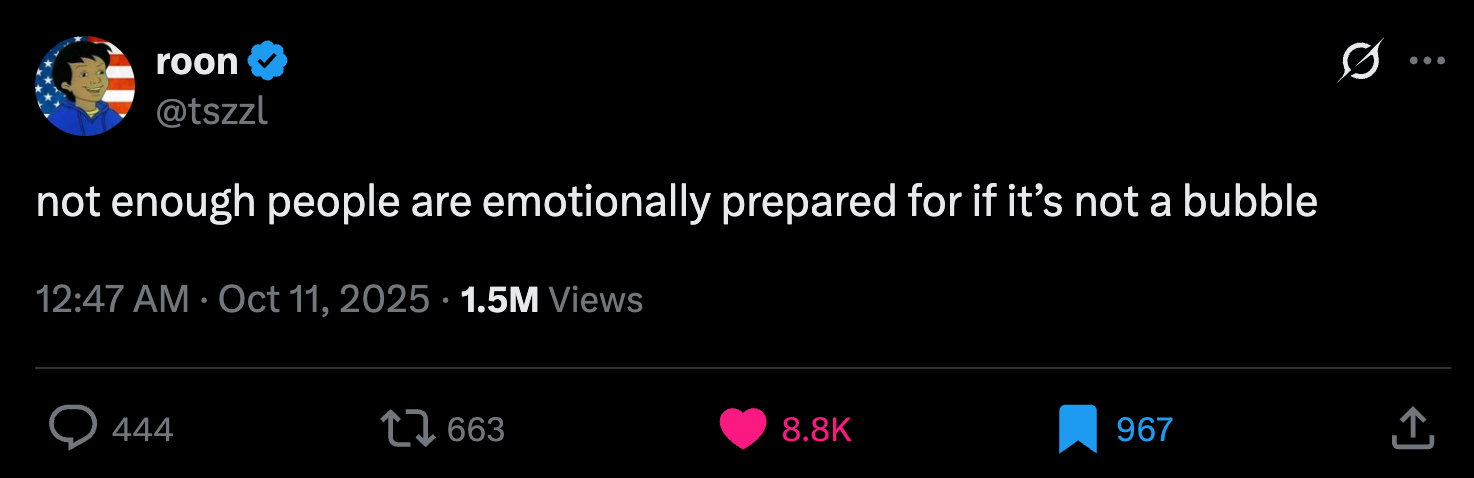
The Most Comfortable Lie in 2026
Calling AI a bubble feels good. I need you to understand why.
If AI is a bubble, your skills are enough. Your workflow doesn’t need to change. Your career plan still works. You don’t have to sit down with a tool you don’t understand and feel like a beginner at 35, 42, or 57.
Big relief packed into one prediction.
And you have evidence. You saw the dot-com crash. Or you’ve heard the stories. Pets.com. Webvan. The internet was supposed to change everything, but $5 trillion evaporated overnight because a bubble burst.
Your pattern recognition is firing: “I’ve seen this movie!”
But here’s what happened after.
The internet didn’t die. It ate everything. Google went public in 2004. Facebook launched. Amazon survived and became one of the most valuable companies on Earth. Netflix killed Blockbuster. The people who dismissed the internet after 2001 missed the biggest wealth creation in human history.
The bubble popped. The revolution kept going.
Now, AI changed 50% of how I work in the last year. My small team handles 10x what I could do alone three years ago. I need to hire MORE people, not fewer. I am working more. Hiring more. Writing dozens of posts every single day.
And I’m not special. I don’t code. I dropped out of university. The only difference between the person who closed that ChatGPT tab in 2023 and me is that I kept the tab open. And kept playing.
The bubble prediction feels nice. But does it protect you? It might protect you from the discomfort of starting something new. From admitting the world changed while you weren’t looking. You want to say, “I was right!”
But if it’s a bubble, is the bubble getting cheaper?
Bubbles Don’t Get Cheaper
People use the word “bubble” without thinking about what it means.
Bubbles inflate. Prices climb. Speculation pushes value beyond what the product delivers. Then it pops.
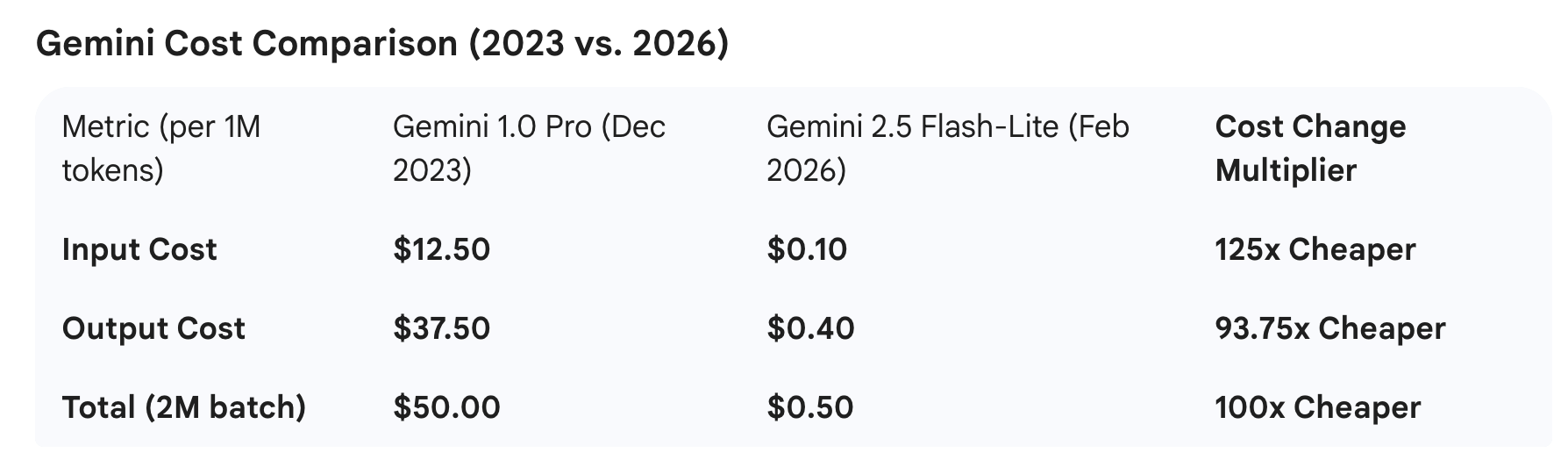
AI is doing the opposite. The cost of running AI models dropped 10x in 12 months. In some cases, 50x. Capabilities doubled. What used to take a year now takes months. When has a bubble ever gotten better & cheaper at the same time?
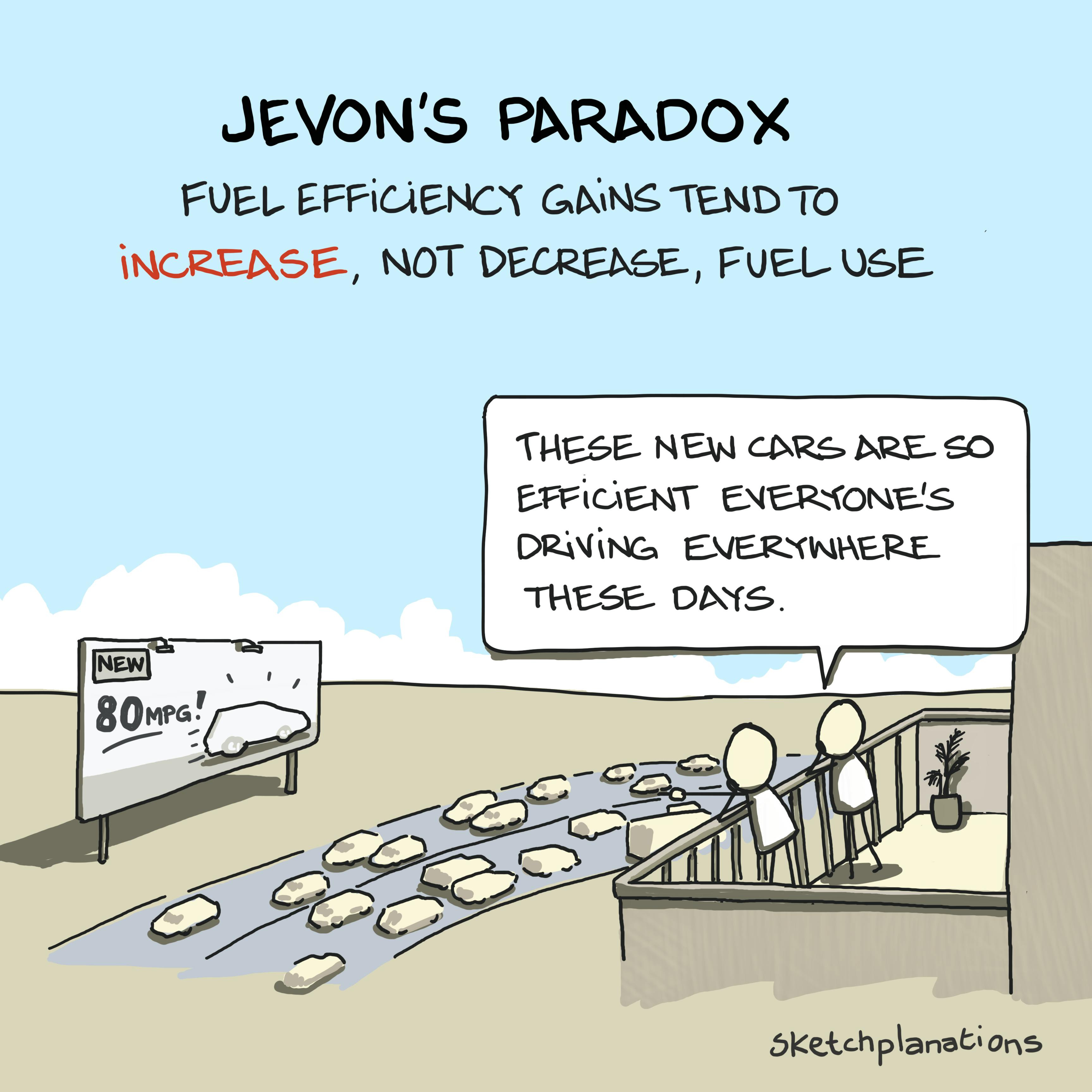
When something gets cheaper, people don’t use it less. They use more. Companies launch projects that were previously too expensive. They need more humans to manage it all. It’s the famous Jevons paradox. Right in front of us.
I see this every week. The more AI can do, the more I want to do with it. I don’t fire people when I find a faster workflow. I find ten new things I couldn’t have tried before. Then I need more people to keep up.
Trillions of dollars are being invested right now. And it’s Reddit/Crypto bros speculators. It’s Google, Microsoft, Nvidia, Meta. The most calculated companies on Earth. The highest valuation for years.
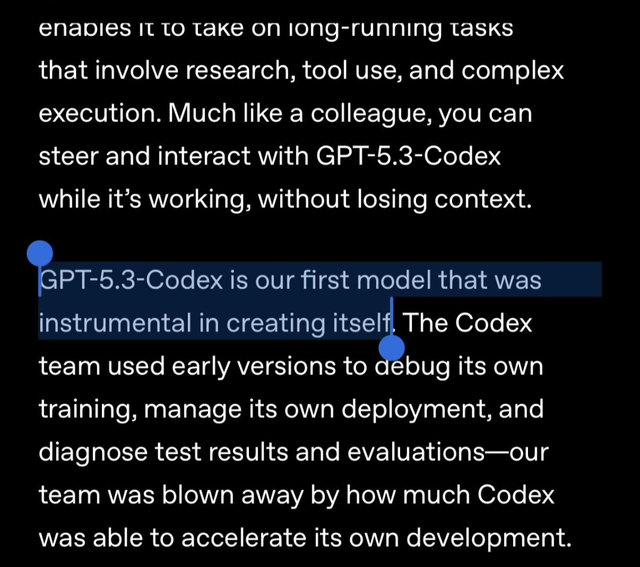
AI is even helping build the next version of AI. The recursive loop has started. This is no longer a 2030 prediction. This is what the companies building these systems are writing in their release notes today, in February 2026.
You can disagree with all of them.
But have a plan for the possibility that they’re right.
Run the Math. Both Directions.
Here’s the exercise nobody does.
If AI is a bubble and you went all-in learning it: you lost some hours. Maybe a few hundred dollars on subscriptions. You learned to think more clearly and communicate with precision. Those skills don’t vanish because a market crashes. Worst case, you were faster at your job for a year. That’s the entire downside.
If AI is not a bubble, and you waited: the tools evolved while you watched. People who started early compounded their advantage month after month. A gap compounds.
Do you want to waste some free time & money, or potentially waste the biggest technological shift of this generation?
That’s an asymmetric risk.
…like believing or not in God: you always lose not believing in God.
And it’s far from being the first time it has happened in human history:
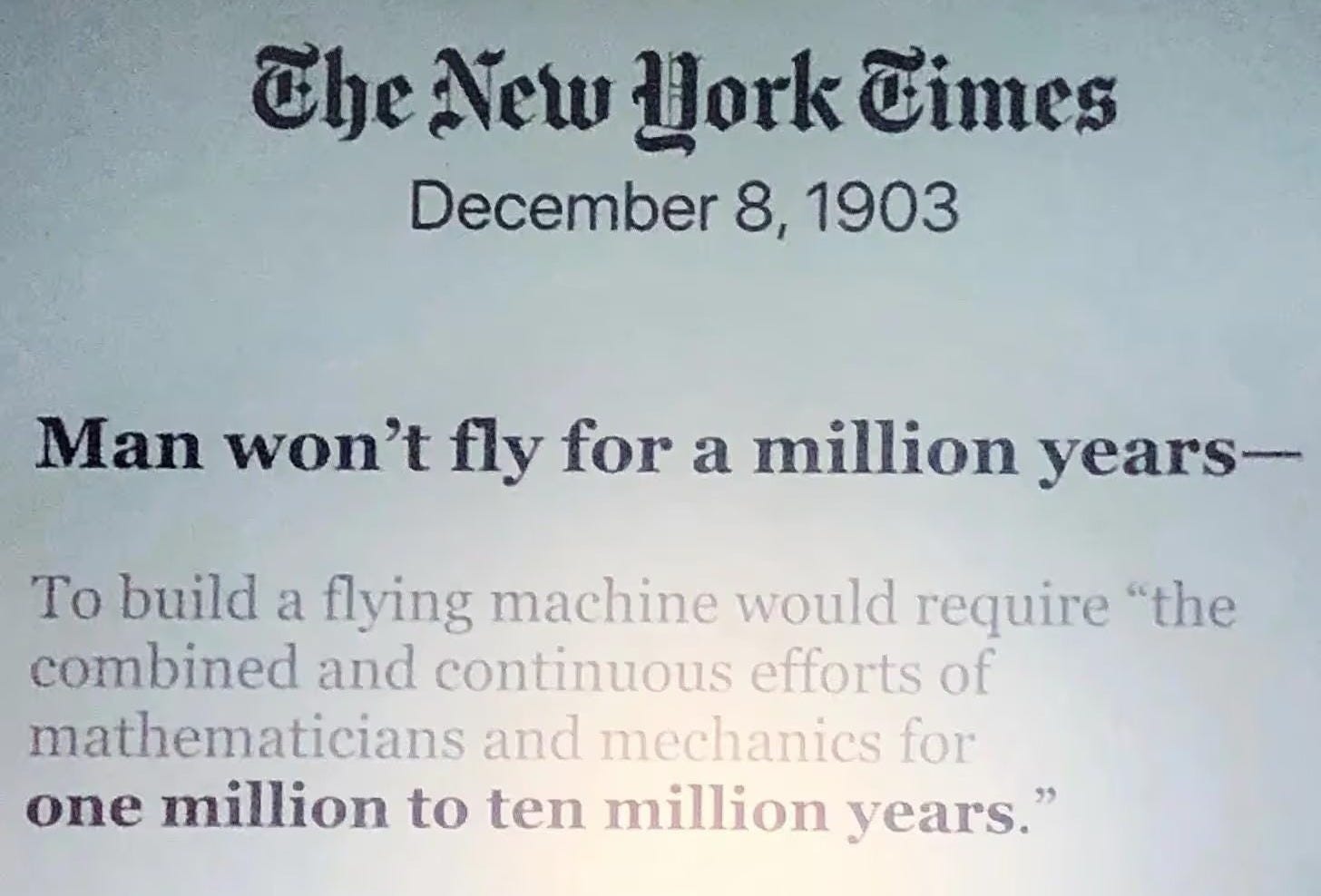
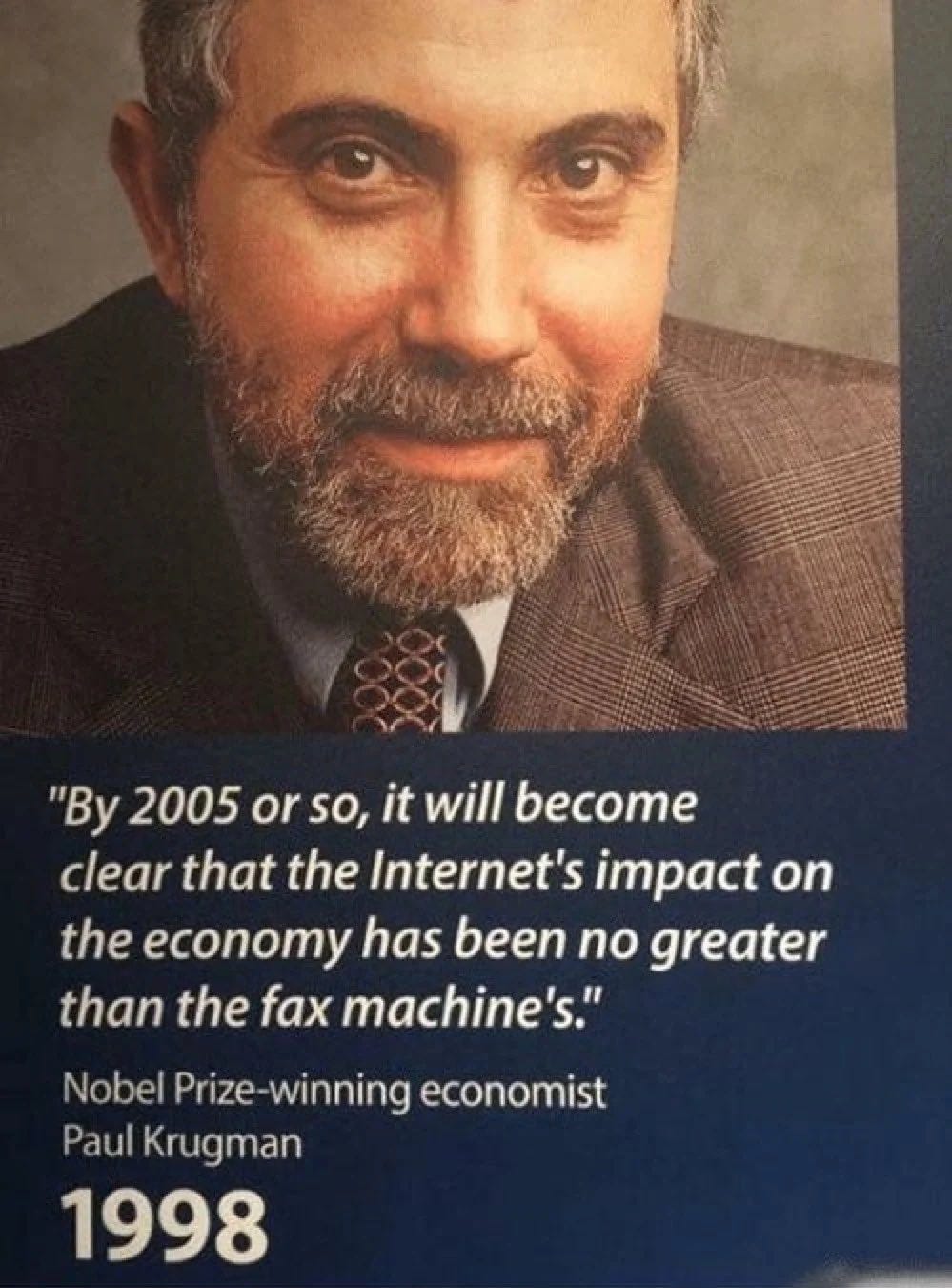
The people calling AI a bubble think they’re being careful. But they’re literally making the highest-risk bet available. And they don’t even know they’re betting.
You Feel Fine. That’s the Problem.
And it has a name. The beta paradox zone.
Your job is fine. Your routine works. Your paycheck arrives. Nothing hurts.
That’s exactly why you won’t move.
Pain makes people change. Comfort makes people stay. Right now, you’re comfortable enough that AI feels like someone else’s problem. Something for tech workers. For people who code. Something you’ll figure out later.
You’ve felt this before. The gym membership you said you’d start using in January. The conversation you kept postponing because things were “fine.”
You just didn’t feel enough pain to act.
This is that moment again. Except bigger.
Close This Newsletter. Open the Tool.
Stop asking “is AI a bubble?”
Start asking, “What am I capable of with AI?” Because whether AI crashes tomorrow or goes parabolic, the answer to that question makes you better.
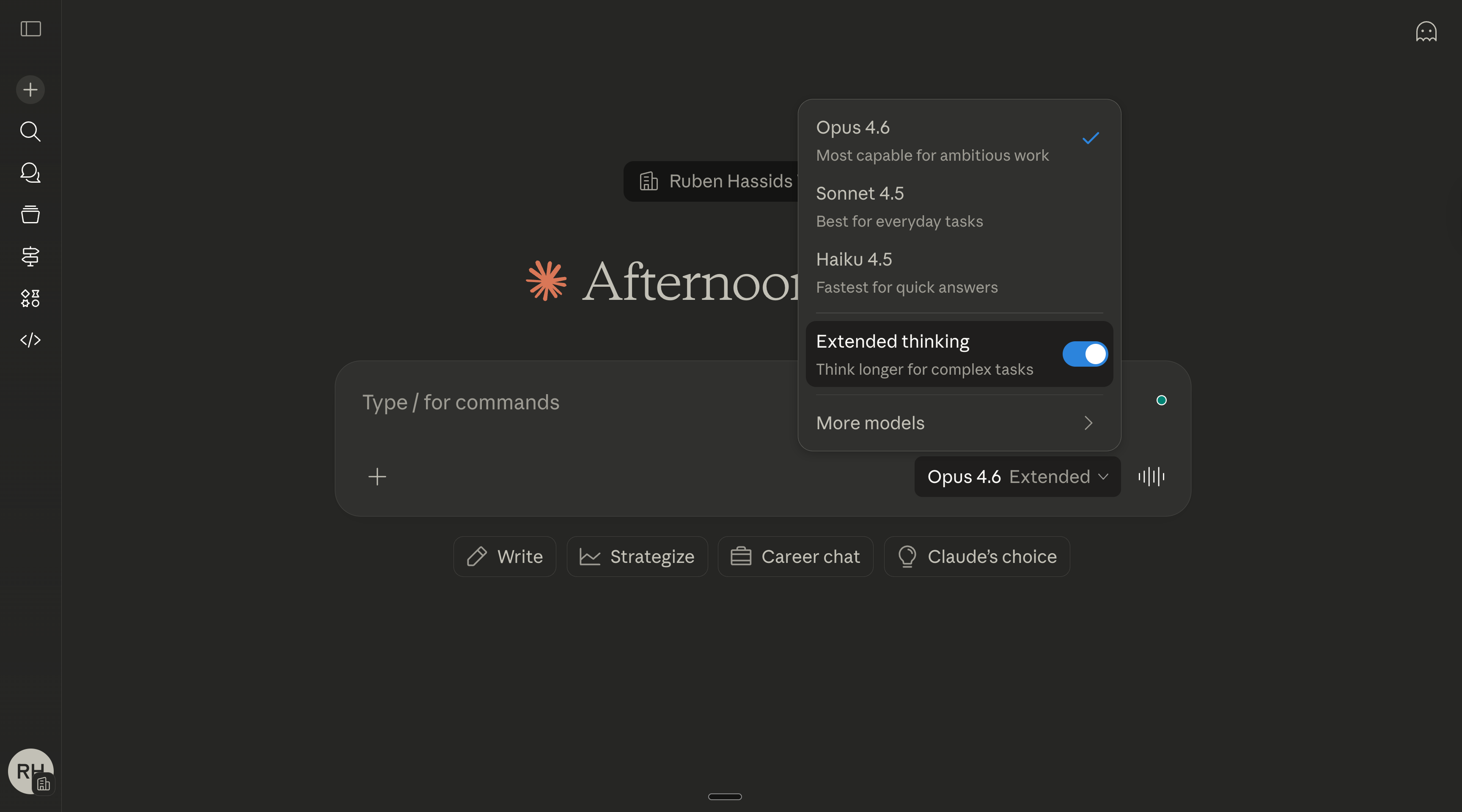
Tonight, open Claude. Make sure to select Opus 4.6 + Extended thinking. Pick the one that matches your job. Copy the prompt. Paste your real work into it. Fifteen minutes.
If you’re a lawyer. Take your last contract. Paste it into Claude with this:
“Read this contract as opposing counsel would. Find every clause that could be used against my client. For each one, explain the risk in one sentence and draft alternative language I can propose.”
If you’re in finance. Take the report you spent all week building. Paste it with this:
“I spent 8 hours on this analysis. Review it like a CFO who’s trying to poke holes. What did I miss? Rebuild the weakest section.”
If you write for a living. Paste your last two published pieces with this:
“Study how I write. The rhythm, the word choices, the structure. Now write a first draft on [your topic] in my voice. Not an AI voice. Mine.”
If you’re in marketing. Paste your last campaign results with this:
“Here are my numbers from last quarter. What’s actually working, and what am I wasting money on? Be blunt. I won’t be offended.”
If you manage a team. Paste your team’s last performance reviews with this:
“What patterns am I too close to see? What’s one question I should be asking each person in my next 1-on-1 that I’m probably not asking?”
If you’re in sales. Paste your prospect’s website and what you sell with this:
“Research this company. Write me a 4-sentence cold email that references something specific about their business and doesn’t sound like every other sales email in their inbox.”
Pick yours. Do it now. Not tomorrow. Not “when things calm down.”
Tonight.
The first result won’t blow your mind. It’ll be good, not perfect. That’s expected. AI writes the first draft. You write the next ten (with AI). Your taste is what makes it exceptional. (That’s the part most people miss. AI isn’t the advantage. YOU + AI is. Don’t be the cynical guy who says AI is bad because it’s not trying hard enough).
3 years from now, you’ll either think “I’m glad I started” or “I wish I had.”
And you already know which one is the most likely to happen.
So close this newsletter.
Open Claude.
Play.
Now, how can you go from playing to mastering quickly?
Do this:
✦ Join a community of obsessed AI users (like my Slack with 1,039 professionals).
✦ Pick one tool (most likely Claude for most of you) and master it.
✦ Use AI for your strengths, not your gaps.
AI is a mirror. Be someone worth reflecting.
Humanly yours - Ruben.
PS: I consult Fortune 500 companies in the US for AI assessment and workshops. 3 spots left for Q2. DM me on LinkedIn. I read every one of my messages there.
"The more AI can do, the more I want to do with it. I don’t fire people when I find a faster workflow. I find ten new things I couldn’t have tried before. " This is exactly what I tell investors that want AI to make us more efficient so I need fewer people.
I think it’s important to make a distinction when you use the term “bubble” in your article. If you refer to AI use and future, clearly not only is not a bubble but it’s a technology revolution “just” started which will change radically the way we live.
However I feel that you are somehow mixing the above mentioned with economic bubbles. And when we approach this from an economic point of view to me there is no doubt this IS a bubble for many reasons: energy bottlenecks not be enough for data centres etc, huge investment in chips that will be obsolete before investment amortisation, circular investment of few companies and accounting manoeuvre. There are plenty of clear signs if one is looking for, one clear sign is Google issuing for the first time 100 years bond (last company doing that was Motorola at their pick before their fate changed).
You can have an economic bubble (and we will within the next few six months most likely) and at the same or after that also the technology at the centre of that bubble being a revolution. They are not mutually excluding.
Basically in your article I would have not used the word bubble which I associate mainly to stocks.
Said all that I enjoy your articles and knowledge sharing.