
AI is a slot machine.
And you need to be an AI gambler.

You open Claude.
You type a question, read the answer, and move on with your day.
That’s how 9 out of 10 people use AI, and it’s why you think AI is overhyped.
The 1 that got the most out of AI is a pure gambler. And he’s winning the decade.
He thinks AI is a slot machine. And he’s right.
Once you accept that AI is a slot machine, you are at stage 5 (out of 5) of AI.
Because there are 5 stages people go through with AI, and they happen to map cleanly onto Kübler-Ross’s 5 stages of grief: denial, anger, bargaining, depression, acceptance. Guess what is also brutally changing our lives? AI.
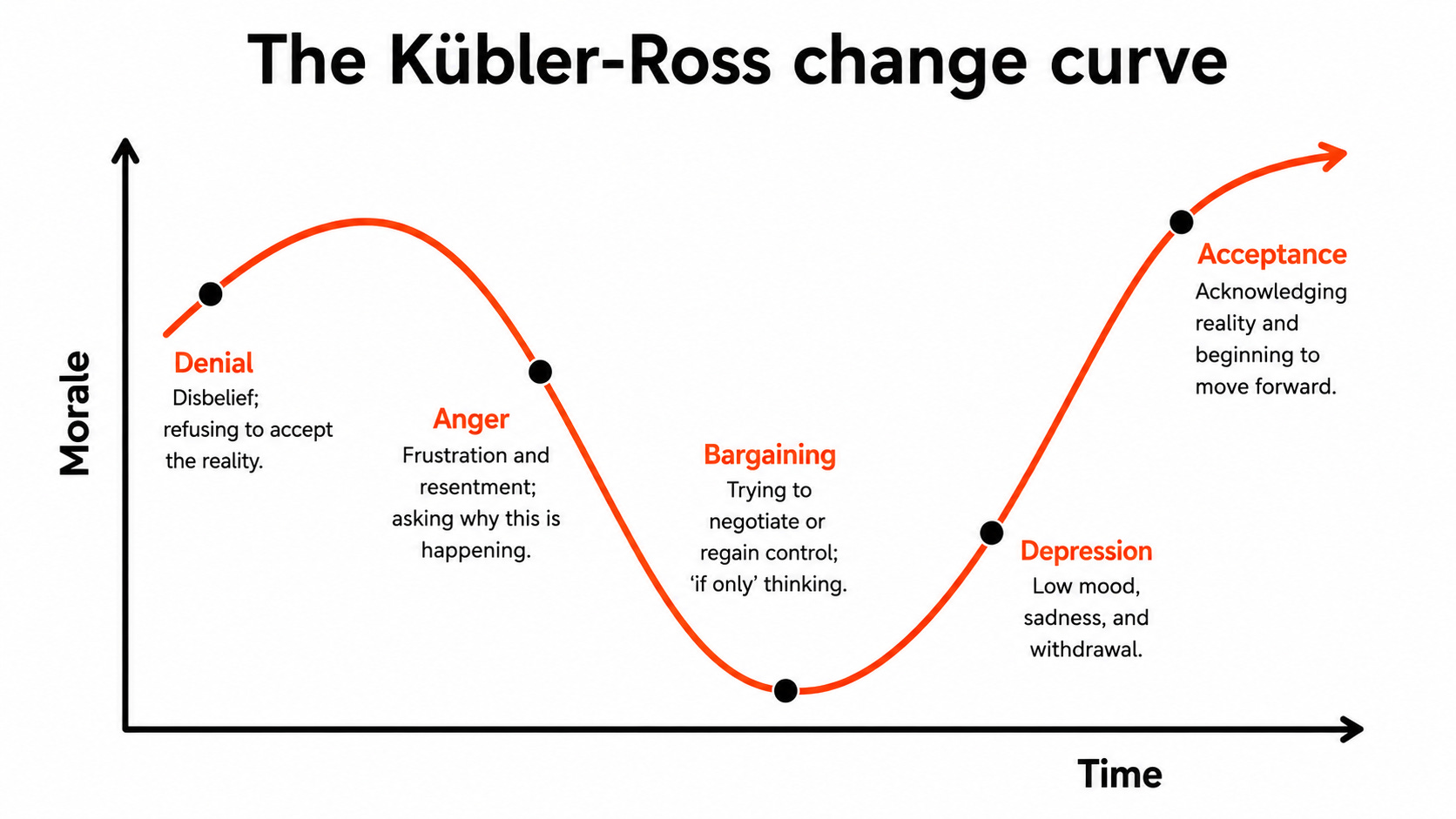
Pick the line that sounded most like you this past week:
“AI is overhyped.” → Stage 1
“Look at this stupid answer ChatGPT gave me.” → Stage 2
“I just need the perfect prompt.” → Stage 3
“I’ve been at this for 6 hours and have nothing.” → Stage 4
“I generated 100 answers, picked my favorite, done the job.” → Stage 5
I think most of you are stuck in stage 3 right now.
Now let’s get you up the ladder.
This newsletter grows from your shares. I want to help a million people use AI right. Sharing keeps your articles free & helps me stay laser focused on mastering AI for you.
Stage 1. Denial
Denial comes in 2 flavors, and they look like opposites.
Flavor A: You tried ChatGPT once in 2023, it hallucinated a quote, and you’ve been telling that story to everyone ever since.
Flavor B: You paste outputs straight into client work because the answer sounded good. And ChatGPT said so. And ChatGPT is a super-intelligence, right? But then the client wasn’t so happy. So you stopped trusting the “super-intelligence”.
Both flavors come from the same blind spot.
AI is probabilistic. The answer you got in your chat right now was 1 of millions of options. It is both unique, and the average. Open a second chat with the exact same prompt, and you’ll get something different. That’s how the thing works.
How to get out of stage 1.
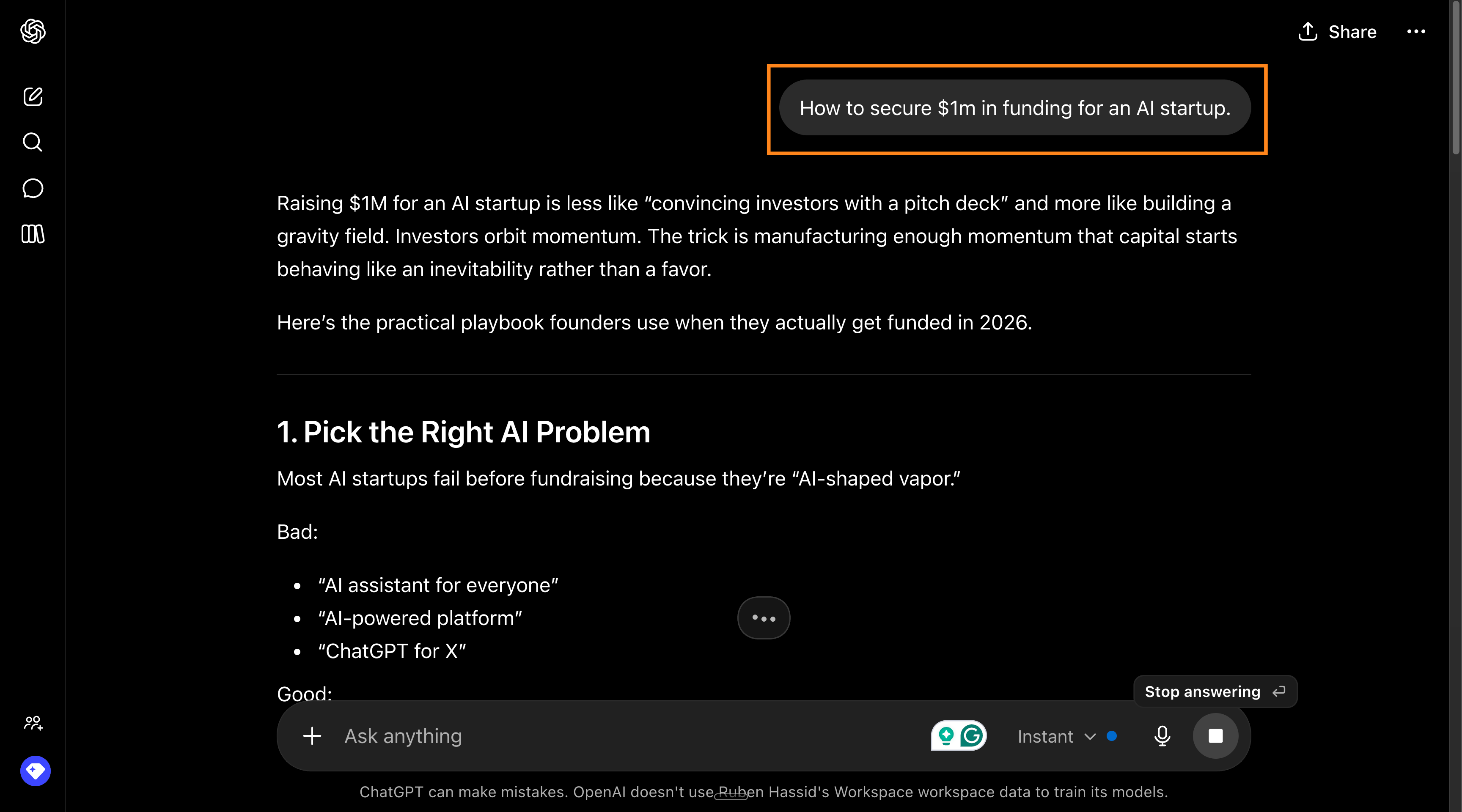
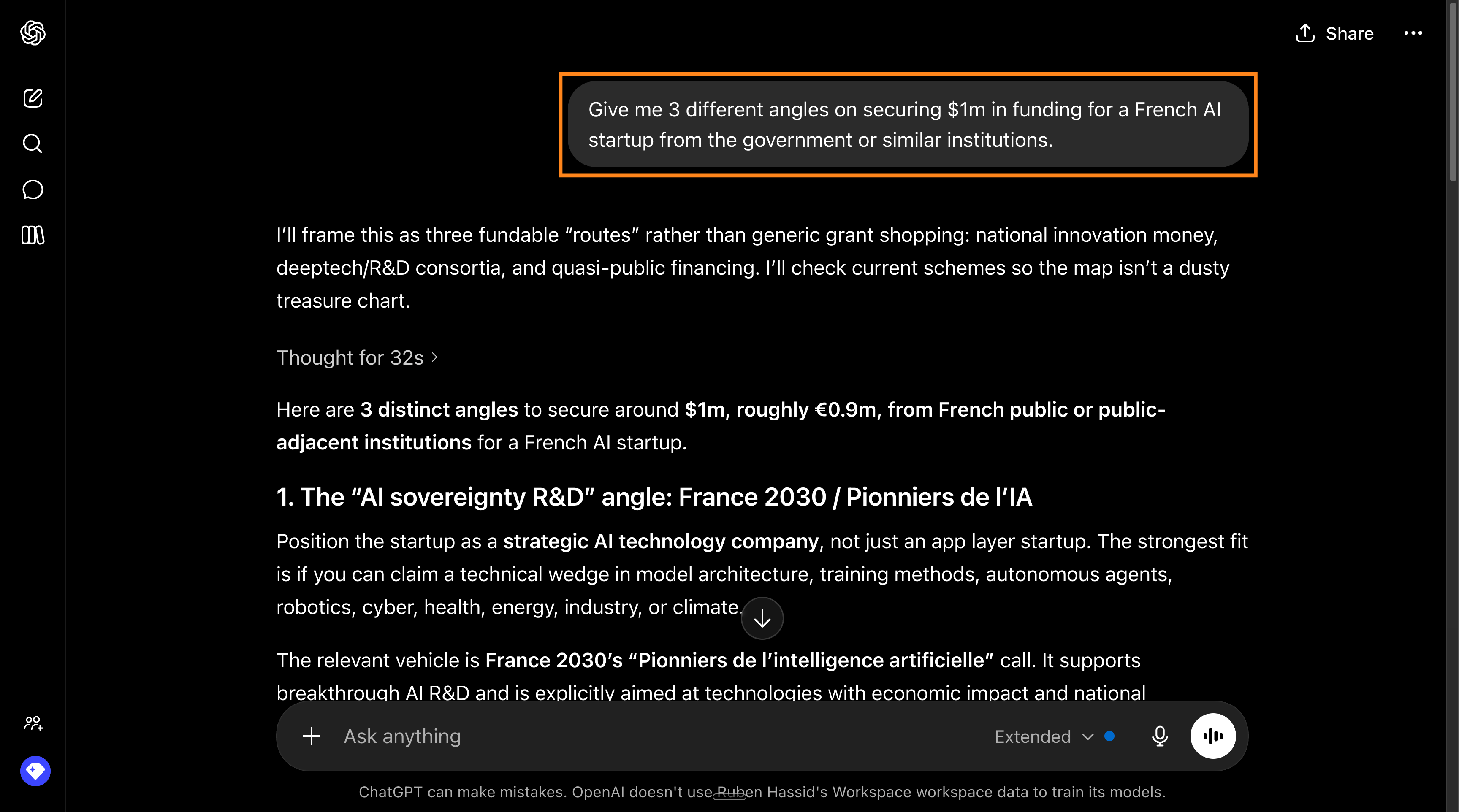
When you ask AI for something, ask for 3 versions in the same prompt.
Give me 3 different angles on [task] for [success criteria].Make it your default way of working with AI = having options.
You’ll never go back.
Stage 2. Anger
You got burned by AI. I’m guessing someone called you out once.
Now you screenshot bad AI outputs and send them to friends.
You probably posted a “look at this stupid answer ChatGPT gave me” thread on LinkedIn this year, or you bookmarked an article called “ChatGPT Got 60% of Medical Questions Wrong,” or the (fake) MTI brain scans showing how AI makes us dumb.
I get it. The first time AI hallucinates a source while sounding 100% confident, you feel lied to. Because in a way, you were.
But the anger is misplaced.
AI isn’t a truth machine. It’s an extremely competent junior intern: it follows your lead, very precisely. Maybe too much? It does not matter. You don’t yell at the junior, but the manager. You are the manager. Man up.
How to get out of stage 2.
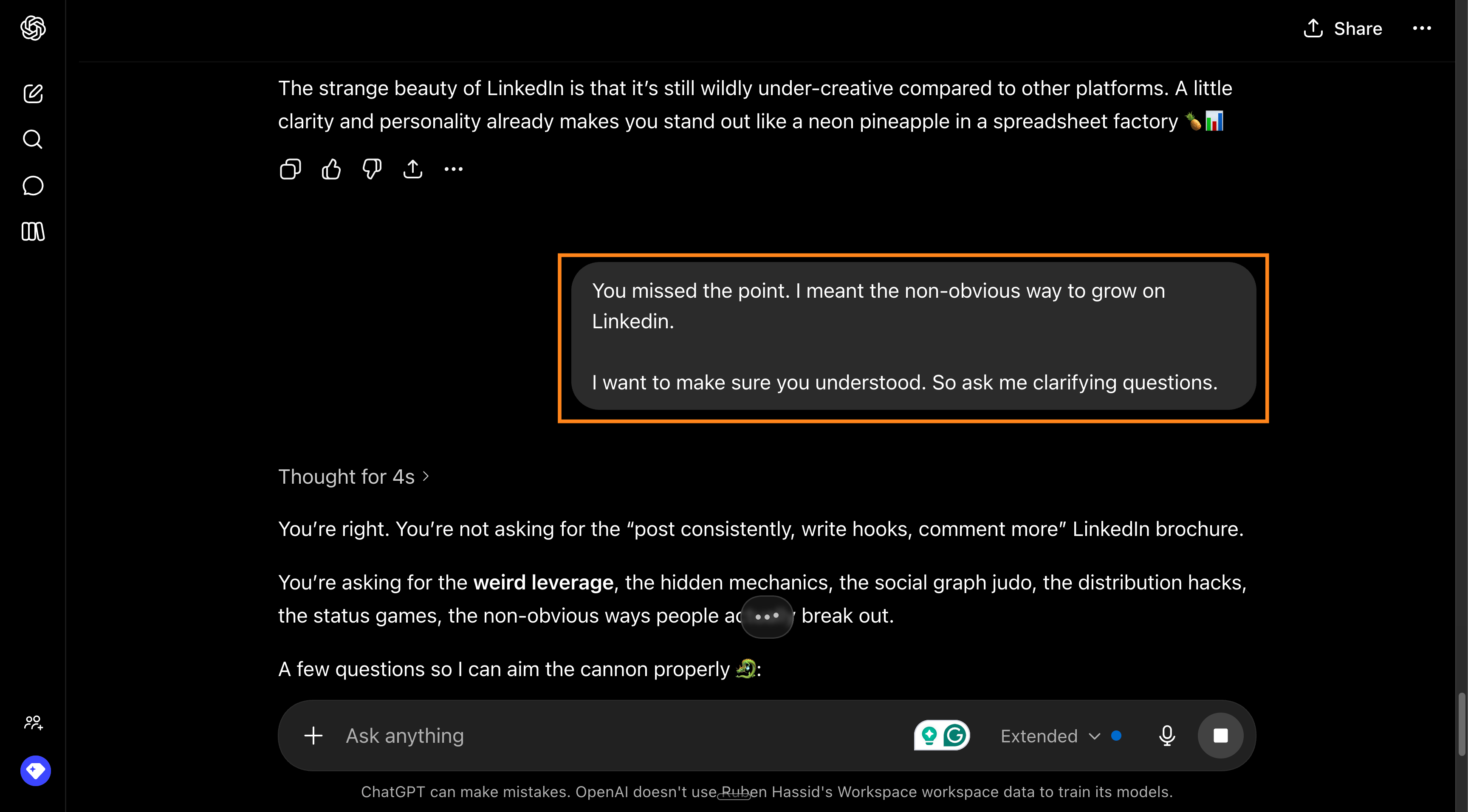
When AI gives you something bad, just say it.
Yeah, I know. It sounds too simple. But most of my prompts are actually a follow-up that goes like this:
You missed the point. I meant to [call out the mistake].

I want to make sure you understood. So ask me clarifying questions.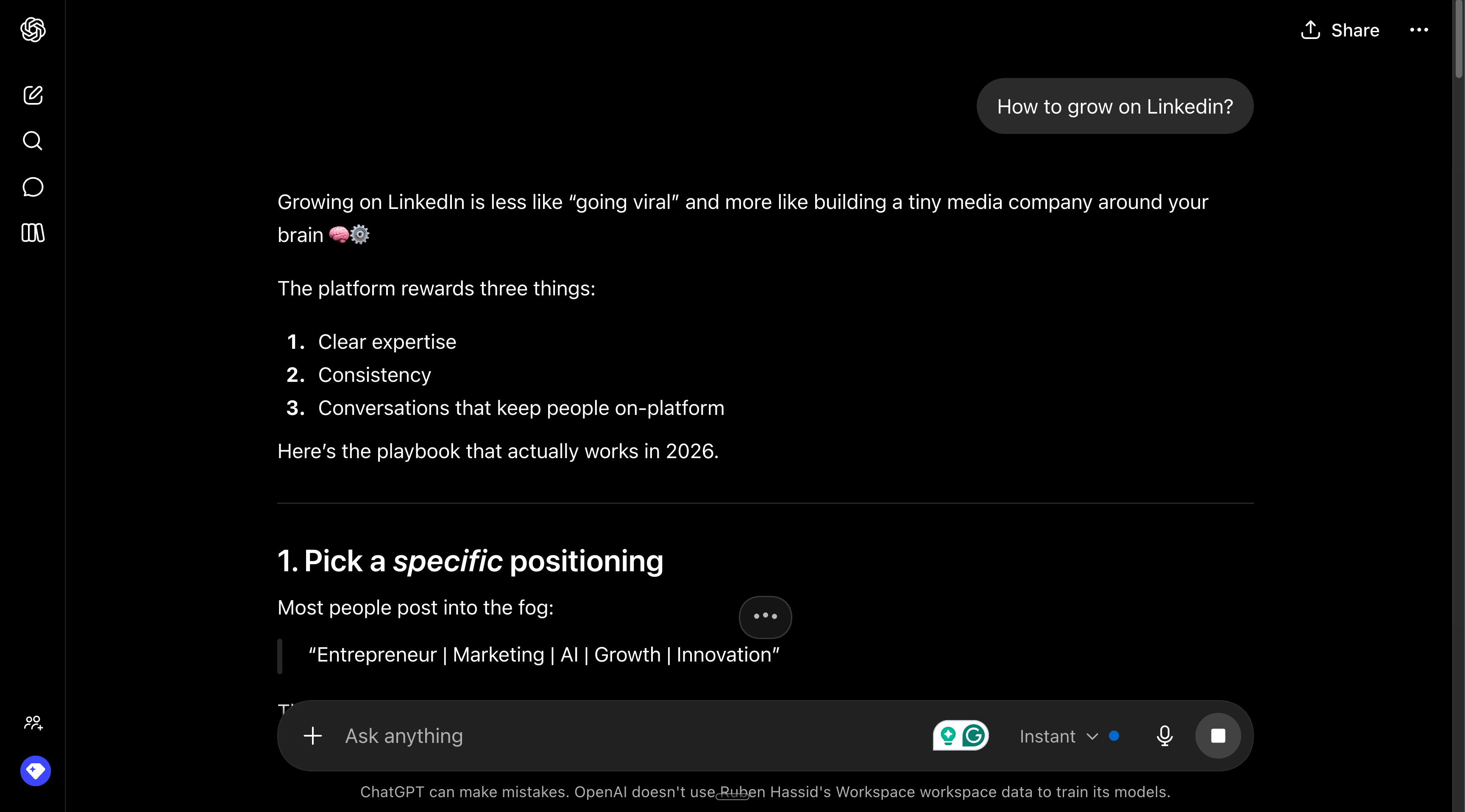
Stage 3. Bargaining
I bet this is where you are.
And where most of you will stay if you don’t read past this section.
*suspensful music because the content creator triggered you*
You think the perfect prompt is the answer. You’ve bought at least 1 prompt pack, you start every message with “You are a senior strategist with 20 years of experience...”, and you spend 20 minutes crafting a system prompt for a 30-second task. You believe prompt engineering is the key.
In a way, yes, good prompts are much better.
Like a great prompt raises your hit rate from maybe 5% to maybe 25%. The remaining 75% requires generating a lot more and throwing most of it away.
This is the plateau most of you hit. There is no “magic prompt that changed my life.”
Having the right setup for your prompt is good.
Understanding the principles of prompt engineering is awesome.
But my best prompts are actually quite small. I know the “AI magic” is in the conversation I’m going to have. And sometimes, it won’t work. That’s OK.
How to get out of stage 3.
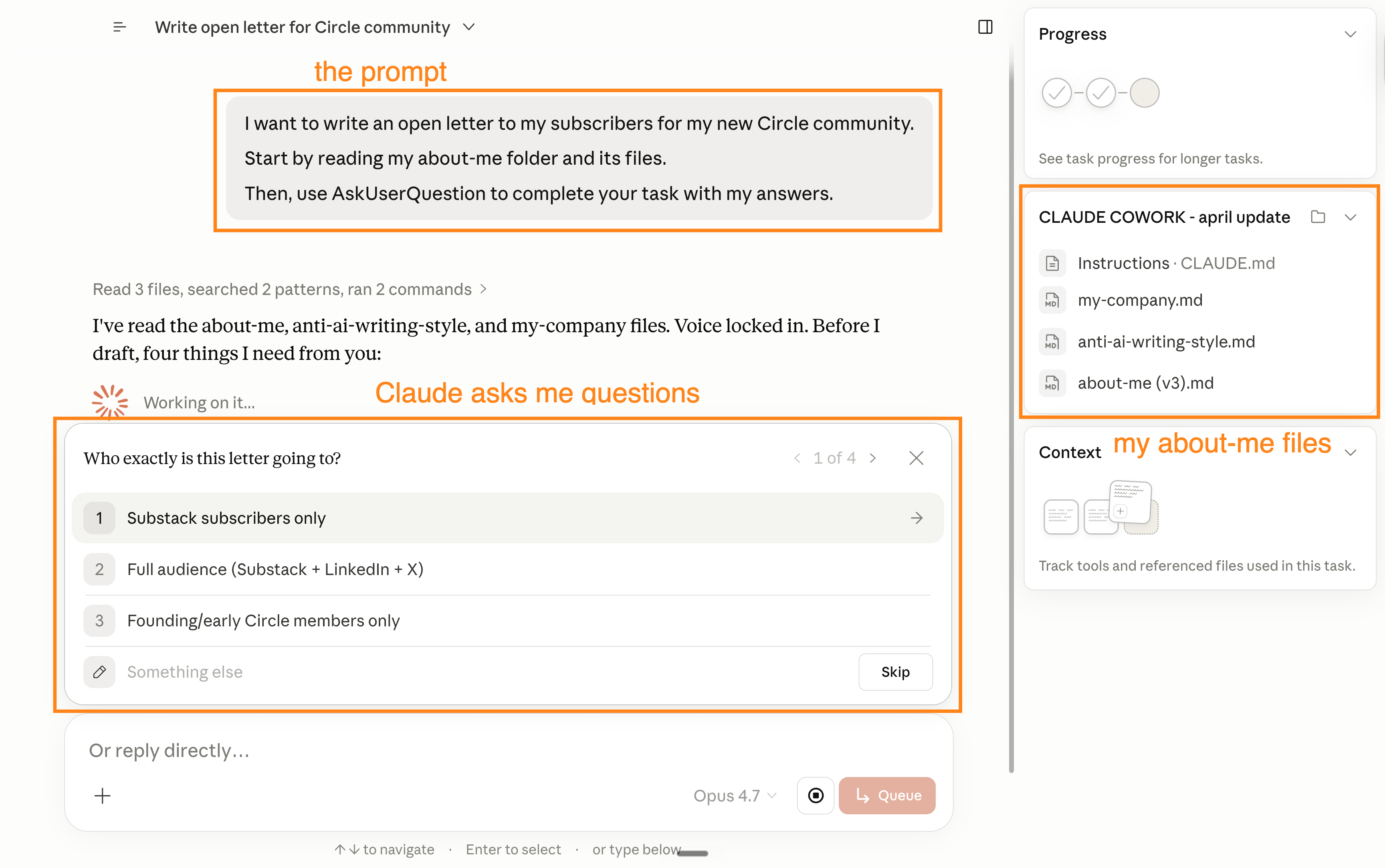
I love this prompt for Claude Cowork (once you set up your folders correctly).
I explained how in this newsletter. I’m sorry. I promise it’s the only other newsletter you have to read. If you skipped it, you won’t have the same results.
Because I trained Claude Cowork on knowing who I am & my taste.
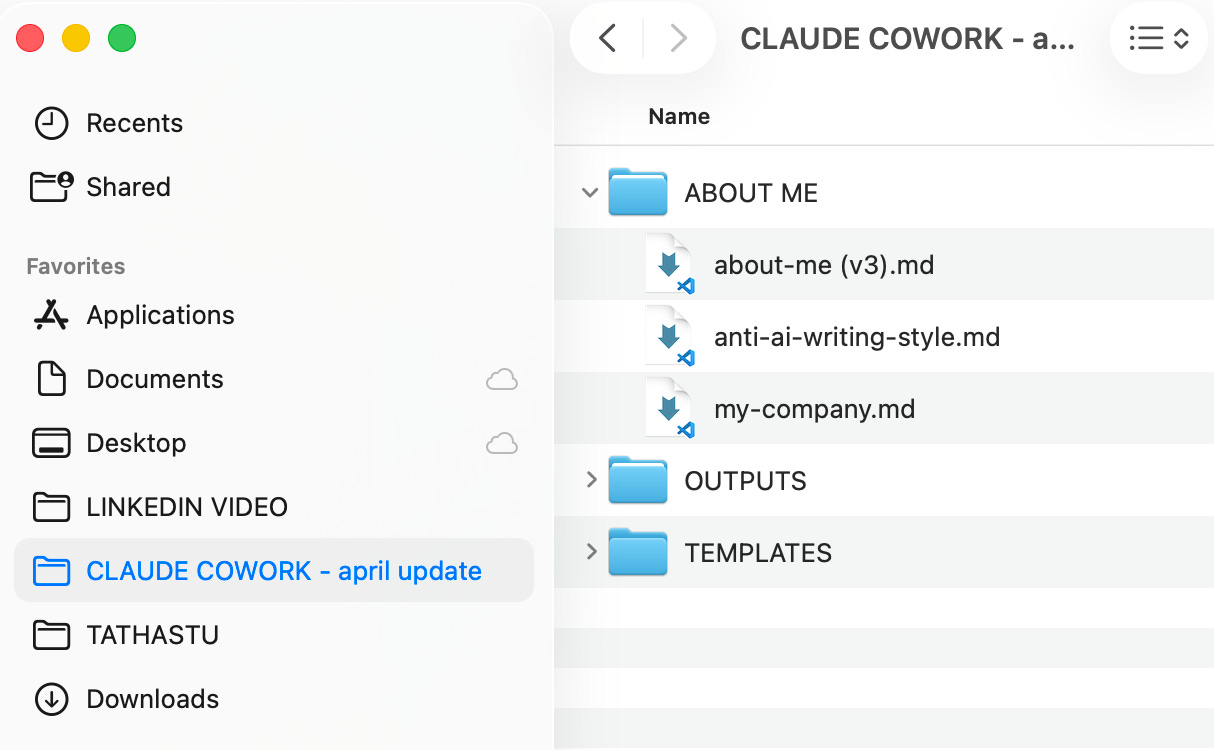
Once you do, and it’s saved in a folder, you can point to this folder when you start a new Cowork session, and simply prompt:
I want to [task] for [success criteria].
Start by reading my about-me folder and its files.
Then, use AskUserQuestion to complete your task with my answers.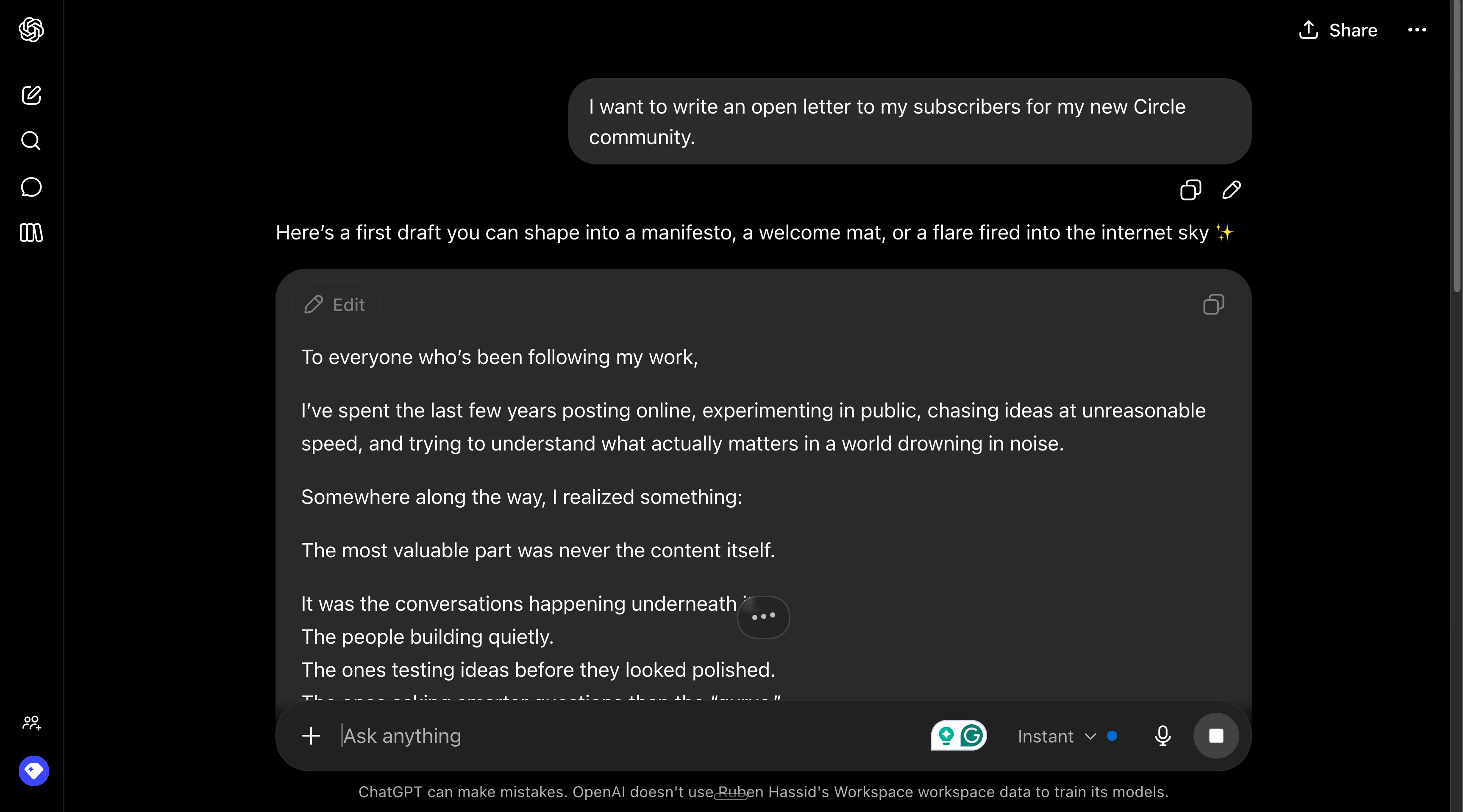
Stage 4. Depression
You’re generating a lot now. You also feel like you shouldn’t have to. You’re a little embarrassed about your credit spend, and your AI tab is getting pricey.
You sat down at 10 am, it’s 4 pm, you’ve generated 80 versions of one thing, and you have a quiet shame about it. You catch yourself thinking, “There has to be a smarter way,” so you bookmark another guide and wonder if you’re doing it wrong.
I’m sorry to break it down to you:
→ there is no smarter way, and the volume is the workflow.
To go from stage 4 to stage 5 is to accept “AI gambling” and regenerating like crazy. AI is expensive, I know. But that’s the only way to get something significant out of it.
The people shipping great AI work right now are generating way more than you think they are, and they’re doing it without apology.
I’ll show you a Midjourney example - an AI to generate images.
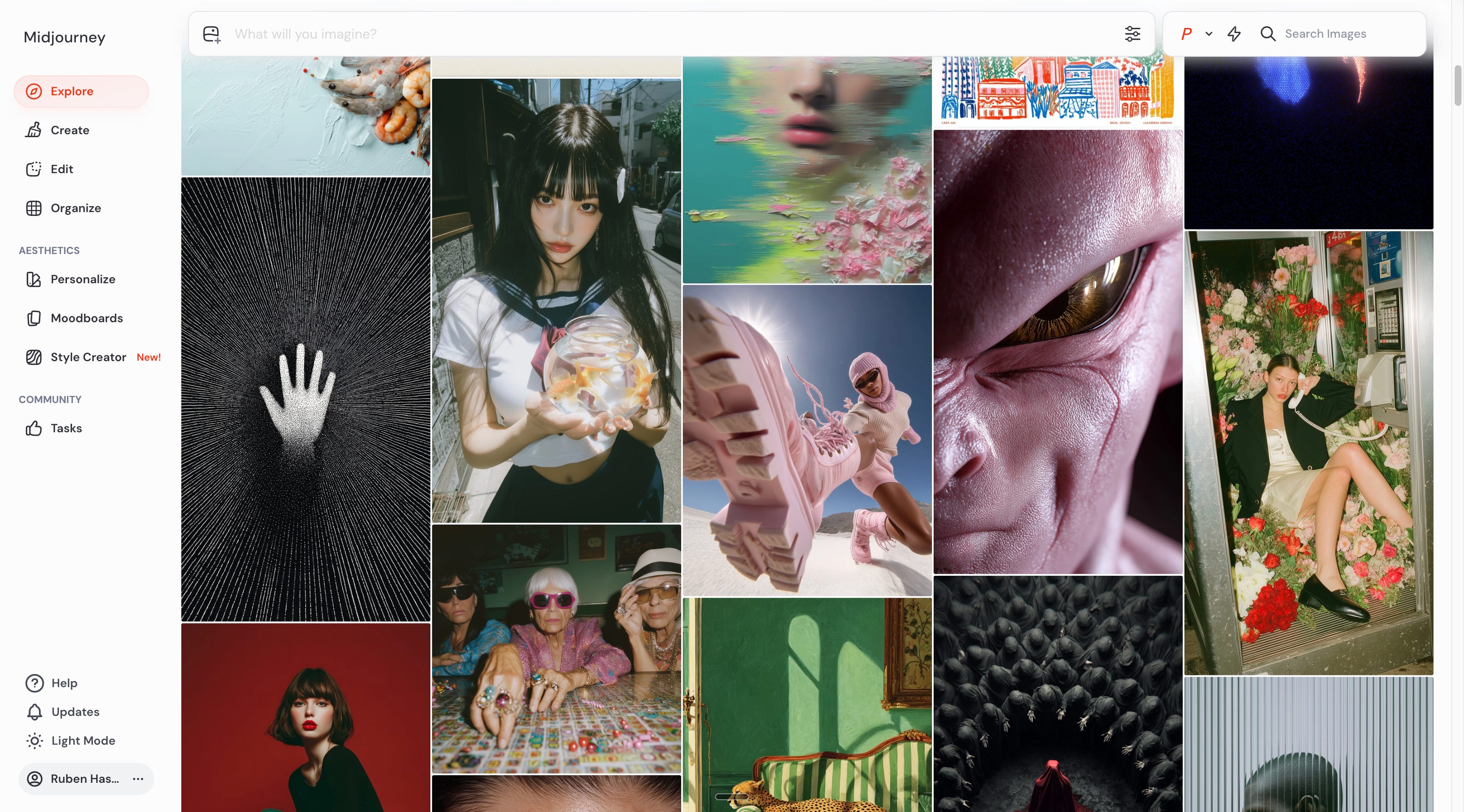
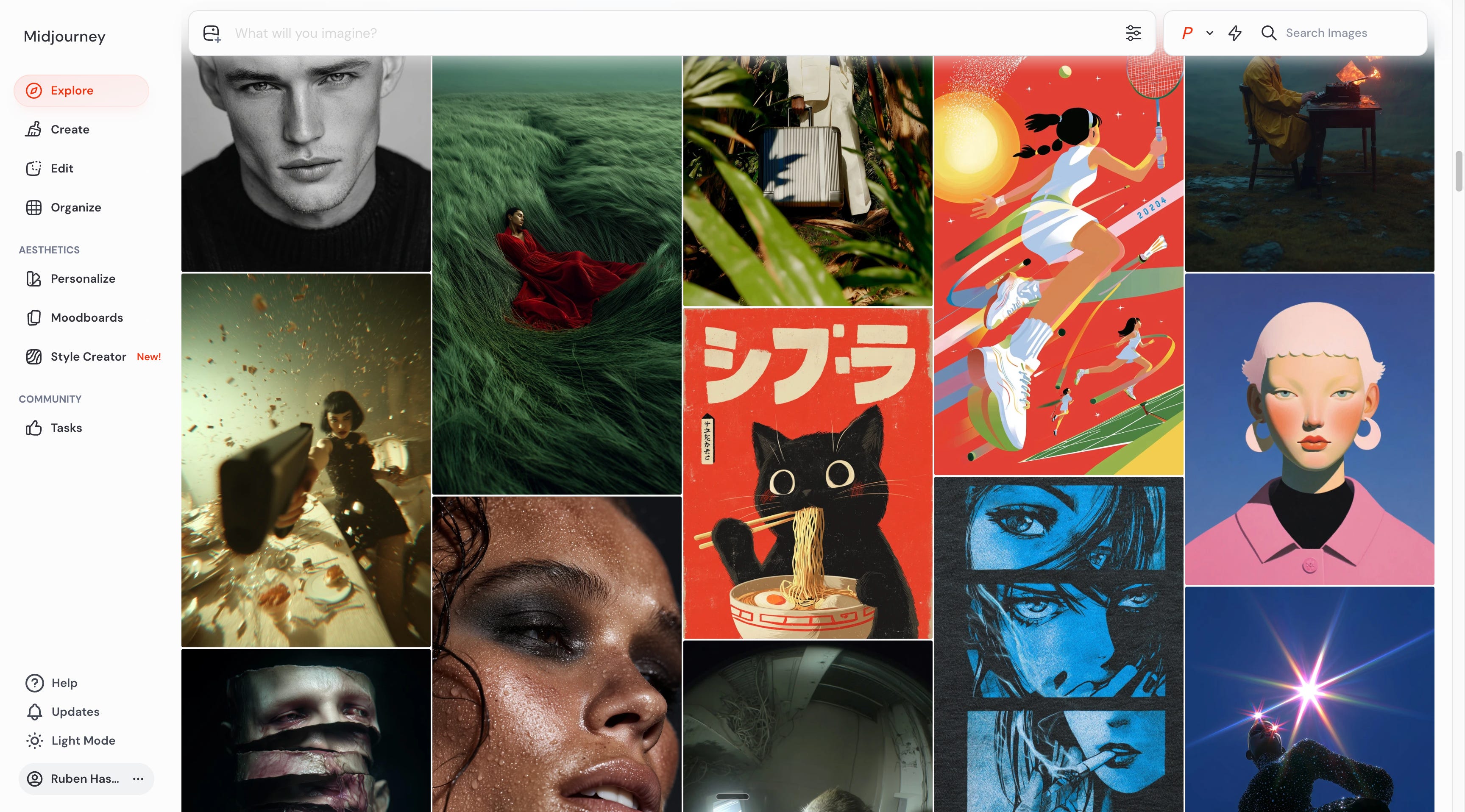
How come all of these images are fantastic?!
Because the guy who made it generated maybe 100, or probably 1,000 of them.
And the one you’re seeing is the final one. The best out of [x].
How to get out of stage 4.
AI subscriptions are like office supplies. It’s the price of work, of speed.
I don’t have a specific prompt to share.
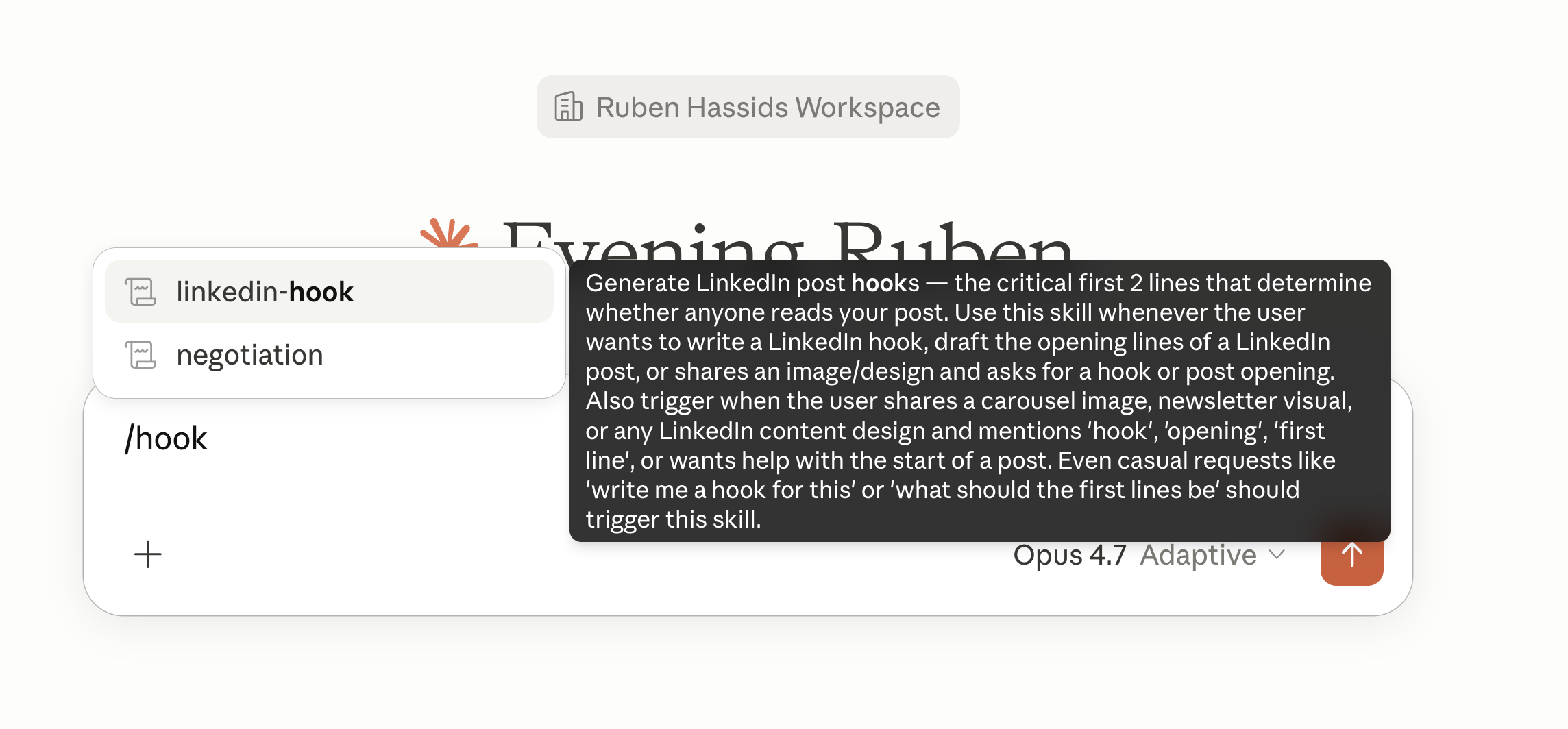
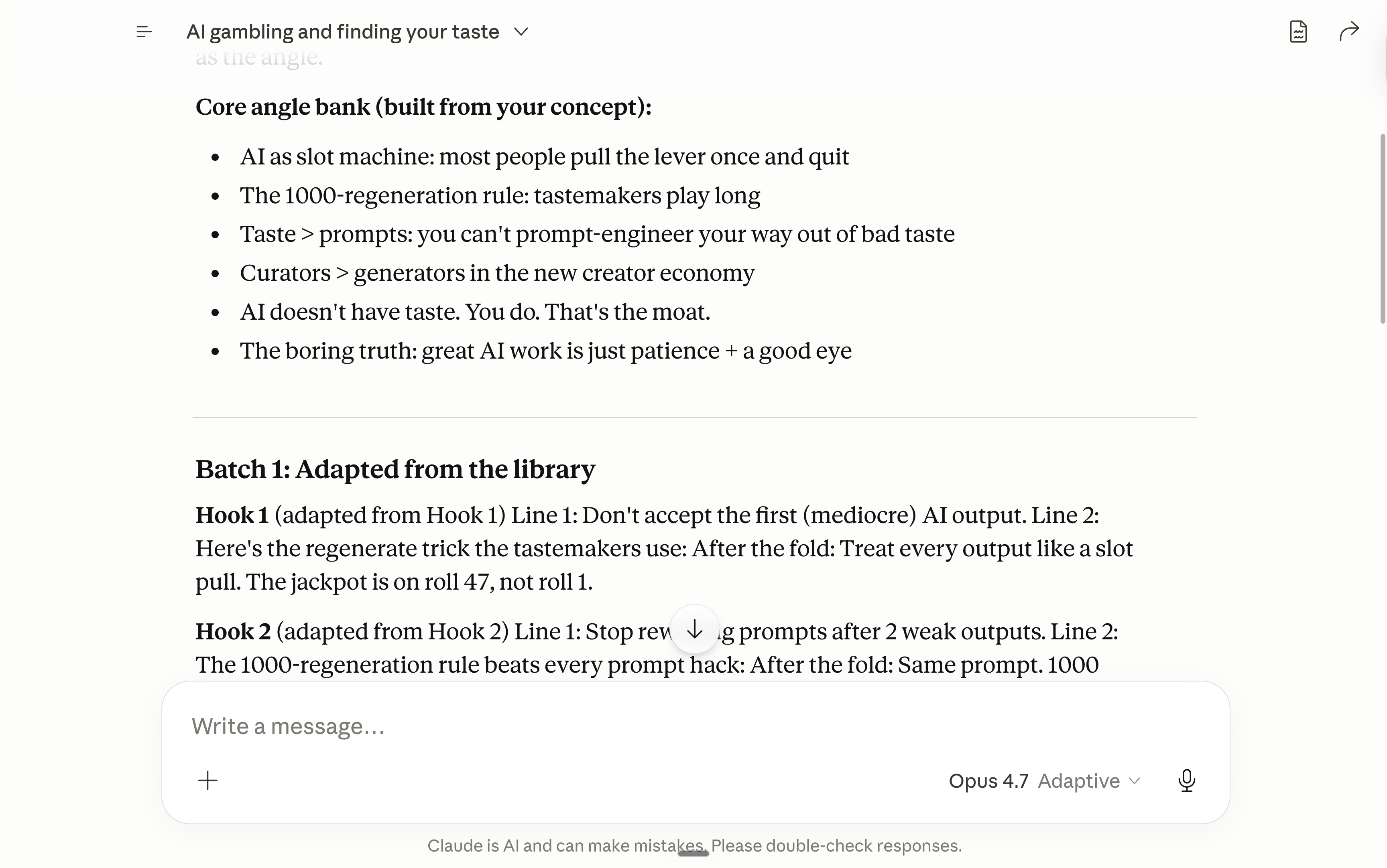
But I do have a Claude skill called /hook to generate 40 Linkedin hooks before choosing one I like. And sometimes I don’t. So I ask for 40 more.
I have a consulting firm in NYC building Claude Skills for enterprises.
If you’re interested, send me an email at howtoai@rubenhassid.ai.
We can only take 1 company per week. Min. 50 people team.
Stage 5. Acceptance (the playbook)
Stage 5 people generate in batches and expect to throw most of it away.
They’ve made peace with the math.
Here’s the workflow:
1. Write the task on one line.
“I need [task] for [success criteria]. But first, ask me questions.”
It might sound obvious, but you need to know what you want.
2. Pick a number.
How many versions do you need? Or options?
You usually need much more than you think.
3. Generate fast.
You want to make a lot of generations, and a lot of follow-up prompts calling out the mistakes. Until one sticks.
4. Download. Export. And do the final edits.
When I generate with Midjourney, I edit in Canva.
When I generate a spreadsheet with Claude, I edit it in Google Sheets.
When I write a newsletter with Claude Cowork, I finish the job in Substack.
AI is not to be lazier, but greater. You have time & options to find the best way to deliver something. Use this time accordingly.
Either you don’t, or you overuse AI.
I only see two options.
You refuse AI categorically. And your product/service permits it. You are selling at an insane premium, and you have full confidence in your skill. No need for multiple versions, you already know the best way to do [x].
You use AI like a slot machine. You know you could never generate 100 variations of something so fast. And you also know the first shot of AI isn’t the right one. So you learn how to generate 100, fast, and pick the right one.
I respect People (1). And I am obviously People (2), most of the time.
But People (2) have some issues, and I want to be honest here:
AI overload. We overwork ourselves. We manage multiple tabs at the same time. We do 4x more, 4x better, but we are also 4x more tired by 2 pm.
AI addiction. Vibecoding is addictive. You try your luck with AI, and you build something you could have never made. And sometimes, you get a bit lost in the “passion work” instead of being actually productive.
I wish I could ask my 600,000+ readers how they deal with both: overload & addiction. You can leave a comment and share your own story:
And for those who pay for my Substack, I made a post on Circle about it:
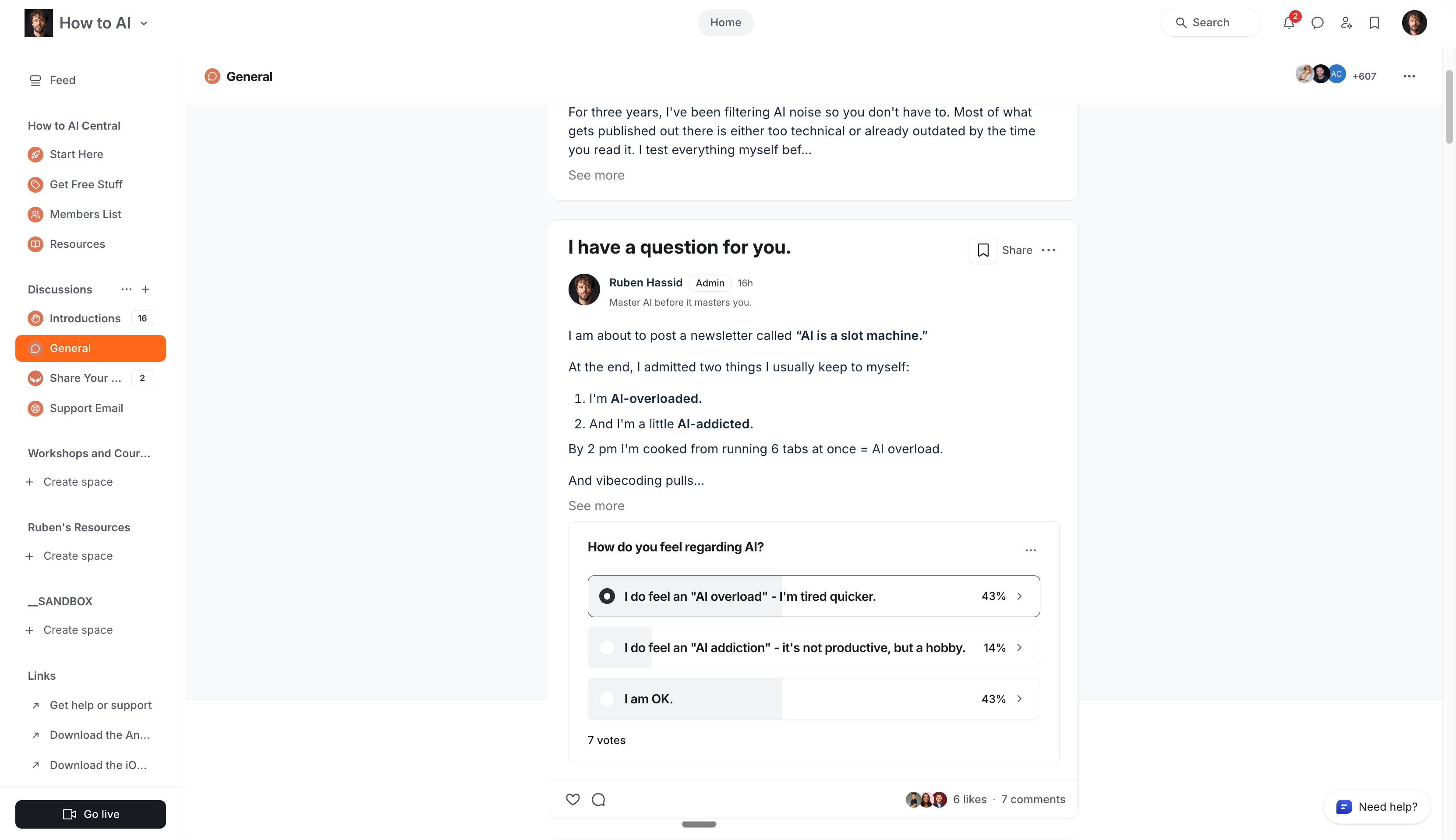
I will repeat it: you don’t have to pay for it. Ever.
Every one of my articles is free. And will remain free.
The Circle is to connect with me & my team & the other members:
People get stuck at AI because they haven't grieved the control they thought they'd have
that's a much harder thing to name, and this piece names it
The slot machine metaphor mirrors evolution perfectly.
Evolution generates thousands of variations — most fail, few survive. AI does the same. The human bottleneck was never creativity, it was volume. One person can't produce 100 serious drafts simultaneously.
Our key skill becomes judgment: not generating — selecting.
Greetings from Bremen, Germany.